Understand what the display tells you
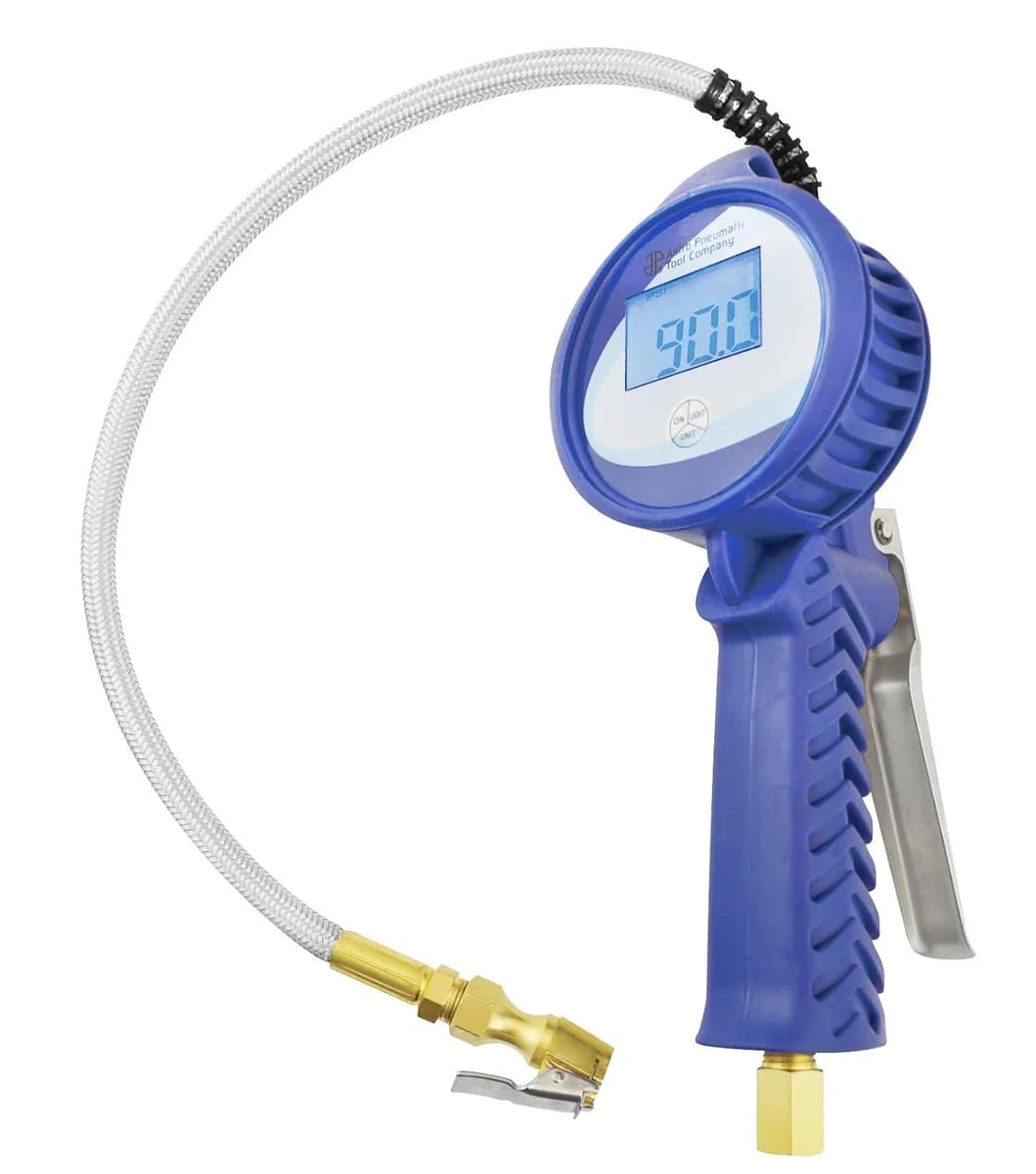
The 3.5-inch digital display reads in small increments, with 0.1 psi resolution in the verified information. Resolution describes the displayed step, not the uncertainty of the measurement. The manufacturer manual gives ±1.2 psi at 0–58 psi and ±2.0 psi at 59–174 psi. Those are different quantities, so avoid describing the instrument as accurate to a tenth of a psi.
Operating and inlet limits are different
The manual lists a 3–175 psi measuring/working range and 218 psi maximum inlet pressure. Maximum inlet is an equipment limit, not a tyre inflation target or proof that every reading near it is supported. Use an appropriate air supply and fittings and follow the manual. The vehicle’s cold-pressure specification remains the relevant target for the tyres.
The hose and chuck are part of usability
Pressure adjustment depends on a sound connection at the tyre valve and a workable hose position. Check whether the chuck suits the valves and wheel access in your shop, and inspect for leakage or damage. A clear screen does not make an unstable valve connection acceptable. Confirm the reading and connection before drawing conclusions about a pressure difference between tyres.
Compare with a simple gauge
Milton S-921 offers a compact 5–50 psi passenger-car checking tool without an airline, but cannot inflate. The 3018 suits a bay-based adjustment workflow and broader stated working pressures, subject to its accuracy bands. Neither tool repairs a leak or determines the correct pressure from the tyre sidewall alone. Use the vehicle placard and service information for the application.