Support geometry comes before the capacity badge
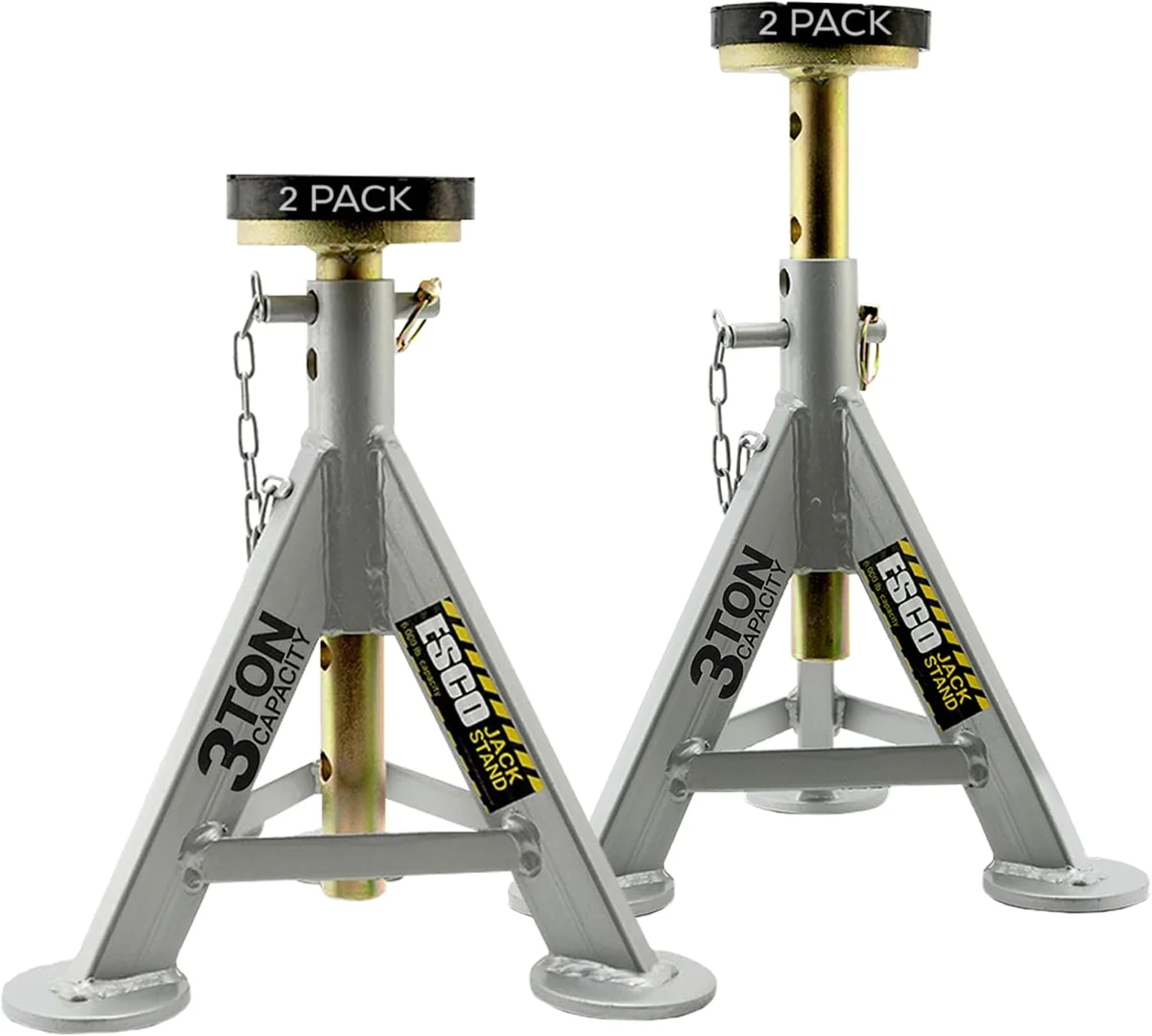
ESCO lists three tons for each stand on its current product page. Its operating instructions require a matching pair at equal locked height when supporting a vehicle end. Do not turn the per-stand figure into an unrestricted six-ton vehicle recommendation: load distribution, approved vehicle support locations and the equipment instructions determine suitability. This review does not certify a support arrangement. Check the label and current manual supplied with the stands and resolve any discrepancy with ESCO before use.
Flat rubber saddles: useful contact, not universal fit
The 10498 has a flat removable rubber top rather than the axle-style saddle of the 10497. That makes the shape an important buying distinction, especially where the vehicle has a defined support pad. Rubber contact can help protect a suitable surface, but it does not convert a flat head into a universal pinch-weld adapter. The manual restricts attachments to those supplied or approved by the manufacturer. Avoid improvised blocks or unapproved adapters that change the contact shape, height or stability.
Height and footprint must work together
The documented working range is 13.2–21.5 inches, with ten adjustable positions and a nominal 12-by-12-inch base. Before buying, establish whether the lifting equipment can raise the approved support point enough to position the stand while maintaining safe clearance. A low vehicle may be incompatible with the minimum stand height even if the floor jack can enter beneath it. At the other end, a tall vehicle needing more than 21.5 inches requires a different support solution, not added packing beneath this stand.
Pin retention and a matching pair
The manual describes a chained adjustment pin secured by a linchpin. Both are part of the locking arrangement; a post resting on a partially engaged pin is not an acceptable substitute. For supporting a vehicle end, ESCO calls for matching stands locked at the same height. It also requires the load to be centred on the saddle and all three feet to sit flat. These points are reasons to inspect the delivered pair and read the manual, not a complete lifting procedure for a particular vehicle.
Floor, inspection and continued ownership
ESCO requires a hard, level surface capable of carrying the load, chocking of the appropriate wheels, and inspection before every use for cracked welds, damaged parts and other defects. A broad foot cannot make gravel, a slope or a yielding surface suitable. Remove damaged equipment from service and obtain replacement components through the manufacturer rather than modifying it. The instructions also say the stands are for repair work rather than an extended or permanent vehicle-storage arrangement. Check that this matches your intended ownership use.
Compare the support system, not a jack against a stand
The Arcan A20019 and SUNEX 6602LP are lifting tools; neither replaces these stands for supporting a raised vehicle during work. The SUNEX has a lower documented entry height and greater maximum lift than the Arcan, but that alone does not establish the correct combination with this pair. The MAXXHAUL chocks address rolling restraint, another separate role. Use the lifting-and-support guide to check the complete system, then follow the vehicle and equipment manuals for the actual setup.