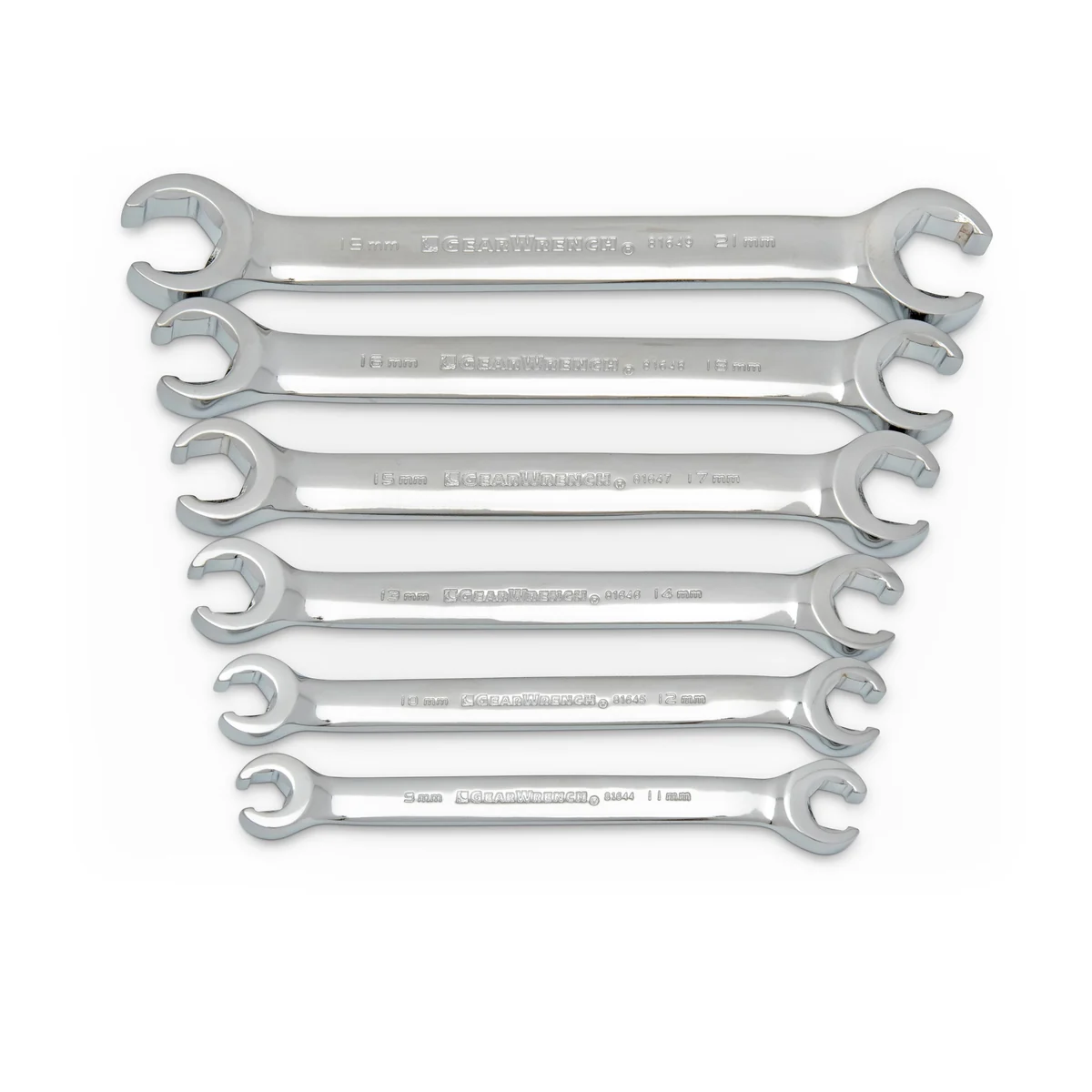
Why the flare-nut shape matters
A line passing through a fitting prevents an ordinary closed box end from sliding into position. A flare-nut wrench leaves an opening for that line while surrounding more of the fitting than a conventional open end. That geometry is the reason to choose the 81906. It does not guarantee that a damaged fitting will release or make an incorrect opening size acceptable.
Check the paired sizes before ordering
The six double-ended wrenches are 9×11, 10×12, 13×14, 15×17, 16×18 and 19×21 mm. Check the actual fitting sizes and available swing space. The larger nominal size range does not include every possible line fitting, and metric tools are not an SAE substitute. A second appropriate tool may be needed to hold the mating connection and avoid twisting the line.
Access and fitting condition determine the approach
Clean enough to identify and seat the tool correctly, then follow the vehicle procedure for the connection. Restricted access can prevent a flare-nut wrench from sitting squarely even when the size is right. If the connection is seized, stop and reassess rather than applying escalating force that damages the pipe or neighbouring component. The set supplies a useful profile; it does not replace a repair plan for deteriorated lines.
How it complements a core wrench set
The 81916 combination set handles ordinary metric fasteners, while the 9416 offers ratcheting convenience. Neither is a direct substitute for this line-fitting profile. For an apprentice, the 81906 is most valuable when line work is part of the training or assigned workload. Check the course list and employer-owned specialist tools so the purchase fills a real need rather than duplicating equipment already provided.