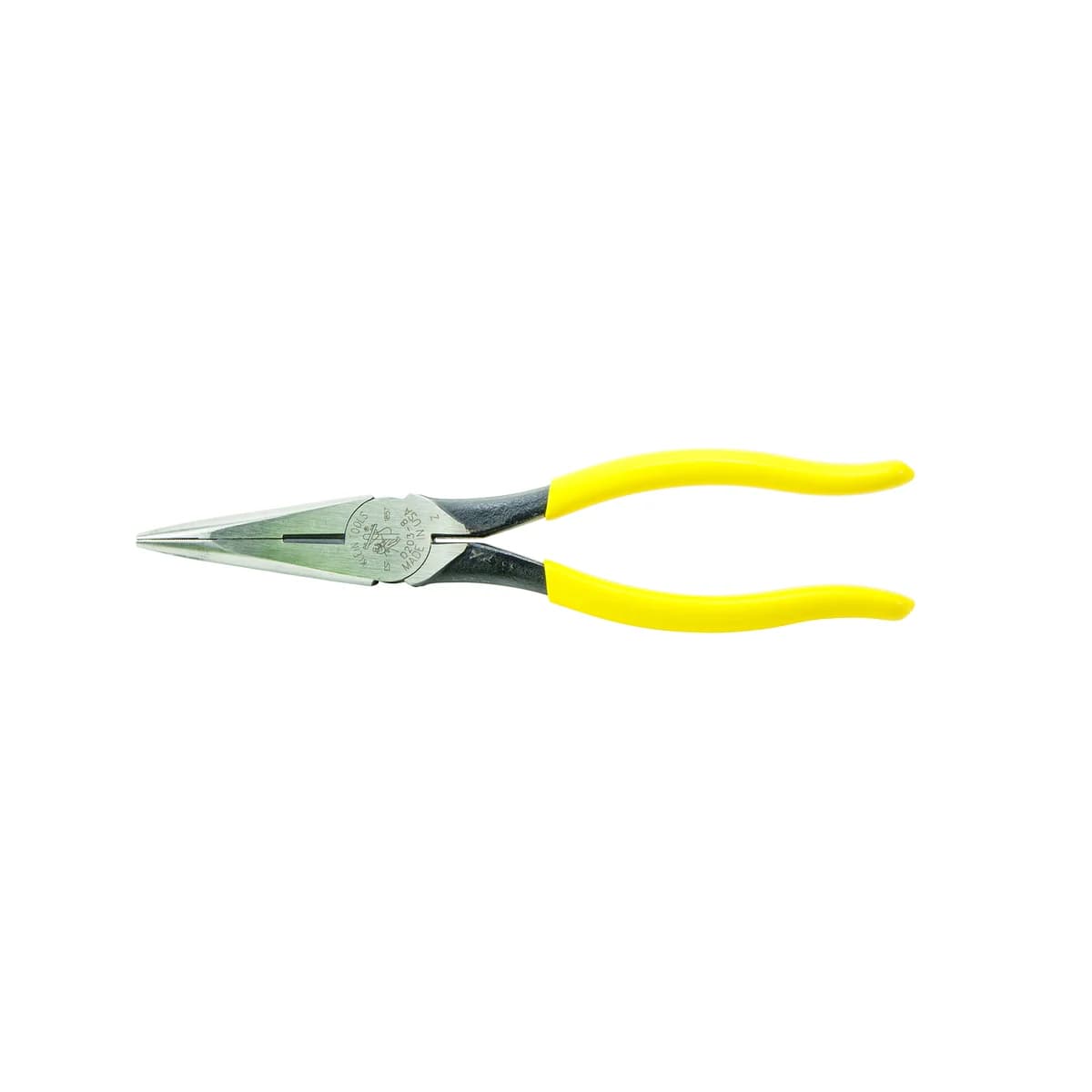
The long nose serves an access role
The nominal eight-inch model has a documented 8.41-inch overall length and a slim long-nose head. That geometry can help where fingers cannot comfortably place or retrieve a small part. It is not automatically the best choice for high-force gripping: narrow jaws trade contact area and leverage for access. Use a tool matched to the part and avoid loading the nose sideways.
Side cutters are a second function
Klein lists induction-hardened cutting edges on this model. Check the intended material and manufacturer capacity before cutting, rather than interpreting automotive use as permission to cut every wire, clip or hardened fastener. D228-8 is the dedicated diagonal-cutter comparison where cutting access and leverage are the main need. Neither tool should be used beyond its documented material suitability.
Handle suffixes are not cosmetic
This is D203-8, not the -INS insulated or -GLW glow-handle version. The standard plastic-dipped covering improves handling but does not establish electrical protection. Isolate circuits as required and use tools and procedures suitable for the actual hazard. Automotive low-voltage work should not encourage assumptions about suitability for high-voltage traction systems.
Reuse the existing tool before buying again
This exact product already exists in the shared TradeGear HQ catalogue. An electrical apprentice moving into automotive work can reuse the same canonical tool rather than buy a second copy for a different trade list. Check condition and fit for the assigned task. The automotive review adds job context without turning the same model into a duplicate product or a claimed hands-on test.