Capacity is only one part of capture
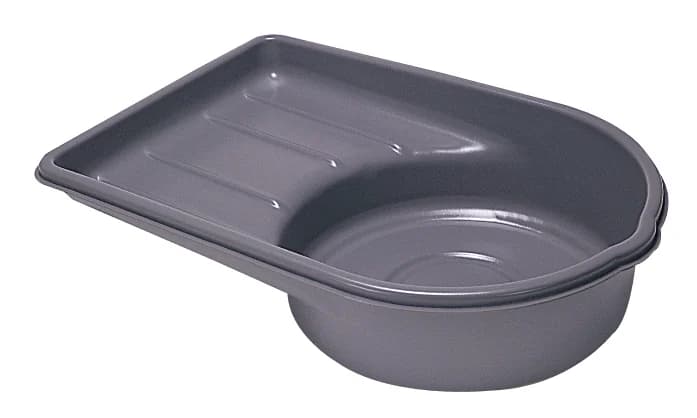
Lisle lists 30 US quarts, equivalent to 7.5 US gallons, in a heavy-duty plastic tub. The broad shape helps intercept a stream that may move as a component drains. Compare the expected fluid quantity and stream path with the container before starting. Nominal capacity is not permission to fill to the edge and then carry a sloshing open load.
Measure the under-vehicle space
The documented dimensions are 33 × 22 × 8 inches. The eight-inch height matters beneath low components, and the footprint matters around stands, wheels and lifting equipment. Check the intended position within a safe support arrangement. Do not compromise stand location or working access simply to fit a large tub under a drain.
Handling and fluid compatibility
The pouring apron helps transfer captured fluid, but the tub is not a sealed transport can. Have a suitable receiving container and disposal route ready. Check the manufacturer limits for the fluid and its temperature; a general drain-tub description does not establish compatibility with every solvent or hazardous liquid. Keep collected fluids separate where the disposal process requires it.
Compare gravity draining with extraction
Mityvac MV7201 offers manual extraction and dispensing where the system and vehicle procedure allow it. That can reduce reliance on an open catch area for some jobs, but it is not universally an alternative to drain-plug service. The Lisle 19752 is clean filling equipment and should not be used as the companion used-fluid container. Choose the method first, then the handling equipment.