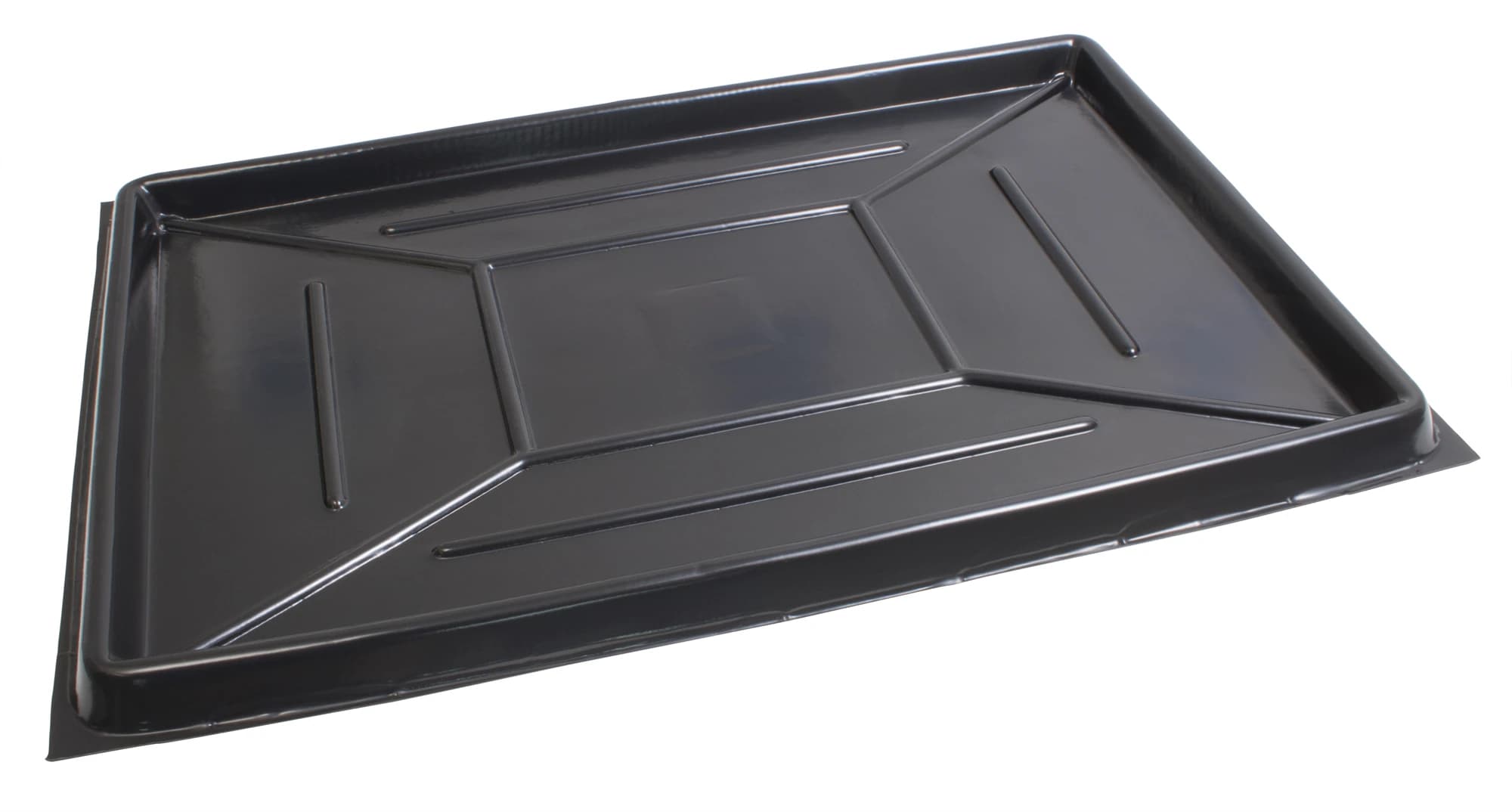
A broad catch area for incidental drips
Lisle specifies a 24-by-36-inch pan, giving the 19722 a two-by-three-foot footprint beneath the work or equipment. Its manufacturer description names showroom floors, garages and carports, which places it in a different role from a compact portable oil drain. The broad area can help intercept drips that do not land in one predictable spot. It also occupies meaningful floor space. Check that the footprint fits the parking position or work area without creating an obstruction, and do not treat a catch pan as a repair for an ongoing leak.
Eight-quart capacity in a shallow profile
The manufacturer lists eight US quarts of capacity and a height of 1.5 inches. Those figures are useful for planning, but they describe a shallow open pan rather than a sealed fluid container. Compare the expected volume with an appropriate collection arrangement before opening a drain, and retain practical headroom for splashes and movement. The 19722's nominal capacity should not be used to justify an uncontrolled full-system discharge. For moving collected fluid away from the bay, choose a suitable transfer or storage container rather than assuming an open tray is spill-proof.
Polyethylene and compatibility boundaries
Lisle identifies polyethylene as the material and describes flexibility and durability as intended design characteristics. That is enough to identify the construction, but not to establish resistance to every workshop chemical or a maximum temperature for hot engine oil. Confirm fluid and temperature suitability with the instructions or manufacturer when the job goes beyond incidental drip collection. Keep the pan clean enough to inspect for damage and avoid mixing incompatible waste fluids. We have not tested impact resistance, deformation, chemical exposure or long-term flexibility on a physical sample.
How it fits in the servicing equipment plan
The Lumax drain container elsewhere in the collection serves collection and transfer needs differently, while Mityvac MV7300 extracts supported fluids through suitable tubing. The 19722 is the passive containment option: it does not pump, evacuate or provide a sealed drain connection. A workshop may need both a purposeful drain arrangement and a broad drip pan, but an apprentice should first check which equipment the employer supplies. Buy this model when its size and shallow layout solve a real containment task, rather than treating every fluid-handling product as another item required for an oil change.