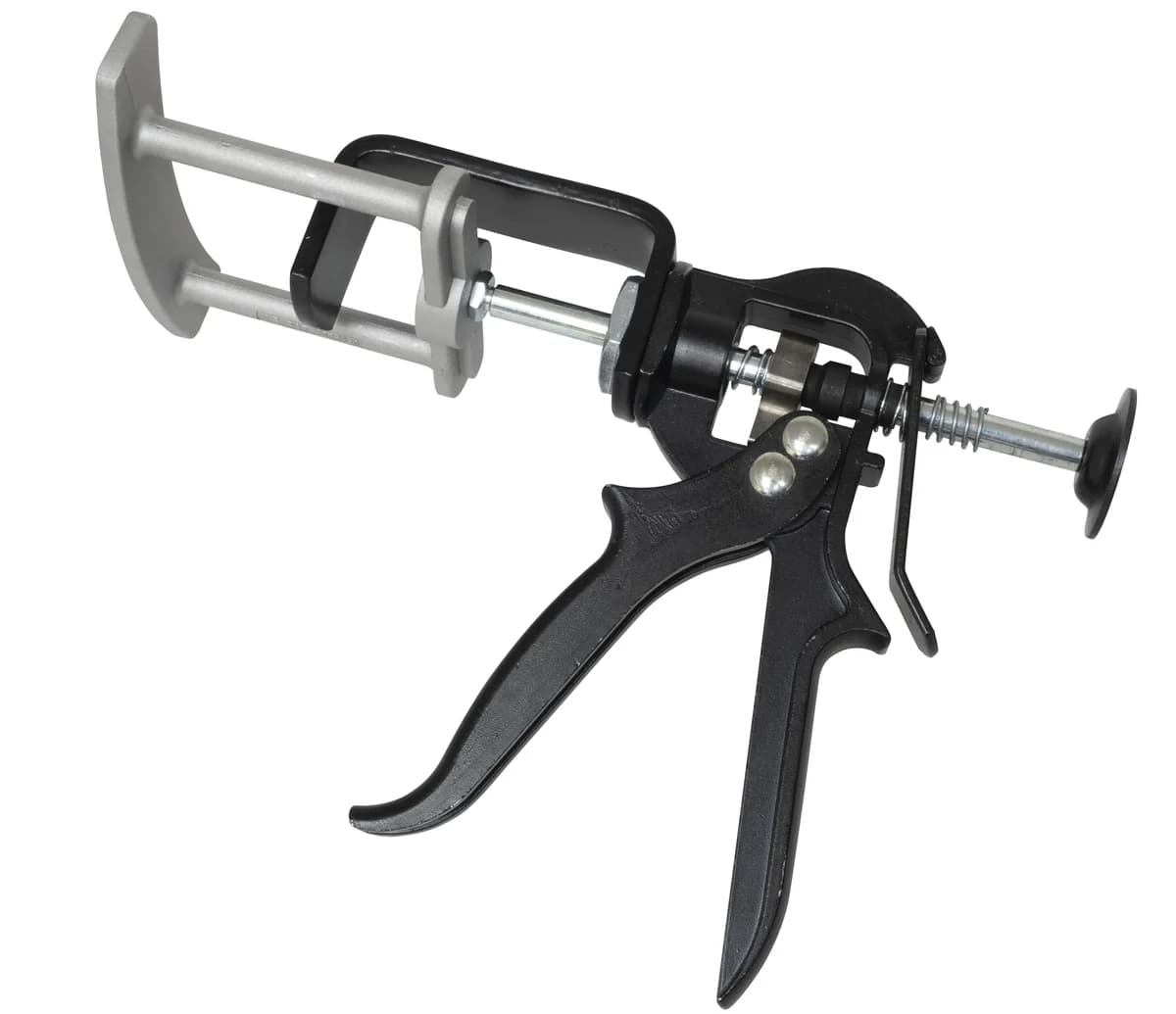
Why compress two pistons together
Lisle describes a tool that uses the inboard brake pad to distribute force while compressing two compatible pistons together. That is different from pushing one piston while leaving another free to move. The useful result is an arrangement suited to that particular caliper design. Confirm the tool can be positioned correctly rather than assuming every two-piston assembly offers the same access.
Identify the retraction method first
Some pistons push back; others require rotation or a vehicle-specific electronic service procedure. The 25750 does not cover all of those methods. Lisle 28600 addresses supported rotating-piston applications, but it also does not supply EPB service mode. Read the vehicle instructions before selecting either tool, because forcing the wrong retraction method can damage the assembly.
The hydraulic system remains part of the job
Piston retraction moves fluid and can affect reservoir level. Follow the vehicle procedure for the reservoir, fluid handling and any specified bleeding operation. Unexpected resistance deserves diagnosis; a compression tool does not establish that the piston, slides or hydraulic circuit are sound. This review is a buying assessment rather than a complete brake-service procedure.
A targeted addition to the brake kit
The 81850 thickness gauges help assess accessible lining thickness, while MV6840 addresses compatible pressure bleeding. They do not replace this compressor because their functions differ. An apprentice should buy the retraction tool required for assigned vehicles rather than a collection of overlapping products labelled brake tools. Check course or workshop availability before duplicating specialist equipment.