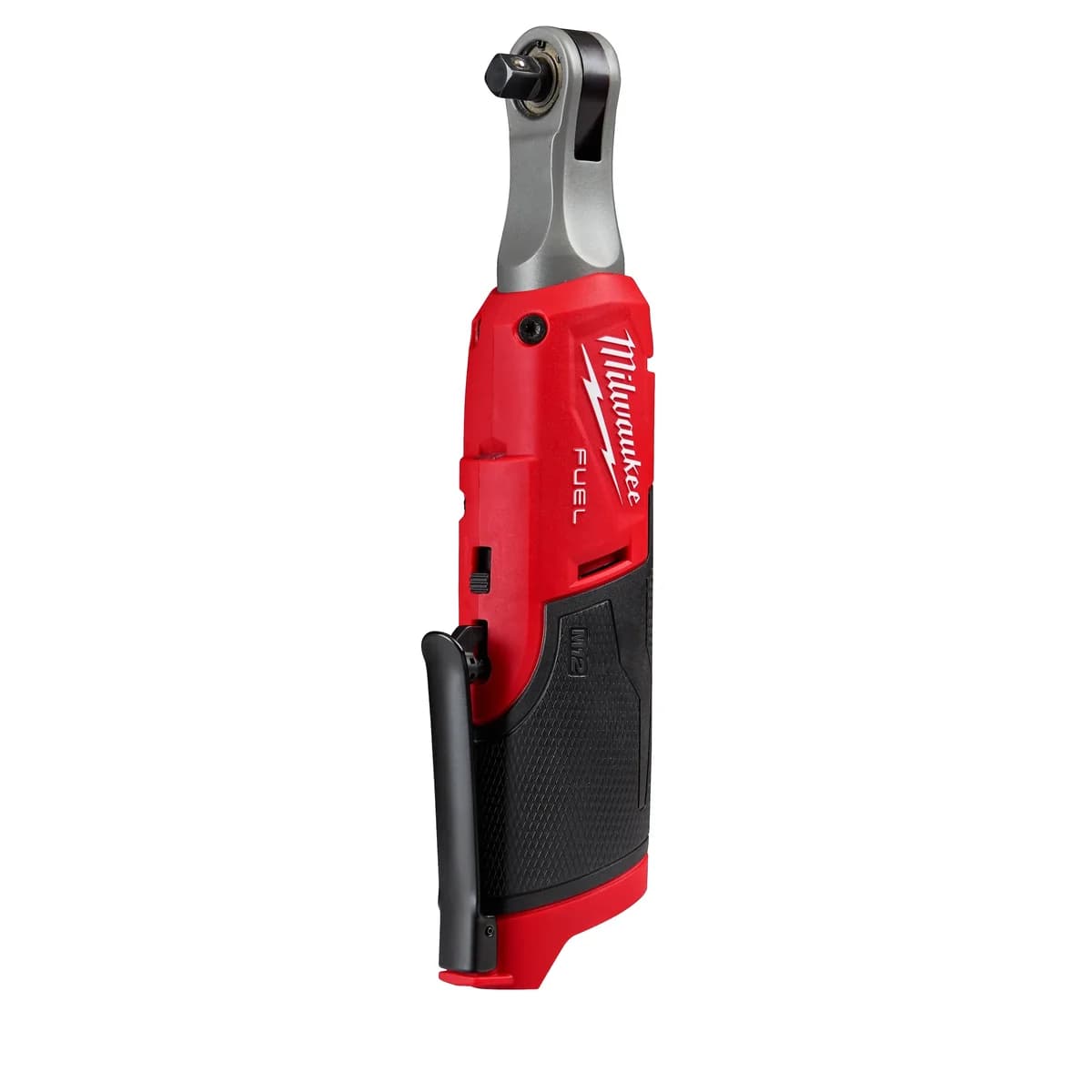
Speed is the reason to buy this model
Milwaukee lists a 0–450 rpm operating speed for the 3/8-inch high-speed ratchet. Its role is reducing repeated manual turns when there is a suitable path to the fastener. That can matter across a day of disassembly and assembly, but it offers little benefit where a hand ratchet cannot be replaced because the tool body will not fit.
Access includes more than the drive head
Check the approach with the required socket and consider both head thickness and the battery end of the tool. A compact drive size does not guarantee clearance between an engine and body structure. Deep sockets and extensions change the setup again. Evaluate the specific fasteners that consume your time rather than treating every threaded connection as an opportunity for powered use.
Separate run-down from tightening decisions
The powered ratchet turns suitable fasteners; the vehicle procedure establishes final tightening and any need for a calibrated tool. Begin engagement correctly to avoid cross-threading, particularly where sight lines are poor. For a resistant fastener, use an appropriate removal method rather than assuming high rotational speed implies high breakaway capability. The 2962-20 is a different tool for impact removal, with different socket and clearance requirements.
M12 ownership and useful hand-tool companions
The -20 package is tool only. Budget for a compatible battery and charger and consider whether the same platform will serve other workshop equipment such as the 2125-20 light. A conventional socket kit remains necessary when access or control favours hand operation. Check whether SKT15311 already supplies the sockets and extensions you need, and use a range-appropriate torque wrench for specified finishing work.