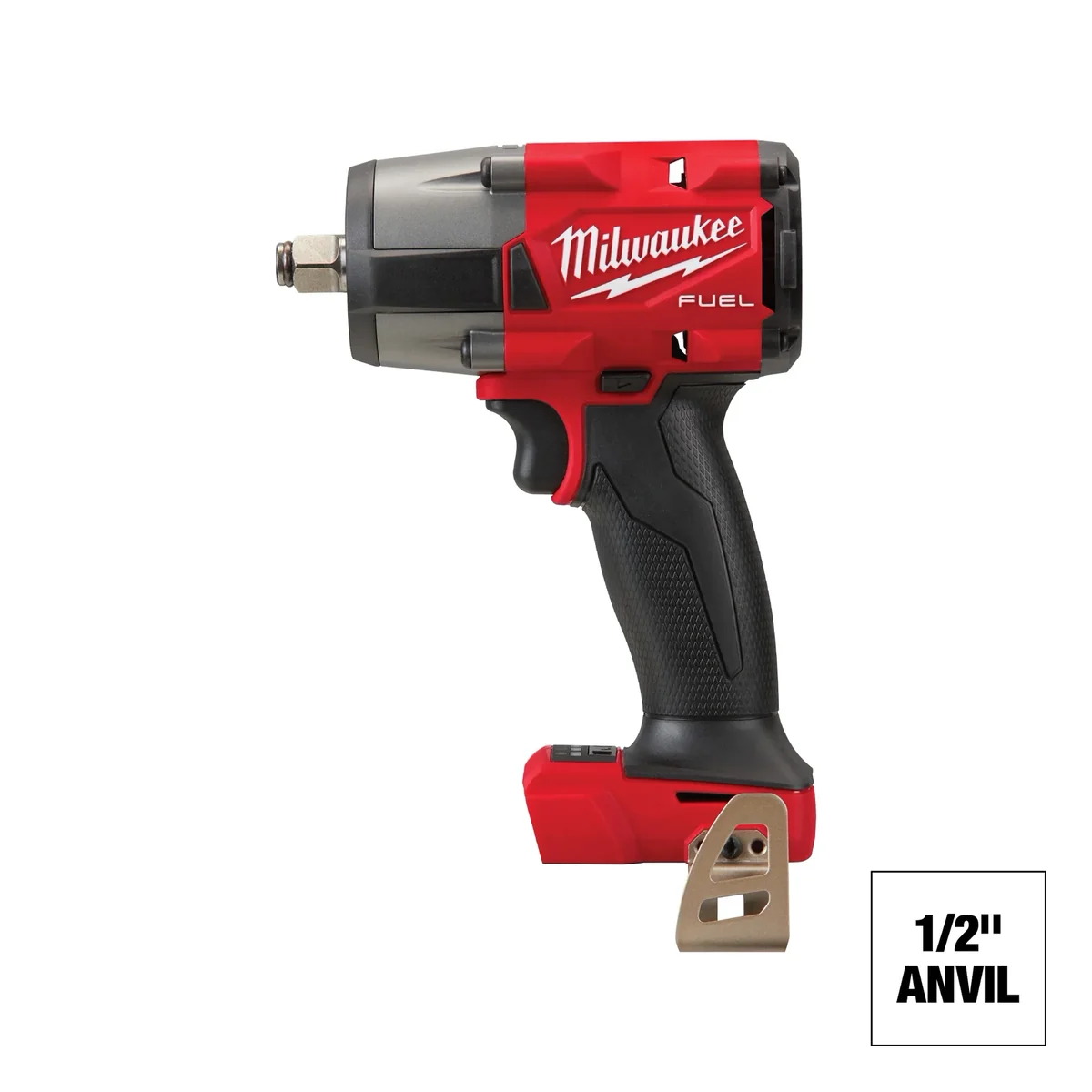
Understand the torque claim
Milwaukee advertises up to 650 ft-lb of breakaway torque for the 2962-20. That is a manufacturer performance claim under its conditions, not a guarantee that a corroded fastener will release or a setting you can use for final assembly. Removal demand varies with the joint, corrosion and prior tightening. A sensible buying decision starts with the fasteners, access and repeat workload rather than the largest number on the product page.
Four modes are control options, not calibration
Different operating modes can help manage run-down or removal behaviour, but they do not turn the impact into a torque wrench. Use the vehicle procedure and a suitable calibrated instrument for final tightening. This distinction matters especially on wheel fasteners, where a convenient impact setting can be mistaken for a verified torque value. Record the actual service specification rather than inferring it from the tool’s mode or sound.
The friction-ring anvil and socket system
The selected model has a 1/2-inch friction-ring anvil. Choose sockets expressly intended for impact service and check seating and retention. The SUNEX 2569 provides straight standard/deep metric coverage, whereas GEARWRENCH 84918N offers a different 3/8-inch articulating arrangement and is not a direct drive-size match. Do not use chrome hand sockets or assume an adapter eliminates the need to check every component’s rating.
Bare-tool cost and the DEWALT comparison
The -20 configuration excludes the battery and charger. Include both, plus the actual battery size you intend to use, when comparing handling and total investment. DEWALT DCF891B is the natural alternative for someone already using compatible 20V MAX batteries. Platform ownership can outweigh a headline torque comparison. A cordless ratchet such as the M12 2567-20 serves confined run-down work and should not be treated as a smaller equivalent impact wrench.