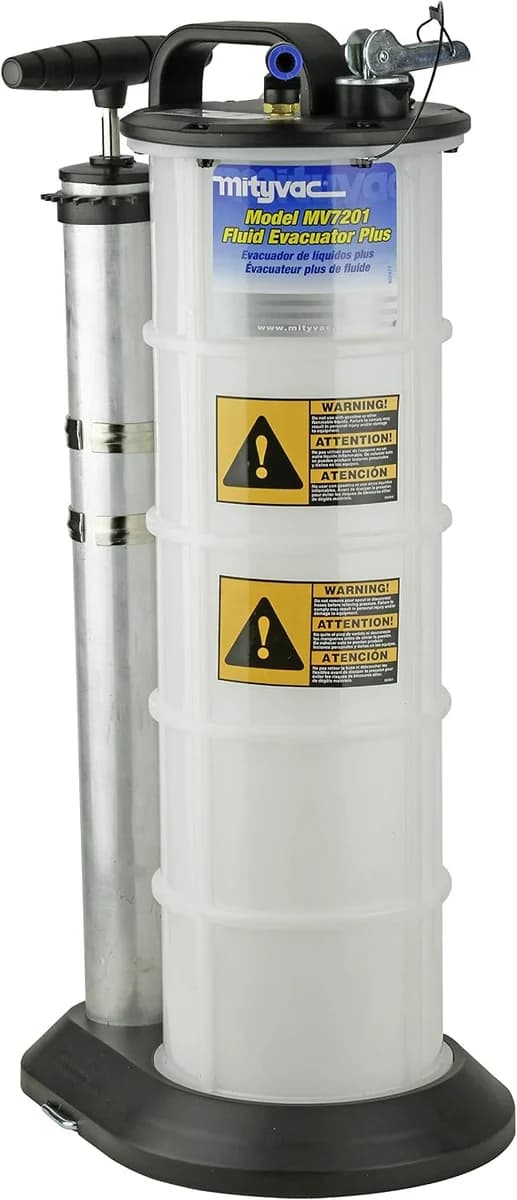
Two directions, one defined fluid-handling system
The MV7201 has a 2.3 US gallon / 8.8 L reservoir and manual evacuation and dispensing modes. That lets it address appropriate removal or transfer tasks without making it a general-purpose pump for every workshop liquid. Confirm the current instructions for permitted fluids and how the controls and connections change between modes.
Vehicle access determines whether extraction works
A suitable tube route must reach the fluid as required without damaging components or leaving equipment behind. The presence of a dipstick opening alone does not establish an approved extraction procedure. Check the vehicle instructions and the supplied tube dimensions. A method that removes some fluid is not evidence that it completes the required service or replaces filter work.
Capacity and overflow prevention have limits
The automatic overflow-prevention feature is a handling aid, not permission to ignore reservoir level or connect an unsuitable fluid. Compare the expected volume with 8.8 L and plan how the collected material will be transferred and disposed of. Temperature and chemical compatibility remain separate checks. Clean dispensing also needs protection against contamination from previous waste-fluid use.
Compare with a tub and a brake bleeder
Lisle 17922 catches gravity-drained fluid with a broad open footprint, useful where a drain opening must be serviced. MV6840 supplies a pressure-bleeding arrangement with reservoir adapters and a different purpose. The similar reservoir appearance does not make those products interchangeable. Choose the vehicle-approved method first, then the container or pump that actually supports it.