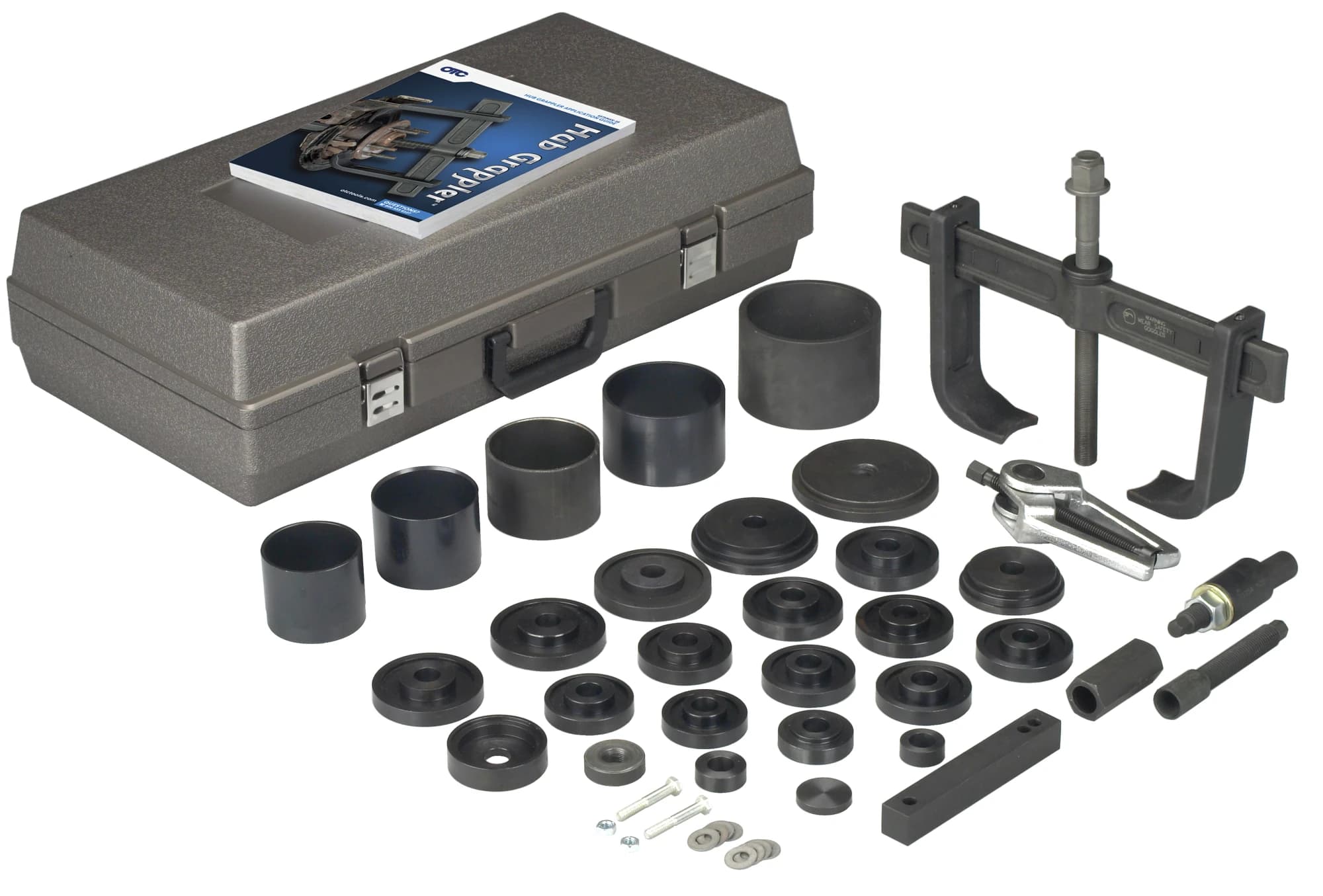
The reason to buy a hub-specific system
OTC describes the Hub Grappler as a system for servicing wheel hubs and bearings on supported vehicles without removing the steering components or knuckle. That can change the equipment plan compared with removing an assembly for a shop press. It remains an application-dependent method, not a promise that every wheel bearing can be serviced in place. The practical value is having the puller and installation arrangements selected together. Confirm the vehicle procedure before assuming that this method avoids disassembly, alignment checks or another specialist operation on your particular job.
Drive screw, jaws and supported power input
The product page identifies a 3/4-inch custom drive screw and equalizer washer, plus jaws intended to locate on the puller bar without separate fasteners. OTC also describes this puller as designed to work with an impact gun. That statement is specific to this system and should not be extended to every puller or C-frame in a mechanic's drawer. Follow the relevant instructions for engagement, lubrication and supported loading rather than choosing an impact setting from the wrench's advertised torque. We have not measured screw effort, speed or durability.
The application guide is part of the purchase
The guide described by OTC includes applications through model year 2018 and identifies which kit components are required for a job. This makes it a buying reference, not simply paperwork to open after delivery. Check the exact vehicle, bearing arrangement and required adapters before relying on the kit for a newer car or a less common application. Model-year coverage on a printed guide is not evidence of subsequent software-style updates. Ask OTC for current confirmation where the published guide stops short of the vehicles the workshop actually services.
Adapters and related service accessories
OTC describes six additional adapters that increase coverage, together with a tie-rod/ball-joint tool and two Ford axle installers. The wording should not be read as a claim that the whole case contains only six pieces, or that two Ford installers cover every Ford axle. Each accessory has a particular contact geometry. Keeping those parts with the application guide is a better ownership practice than mixing them into an unlabeled puller drawer. Match the receiving and installation surfaces as a set and check any missing part before work begins.
Weight, case space and repeat workshop use
Published package dimensions are 26 by 15 by 8 inches, with a 54-pound shipping weight. This is a meaningful storage and handling commitment, especially for a mobile technician already carrying jacks, stands and hand tools. The kit is easier to justify when its supported hub work recurs, rather than as a speculative upgrade for an apprentice's first purchase. Plan where the case will live and how it will be moved. Neither the shipping weight nor the size of the drive screw is a published safe working-load rating.
Hub Grappler versus the smaller mechanical tools
A 6297 separator handles a compatible tapered ball-joint separation; a 7249 C-frame supports suitable press-fit work; the 4579 offers slide-hammer configurations where that loading method is appropriate. The 6575 is the hub-and-bearing system among these choices. They should be compared by the service operation and application chart, not ranked together by size or purchase cost. Start with the confirmed job list and retain the other tools already owned where they remain suitable. A hub kit does not replace the support equipment or final torque tools required around the repair.