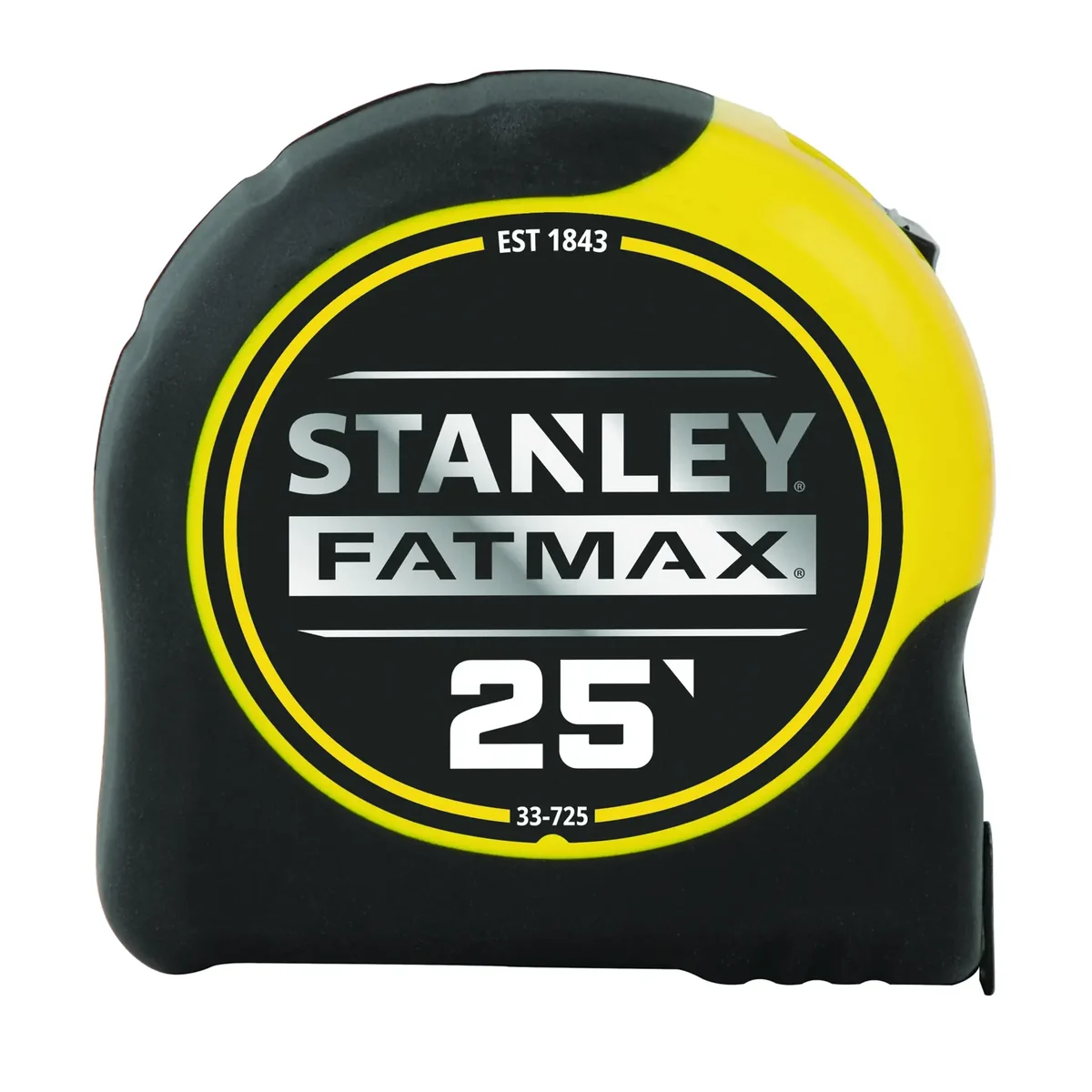
The selected single-tape configuration
The verified product is one 25-foot FATMAX with a 1.25-inch blade, not a multi-pack or a magnetic variant. Check the 33-725 number and quantity on the offer. A tape already owned for carpentry or general workshop work can serve the same suitable dimensional tasks in an automotive setting without creating another product in the shared catalogue.
Reach helps positioning, not every measurement
Stanley’s current manufacturer information uses a 14-foot reach claim. That describes a handling capability rather than a promise that every unsupported measurement is equally accurate. Plan the measurement around suitable contact points, blade support and a readable scale. A long blade that bends or cannot seat at the datum may not answer the dimensional question reliably.
Keep tolerance checks separate
A tape is useful for a trolley footprint or workshop space, but not for valve clearances or other small component tolerances. Lisle 68100 provides known feeler thicknesses for appropriate gap checks, and other service measurements may need a caliper or micrometer. Choose the instrument and method from the service information rather than assuming one measuring tool covers every scale.
Condition and shared-kit ownership
Blade coatings and hook condition affect how well a tape remains usable. Inspect damage and follow Stanley’s handling instructions, including controlled retraction. Count this as an existing shared tool if you already own a suitable one. The automotive directory adds context; it does not claim a second independent product or duplicate review is required for another trade.