Best Miter Saws for Carpenters: Fixed, Sliding or Glide?
DWS715 is the fixed 12-inch starting point when the stock fits. C10FCGS offers a smaller fixed format. DWS780 adds sliding dual-bevel capacity; GCM12SD and LS1019L address station layout with different movement systems.
5 picks · 5 full reviewsUS-focusedResearch-based recommendations
Product image: DeWalt. Check the listing for included accessories.
All five are corded US-market comparisons. Capacity depends on cut angle and stock orientation. Manufacturer precision or dust-capture claims are not independent tests by TradeGear HQ.
HOW TO CHOOSE
What matters for the work
Buy for actual trim
List the molding width, thickness and orientation and check angled cuts as well as straight cuts. A sliding 10-inch saw can cover stock that a fixed 12-inch model cannot. Do not use blade diameter as the full capacity comparison.
Station and transport are part of the tool
Glide and forward-rail systems can help rear clearance. Long workpieces still need support and space. If the saw moves daily, compare the loaded transport arrangement rather than bench footprint alone.
Leave money for the working setup
Price the machine with the appropriate stand, finish blade, clamps and extraction connection. A fixed saw that covers every repeated cut can be a better fit than a large slider used only at a fraction of its capacity.
We compared manufacturer specifications and documented features. We have not hands-on tested these products. Read our recommendation method →
Detailed picks
Useful differences, meaningful drawbacks and the specifications behind each recommendation.
OPTION 1
Product image: DeWalt. Check the listing for included accessories.For a simpler trim station
For a simpler trim station
DeWalt
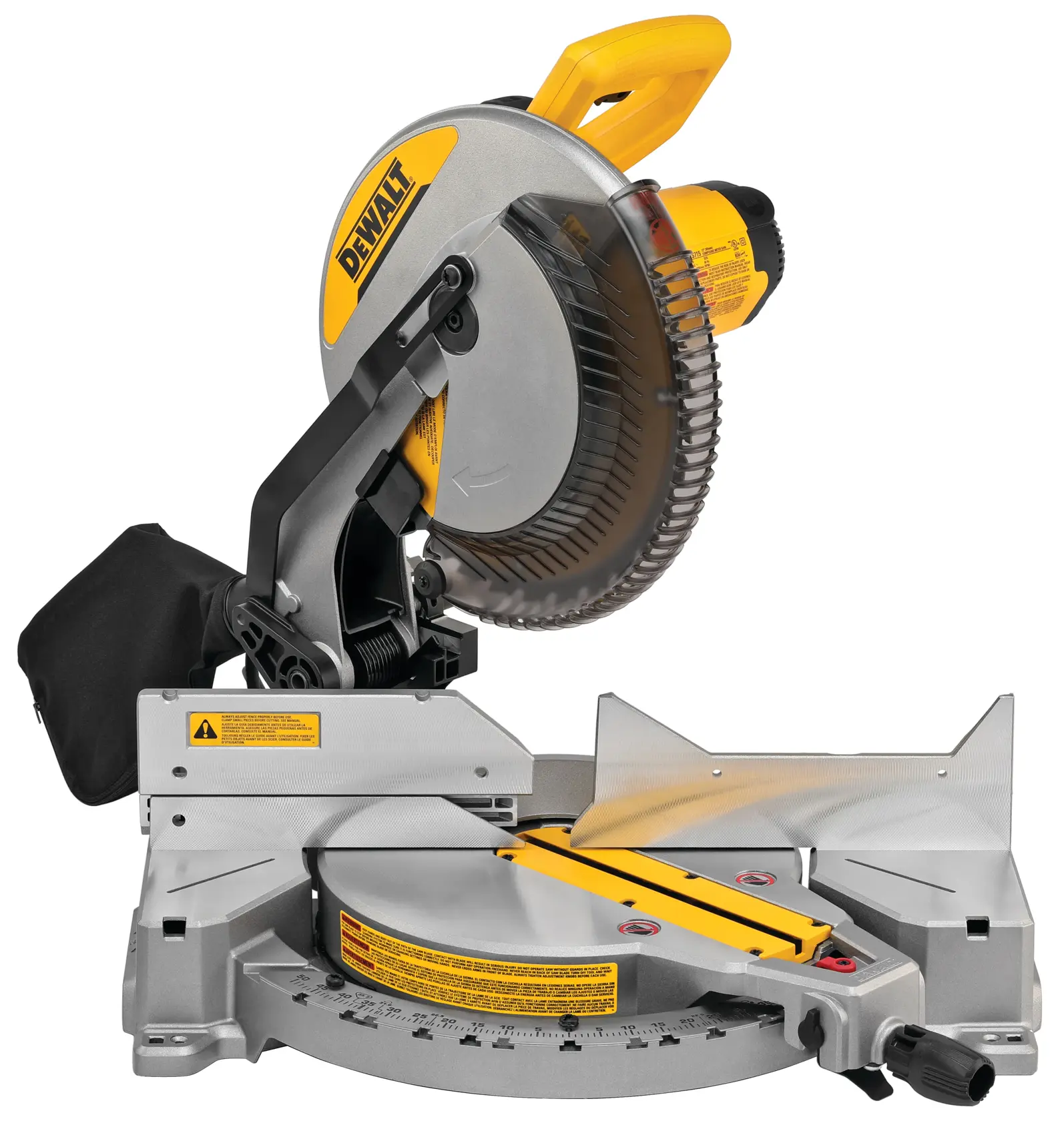
DWS715 12-inch Single-Bevel Miter Saw
Best for: Trim and crosscut work within a fixed 12-inch saw’s documented capacities.
DWS715 is the fixed, single-bevel 12-inch alternative. DeWalt documents 2x8 dimensional-lumber capacity at 90 degrees and 2x6 at 45 degrees. It is a useful comparison for a carpenter who needs a working trim station rather than the largest machine on the shortlist.
Start here when all repeated cuts fit. Put the remaining budget toward stock support, the appropriate blade and extraction. Move to DWS780 or another slider for a demonstrated capacity or workflow need, rather than assuming every finish carpenter needs dual bevel and sliding rails.
Fixed saw avoids unnecessary sliding complexity
12-inch blade format
Documented dimensional-lumber capacities
Power
15-amp corded
Blade
12 inches
90° capacity
2x8 dimensional lumber; manufacturer figure
Main tradeoff: Restricted width compared with sliders
Product image: Metabo HPT. Check the listing for included accessories.For a smaller fixed station
For a smaller fixed station
Metabo HPT
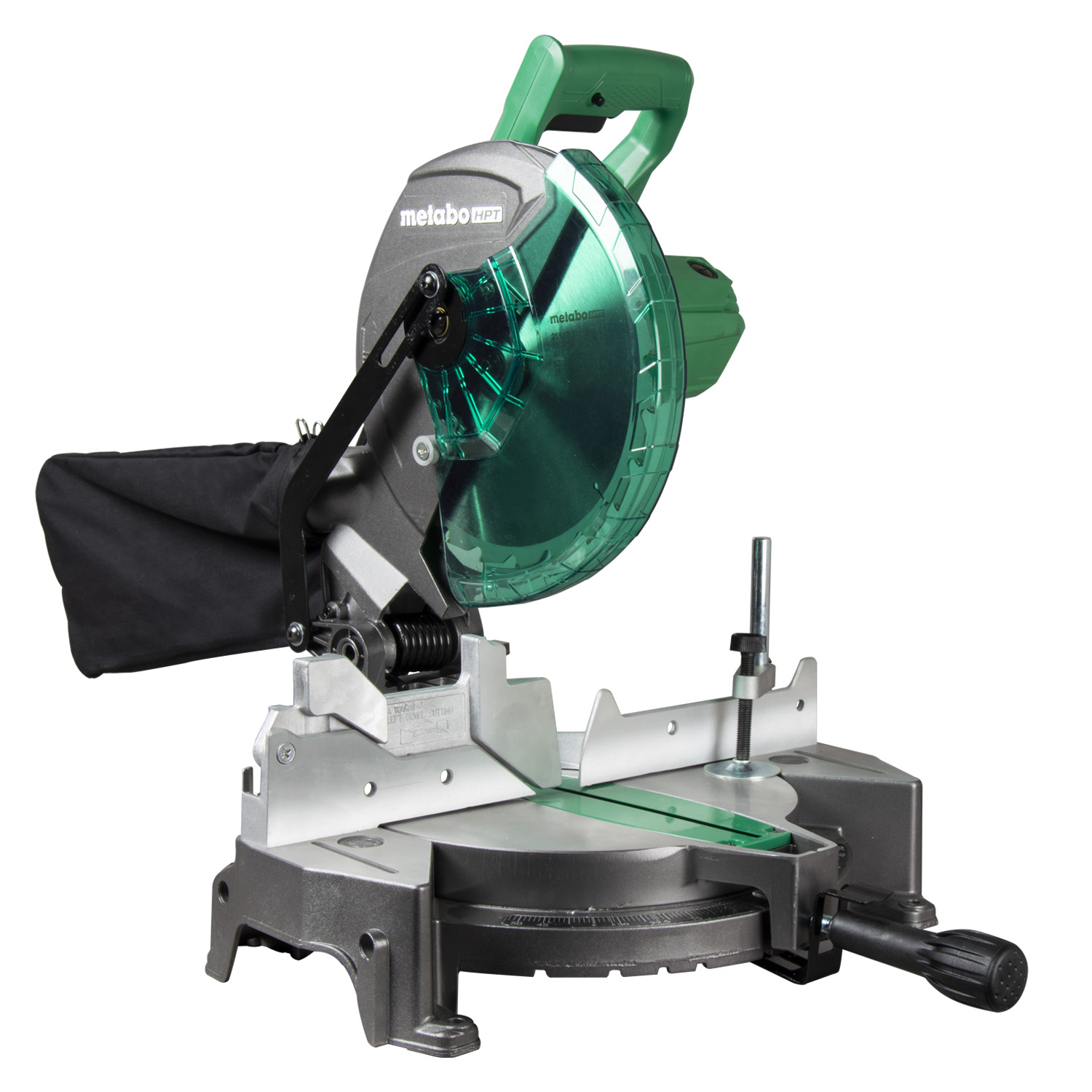
C10FCGS 10-inch Compound Miter Saw
Best for: Suitable narrower crosscuts where a smaller fixed machine and frequent transport are priorities.
C10FCGS is a fixed 10-inch corded compound saw with left-bevel adjustment. Metabo HPT lists it at about 24 pounds, markedly different in carrying class from the large sliding machines. Check the actual package and cut capacity before choosing it for trim.
It is a credible basic-station comparison when the stock fits. A finish-specific blade and proper support may be more useful purchases than a larger saw. The manufacturer page shows slightly inconsistent weight figures, so treat the carrying figure as approximate rather than a precision comparison.
Product image: DeWalt. Check the listing for included accessories.For wider mixed trim work
For wider mixed trim work
DeWalt
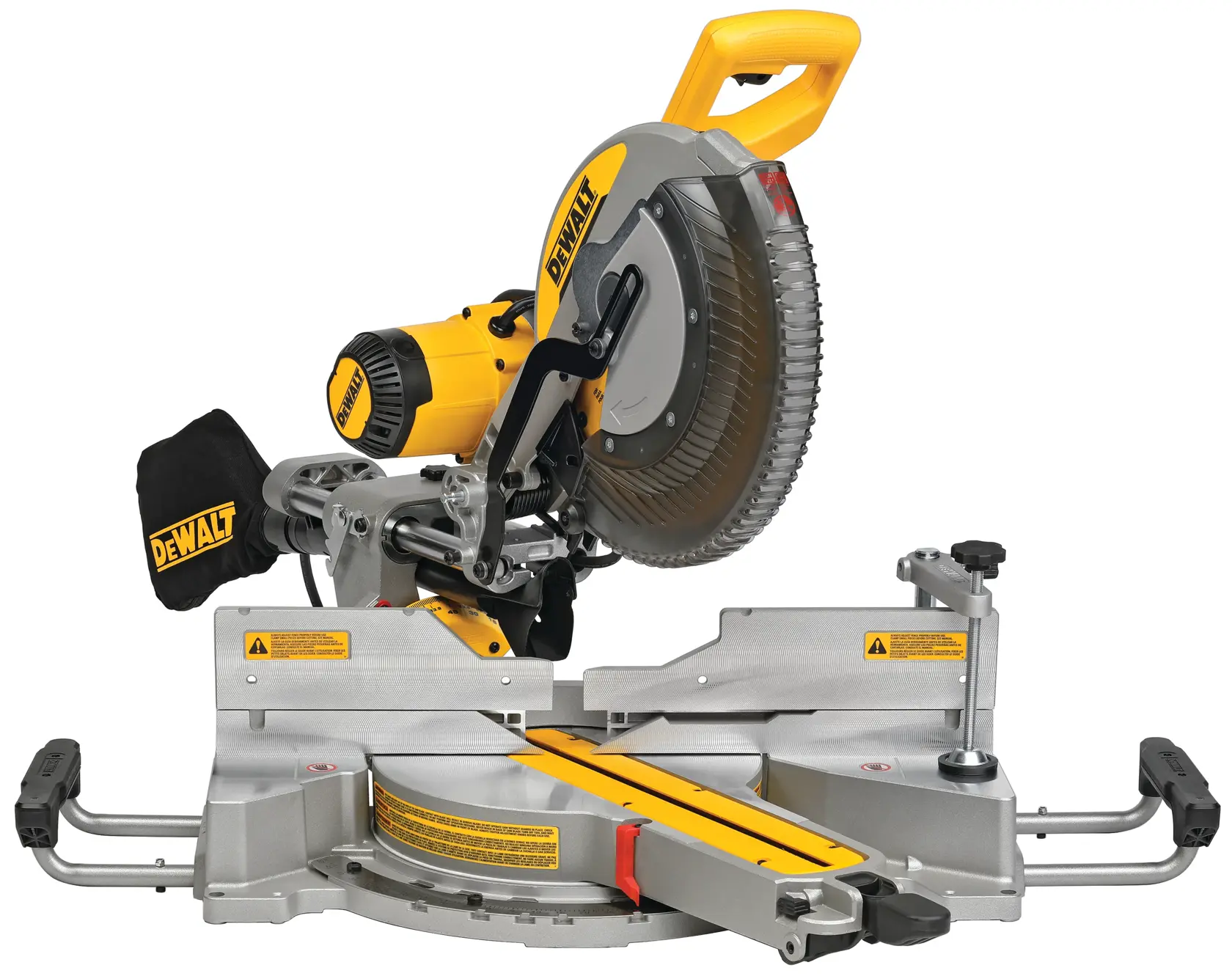
DWS780 12-inch Double-Bevel Sliding Miter Saw
Best for: A supported trim station with recurring wider stock and dual-bevel requirements.
DWS780 adds a sliding dual-bevel format and the documented XPS cutline system. DeWalt lists 2x14 dimensional-lumber capacity at 90 degrees and 2x10 at 45 degrees. That capacity is a specific buying reason; it is not an automatic upgrade for every apprentice.
Choose when the repeated cuts justify a larger station. Compare DWS715 for suitable fixed-saw work, Bosch for the glide arrangement and Makita for forward rails. Budget for compatible support and extraction, and distinguish DWS780 from similar DeWalt model names.
Sliding crosscut capacity
Dual-bevel arrangement
XPS cutline system
Power
15-amp corded
Blade
12 inches
90° capacity
2x14 dimensional lumber; manufacturer figure
Main tradeoff: Larger station and transport commitment
Product image: Bosch. Check the listing for included accessories.For constrained rear station space
For constrained rear station space
Bosch
GCM12SD 12-inch Dual-Bevel Glide Miter Saw
Best for: A planned station where the Axial-Glide arrangement addresses rear-clearance constraints.
GCM12SD uses Bosch’s articulated Axial-Glide arrangement instead of conventional rearward sliding rails. The manufacturer documents 12-inch dual-bevel operation and front adjustment controls. Its reason to shortlist is the station arrangement as much as the cutting capacity.
Measure the whole work envelope, including long stock and operator space. Compare it with Makita LS1019L’s forward-rail system and the DeWalt slider against the same actual boards. Space-saving mechanism claims do not mean the complete station is small or light.
Product image: Acme Tools. Check the listing for included accessories.For forward-rail station layouts
For forward-rail station layouts
Makita
LS1019L 10-inch Dual-Bevel Sliding Miter Saw
Best for: Trim stations where forward rails and documented molding capacities suit the layout.
LS1019L is a 10-inch dual-bevel slider with forward rails, front bevel adjustment and a laser. Makita documents 12-inch crosscuts at 90 degrees, 5-1/4-inch vertical baseboard and 6-5/8-inch nested crown capacity. It illustrates why blade diameter alone does not settle the comparison.
Choose the rail and capacity arrangement for an actual station need. It remains a substantial machine despite its 10-inch blade. Compare complete support and extraction packages, and confirm the molding orientation matches the capacity you are relying on.
Forward-rail arrangement
Front bevel control
Documented trim capacities
Power
15-amp corded
Blade
10 inches
90° crosscut
12 inches; manufacturer figure
Main tradeoff: Substantial station despite 10-inch blade
No. It can reduce stock reorientation for recurring cuts, but a single-bevel tool can cover suitable work. Choose for the actual task sequence.
Is a larger miter saw always better?
No. It adds capacity but can increase station, transport and setup demands. Choose the smallest suitable working arrangement.
Does the included dust bag cover dust control?
Not automatically. Material, task and work environment determine appropriate collection and protection. Check the port, adapter and extractor arrangement.