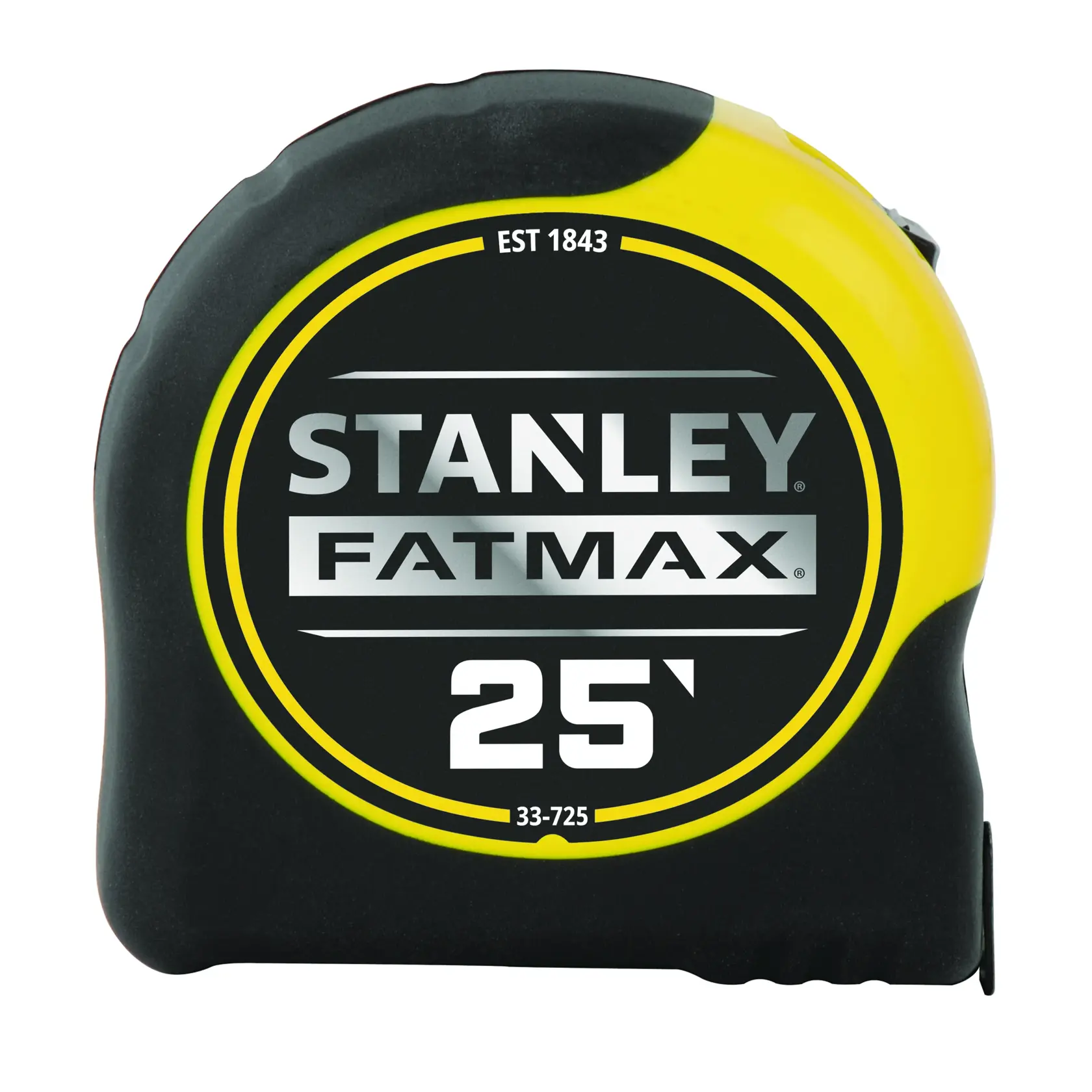
The 33-725 is a 25-foot FATMAX tape with a wide blade and reinforced coating near the hook. For an apprentice, this belongs ahead of another powered cutting tool: most fitting and stock work starts with a repeatable measurement. Stanley's advertised reach is a conditional manufacturer claim, not our test of unsupported blade extension. Confirm the graduations suit the plans and the way the crew records dimensions.
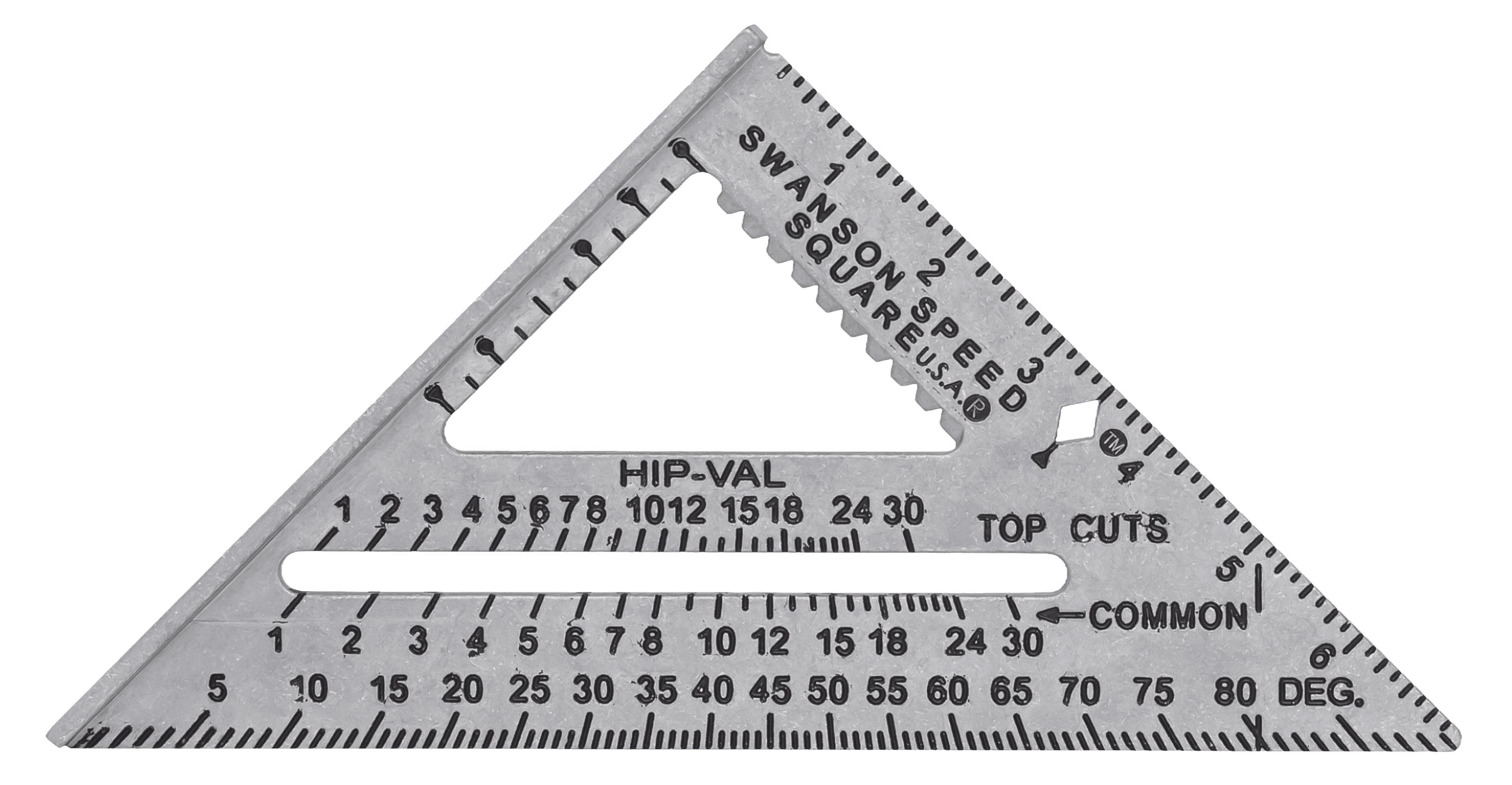
Swanson S0101 is the seven-inch Speed Square format for framing marks, angle references and supported short crosscut layout. It is a different tool from a long framing square or an adjustable combination square. The manufacturer identifies several packaging variants; this entry uses S0101 with the reference book. Check that identifier rather than treating every similarly shaped square in a retailer search as the same product.
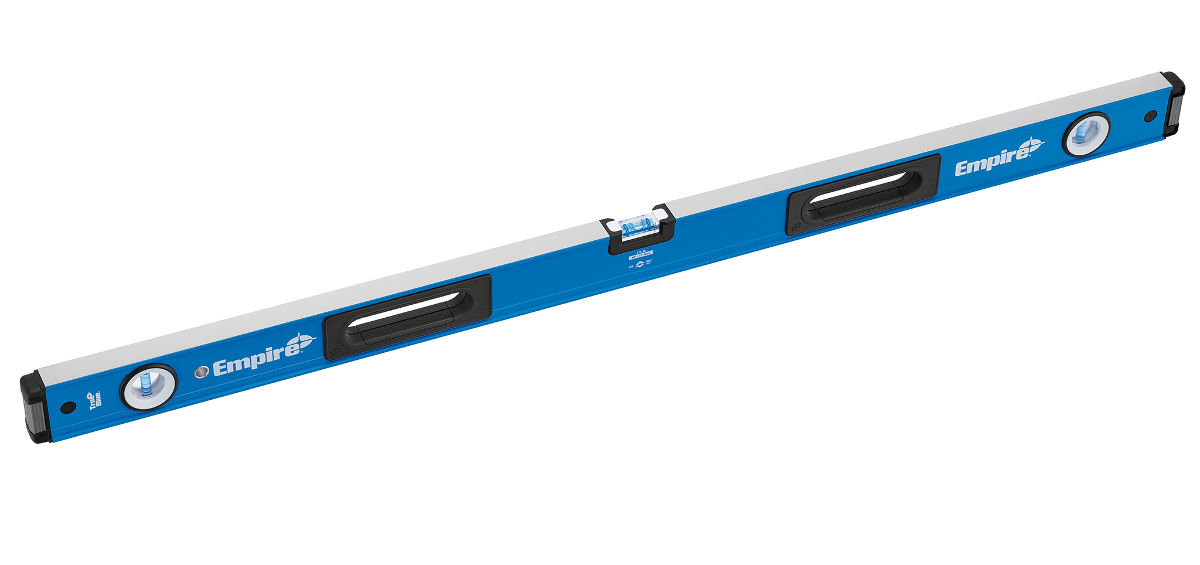
Empire e75.48 is the non-magnetic 48-inch TRUE BLUE box level, useful for checking longer fitting references. It should not be confused with em75.48, the magnetic version. The maker documents milled working edges, removable end caps and highlighted vials. Those features help identify the configuration; its published accuracy is manufacturer evidence rather than a reading we independently measured on a delivered unit.
Johnson CS5 is a 16 by 24-inch aluminum framing square, not a combination square. Its longer legs and stamped tables support framing layout and checking larger right-angle references. Johnson lists several graduation divisions alongside rafter, brace and board-foot tables. A carpenter should read the relevant scale carefully rather than assuming every mark represents a familiar fraction of an inch or that the tables replace understanding the layout.
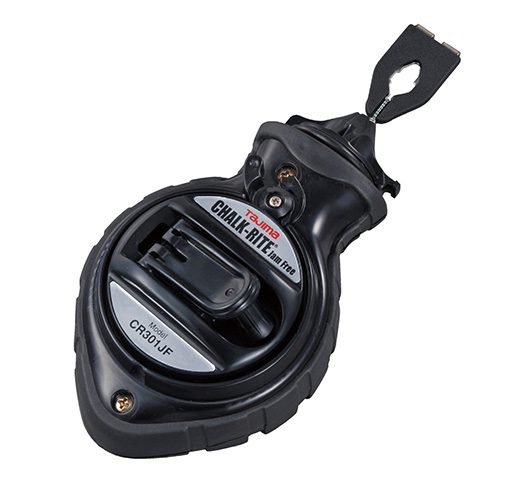
Tajima CR301JF uses a braided extra-bold line and a five-gear winding arrangement. Its carpenter role is construction layout where a visible snapped reference is useful, such as marking a longer run of stock or framing positions. The one-millimeter line designation distinguishes it from finer finish-layout options. Chalk is a separate material decision: a bold line is not automatically appropriate on an exposed finished surface.
Estwing E3-20S is the 20-ounce rip-claw model on the manufacturer's hammer page. Its smooth face, one-piece steel construction and molded grip make it a conventional carpenter comparison for suitable nail driving and removal. Do not confuse its size with E3-16S or assume a milled framing face is supplied. The correct head weight depends on the repeated work and the user's handling preference.
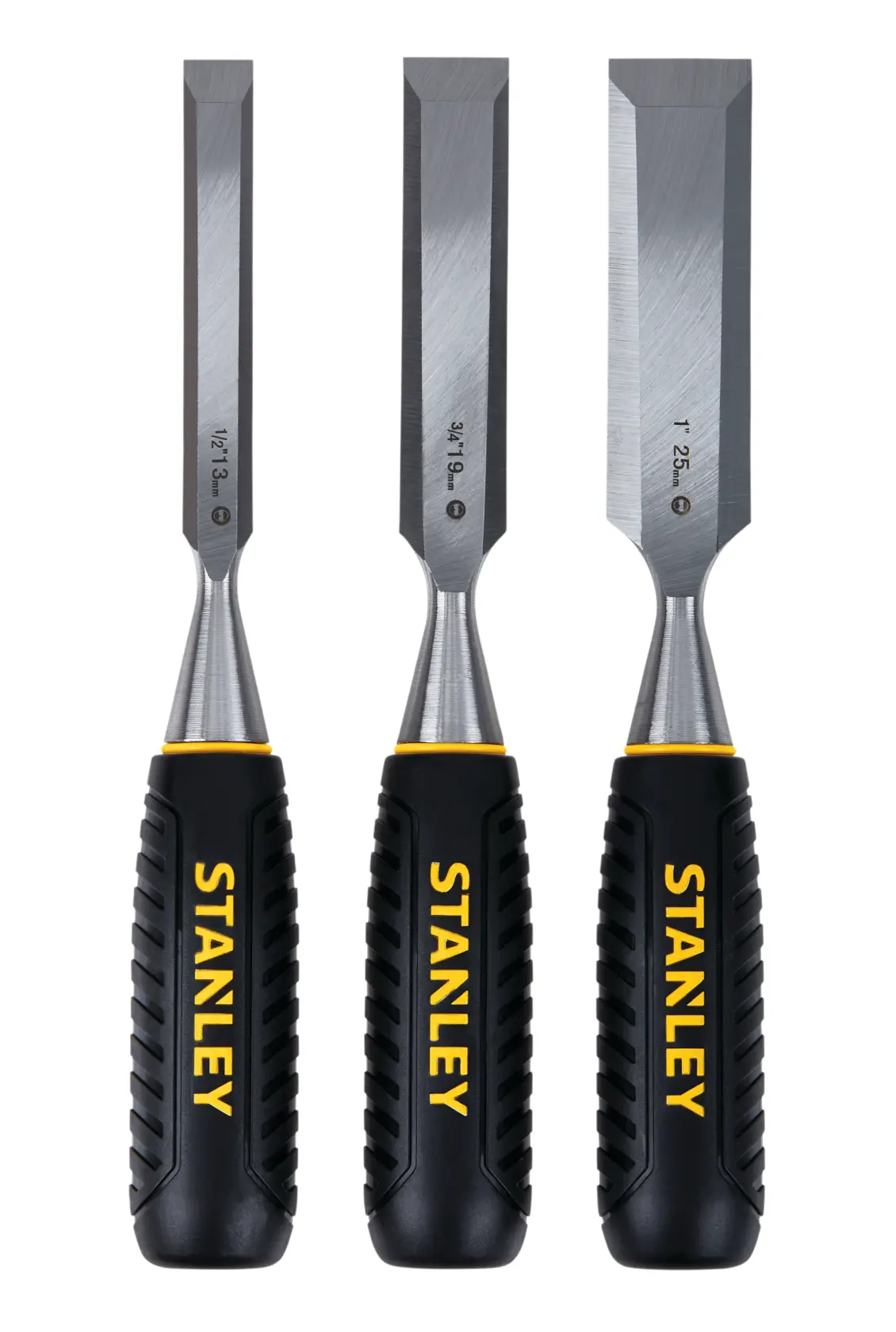
Stanley STHT16727 is a three-piece wood-chisel set in 13, 19 and 25-millimeter widths. These sizes provide a basic starting point for suitable hinge fitting and small controlled trimming tasks. They are not the eight-piece SweetHeart set, nor a carving selection. The manufacturer documents short carbon-steel blades and polypropylene handles. Keep the exact number on the purchase list so a search result does not silently substitute another Stanley set.
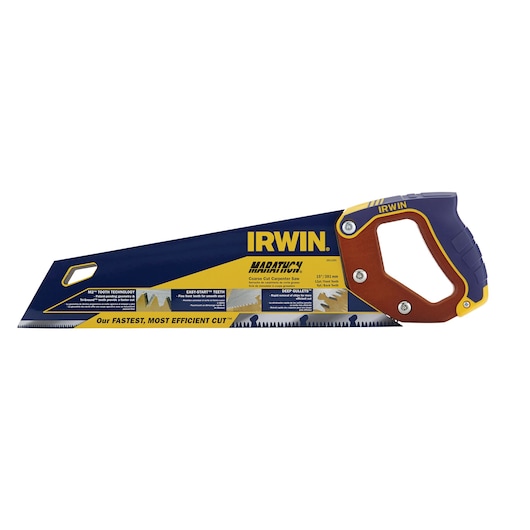
Irwin 2011201 is a 15-inch Marathon ProTouch coarse-cut handsaw. It can cover suitable occasional stock cuts without a battery, charger or powered station. Its manufacturer description identifies chip-clearing gullets and a dedicated starting-tooth section. Those features should not be read as a promise of a fine exposed joint: a coarse stock saw and a joinery saw solve different requirements even when both appear on a carpenter's list.
Stanley STHT10721 is the retractable-blade utility knife listed on the current manufacturer page. A carpenter can shortlist it for suitable scoring and material-preparation work rather than using a worn blade or an improvised sharp edge. Stanley documents textured grip areas, push-button blade changing and magnetic backup storage. The page states that extra blades are separate, so a storage capacity is not the number of spare blades guaranteed in the box.
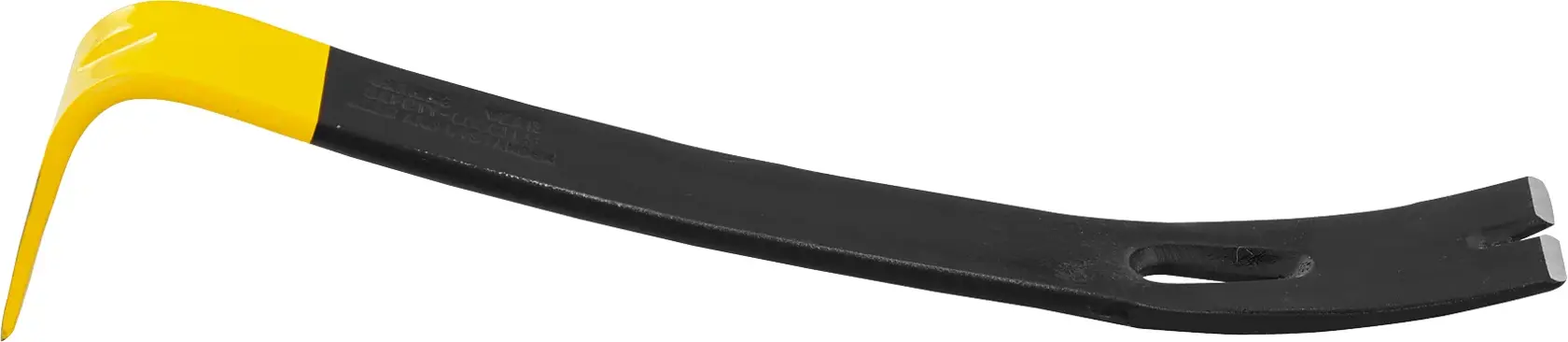
Stanley 55-515 is the compact Wonder Bar pry-bar comparison, with forged steel construction and beveled nail slots. Its carpenter role is controlled removal of suitable boards, trim or accessible nails during renovation. The compact size can reach some gaps without committing to a long demolition bar. That access advantage does not guarantee the retained surface will survive: removal method, fasteners and the surrounding construction still govern the result.
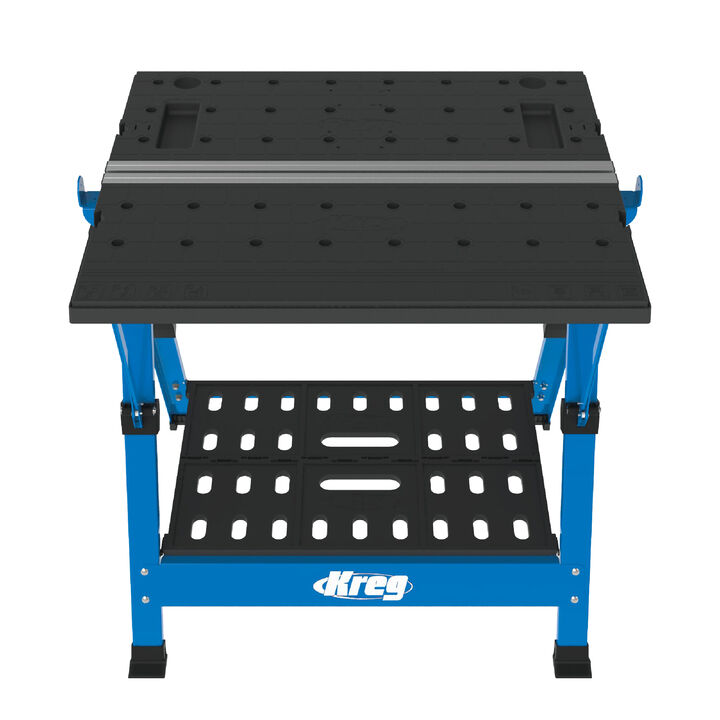
Kreg KWS1000 provides a folding work surface for fitting, assembly and supported preparation. The documented surface is 27-1/2 by 31-1/4 inches, with a 350-pound rated capacity under the manufacturer's conditions. The current package lists bench dogs, support brackets and connection keys. A clamp appearing in older photos or bundles should not be assumed included: identify the actual contents before treating the table as a complete clamping station.
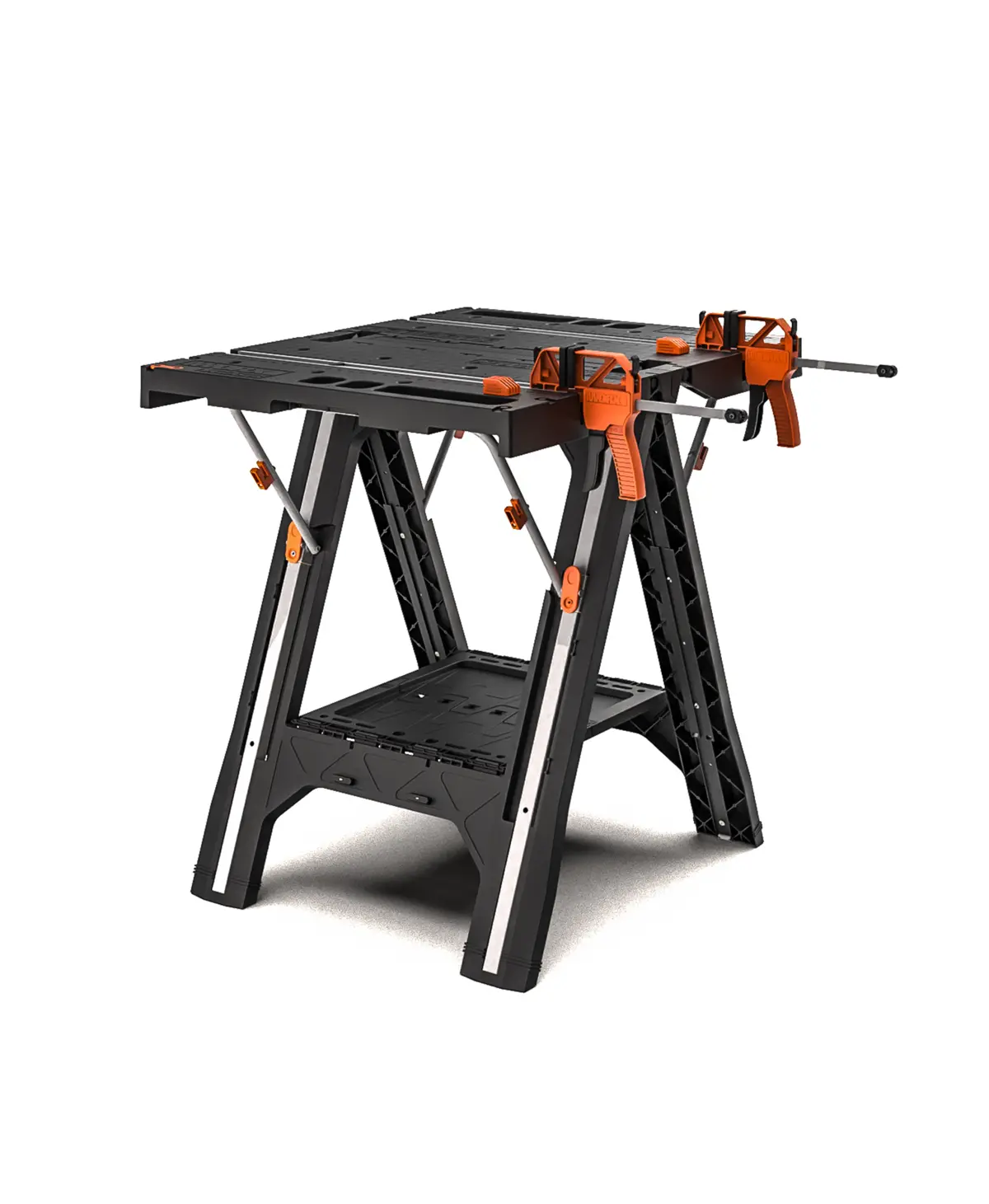
WORX WX051 Pegasus is a folding table with two clamps and four clamp dogs listed in the US package. Its table-mode load rating is 300 pounds; the higher sawhorse rating refers to a different configuration. Do not use the larger number as a universal tabletop allowance. The 31 by 25-inch surface makes it a portable fitting and assembly option, with a 32-inch working height to compare against the task.
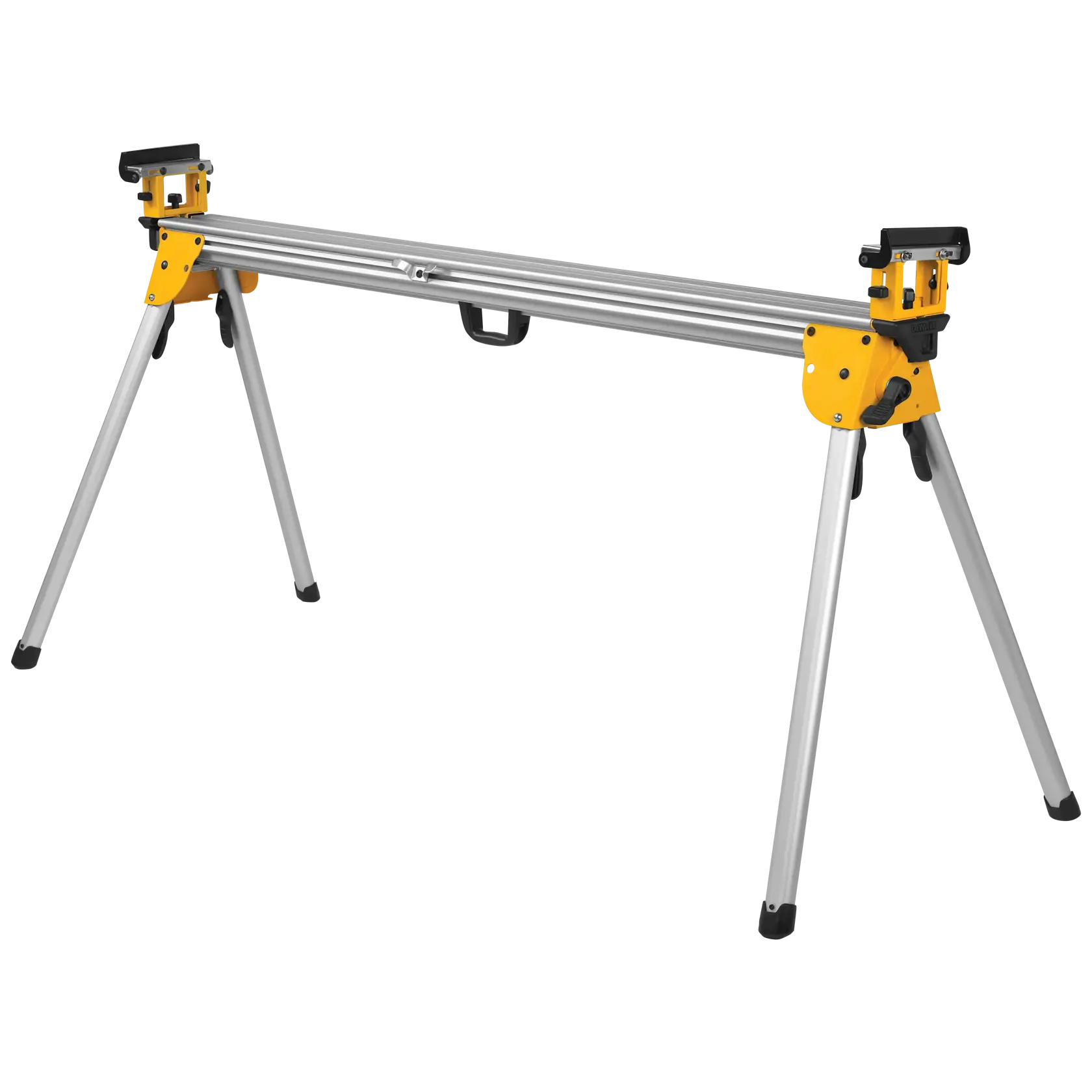
DeWalt DWX723 is a folding aluminum miter-saw stand with mounting brackets and repositionable stock supports. The manufacturer lists a 29-pound stand and a beam that extends to support suitable long material. That is a dedicated cutting-station role rather than a general assembly-table purchase. The miter saw is separate, and the stand's compatibility statement still requires the correct mounting arrangement for the particular machine.
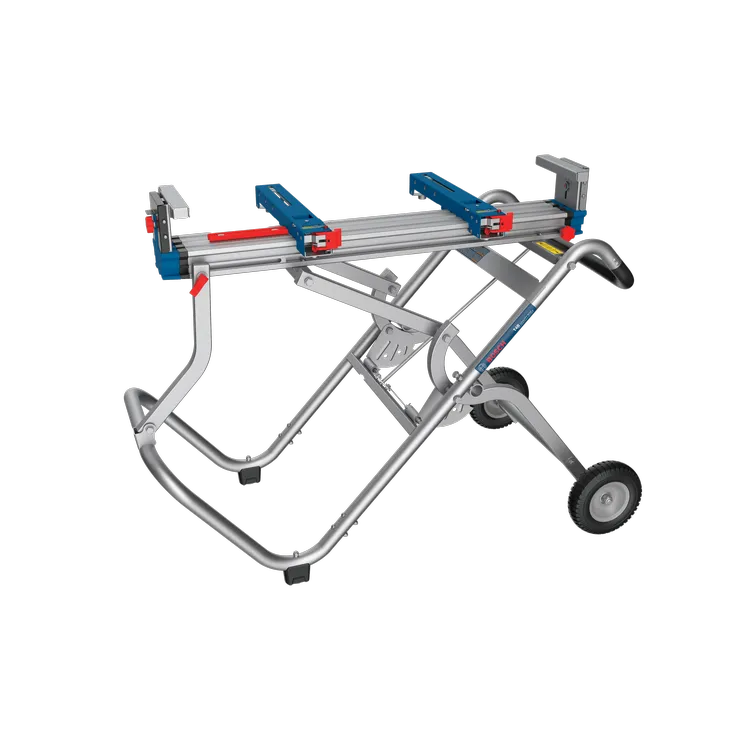
Bosch T4B is the Gravity-Rise wheeled miter-saw stand, intended to make a mounted cutting station easier to relocate. Its rapid-release mounts and outfeed supports address a different need from a folding assembly table. Check compatibility with the actual saw and the full loaded transport arrangement. The manufacturer page and recent owner comments raise a specific purchase question about foot-design changes, so adjustable leveling feet should not be assumed from an older photograph.
Bora PM-4500 is the original Speedhorse sawhorse, not the height-adjustable Speedhorse XT. The manufacturer lists a 45-inch top and an 1,800-pound per-unit rating under its loading conditions. This is a support component rather than a complete table. A carpenter planning a temporary station must include the second support where required, suitable connecting stock and a work surface instead of comparing one sawhorse with a complete folding bench.
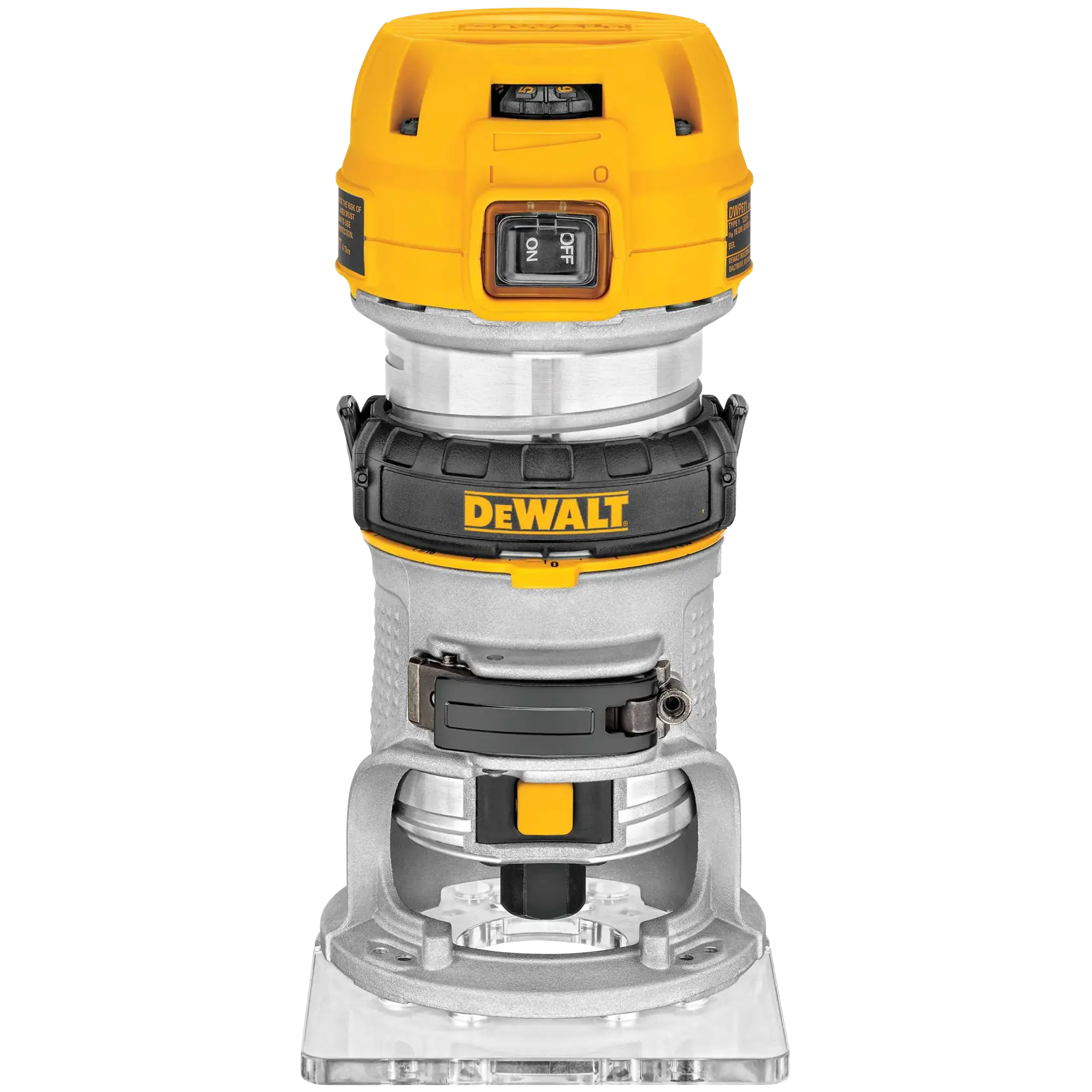
DeWalt DWP611 is the corded compact-router option for suitable quarter-inch-bit work. Its documented features include variable speed, a depth-adjustment ring, LEDs and a clear sub-base. The maximum horsepower label is a manufacturer rating, not a cross-brand cutting test. This listing is the fixed-base router, so a plunge base seen in a similar DWP611PK kit should not be assumed part of the same purchase.
Makita RT0701C is the corded compact-router model with a quarter-inch collet and variable speed from 10,000 to 30,000 RPM. Makita documents rack-and-pinion fine depth adjustment and a straight guide in the package. The model should be distinguished from RT0701CX7 and other base kits: a photograph of an extra attachment is not evidence that this basic configuration includes it. Check the actual supported bit and work requirement first.
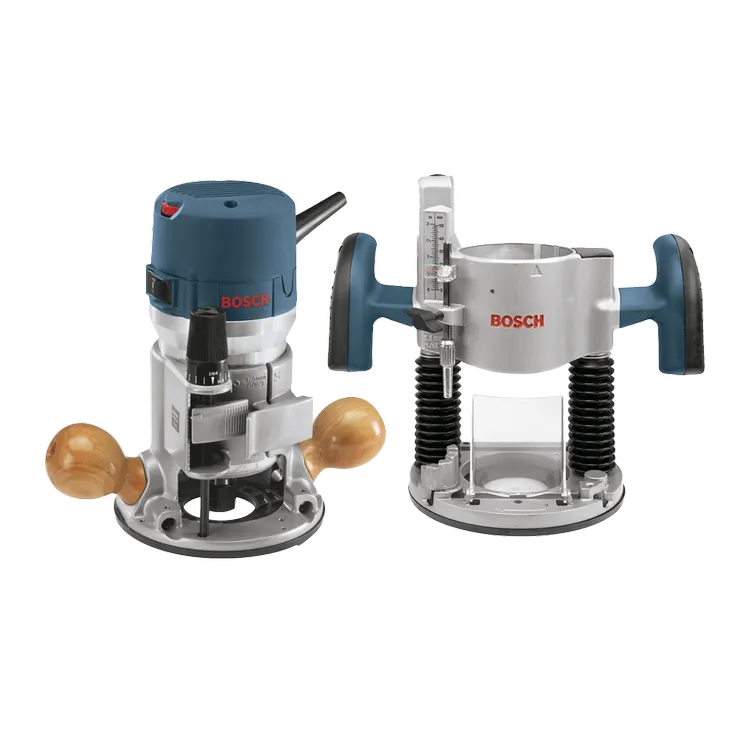
Bosch 1617EVSPK is a corded router combo with fixed and plunge bases, a 12-amp motor and an 8,000 to 25,000 RPM speed range. The two-base package gives it a different buying role from the compact fixed-base routers. It can be shortlisted when the work genuinely calls for both formats. Manufacturer horsepower claims do not establish a tested ranking, and a table-compatible mounting pattern is not confirmation that every router table fits.
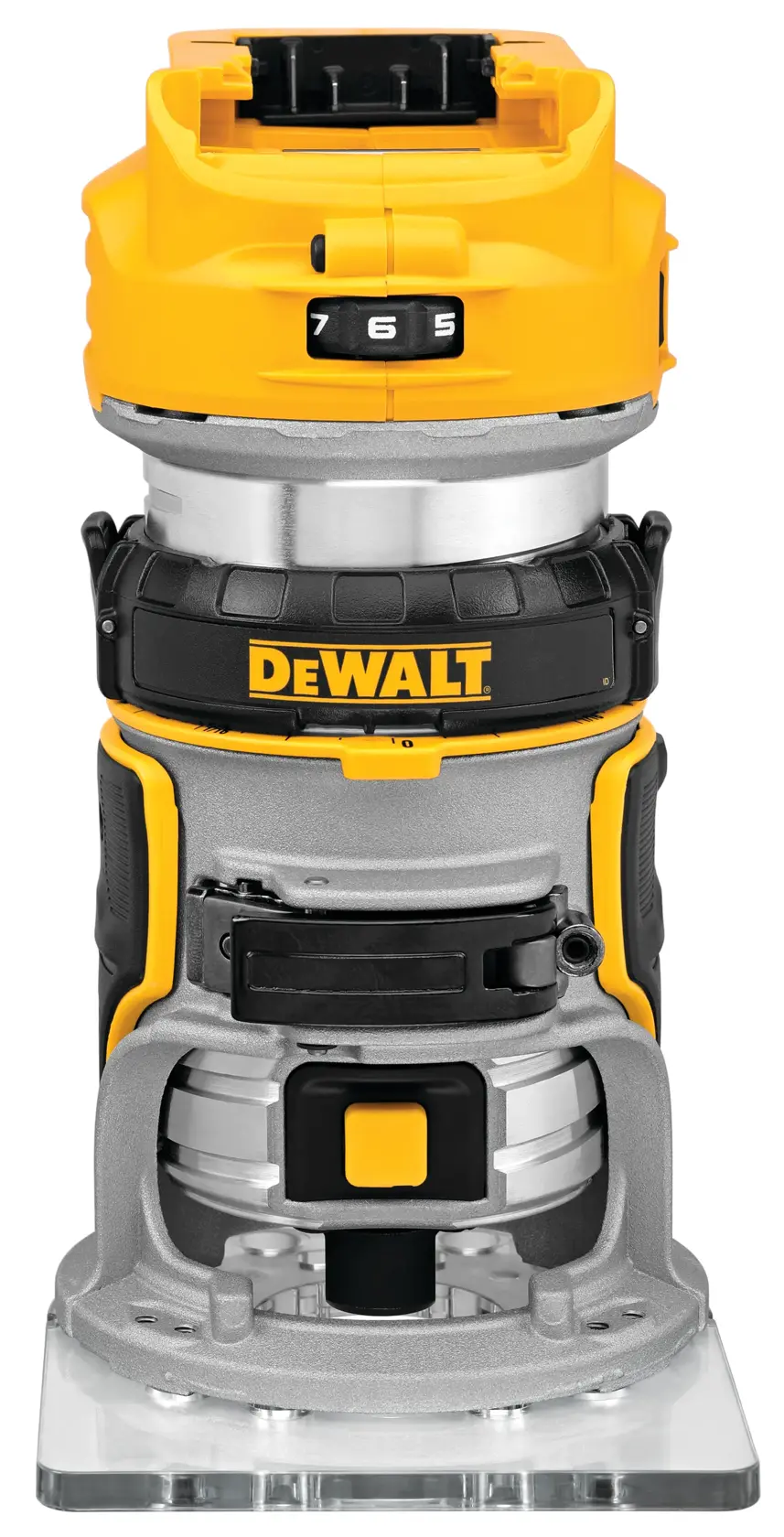
DeWalt DCW600B brings the compact-router role to existing 20V MAX battery users. Its documented variable-speed dial, depth ring, LEDs and electronic brake are useful configuration details for suitable edge work. They are not our measurements of finish quality or stopping time. The B model is the bare-tool purchase. A buyer starting from zero needs to include compatible power equipment rather than comparing this body price with a ready-to-use corded router.
Makita XTR01Z is the LXT compact-router alternative with a documented 10,000 to 30,000 RPM speed range and rack-and-pinion depth adjustment. It addresses supported mobile routing for a buyer who already has suitable LXT power equipment. LXT is distinct from Makita's XGT battery family. The Z listing excludes batteries and charging, and the supported base arrangement should be checked before assuming every routing attachment is included.
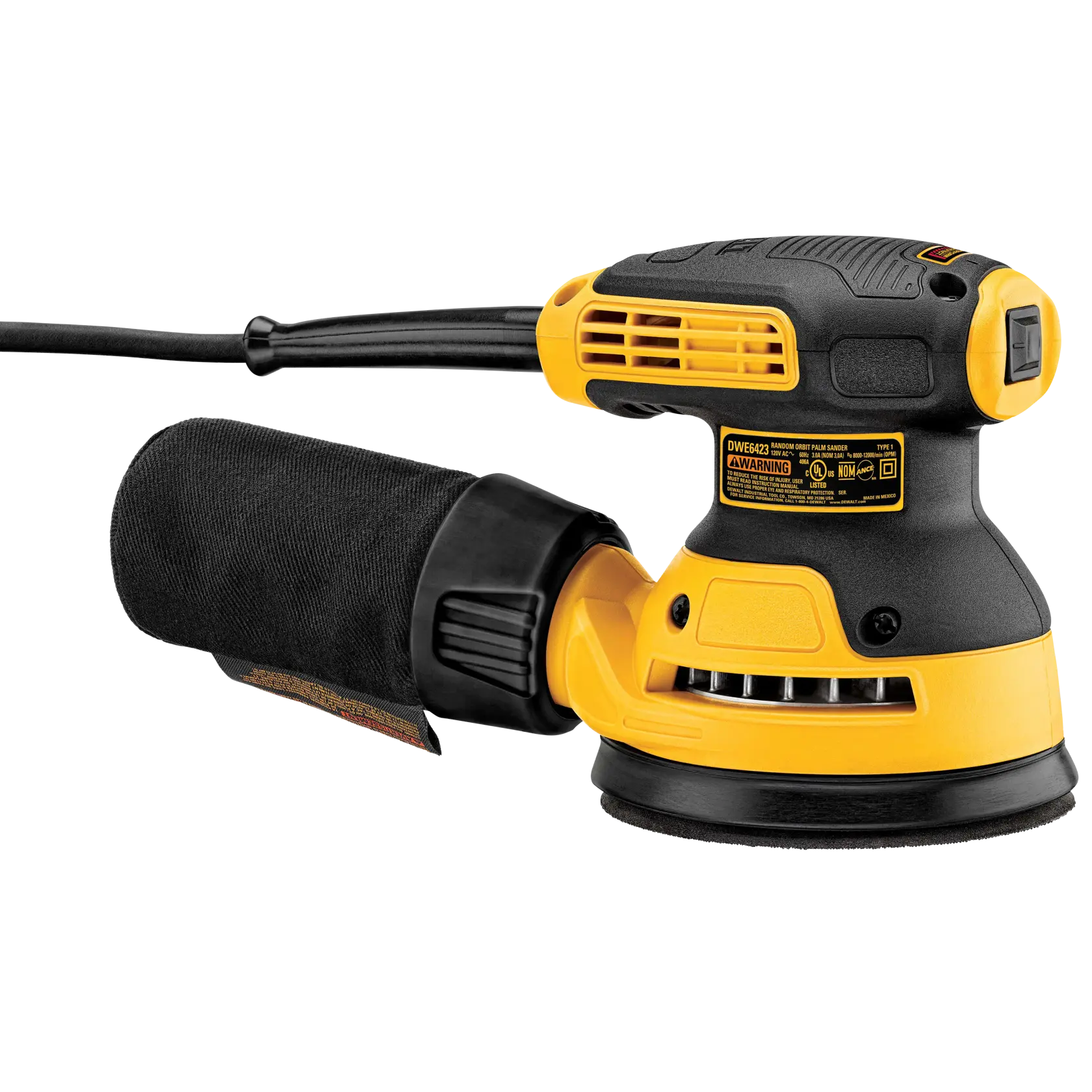
DeWalt DWE6423 is the corded five-inch variable-speed random-orbit sander, with a three-amp motor and an 8,000 to 12,000 OPM range. It belongs in a supported finishing setup for flat work and appropriate contoured surfaces. A random-orbit machine is not a detail sander for every internal corner. The manufacturer identifies specific extraction connections; confirm the adapter and current package instead of treating a supplied dust bag as complete collection for all work.
Makita BO5041K is the five-inch corded random-orbit sander with an adjustable front handle and a 4,000 to 12,000 OPM speed range. The K configuration includes a case; BO5041 is the related option without it. The front handle is a particular buying reason for a carpenter who wants that control arrangement on supported work, rather than a general guarantee of better finishing. Check the usable access around the actual workpiece.
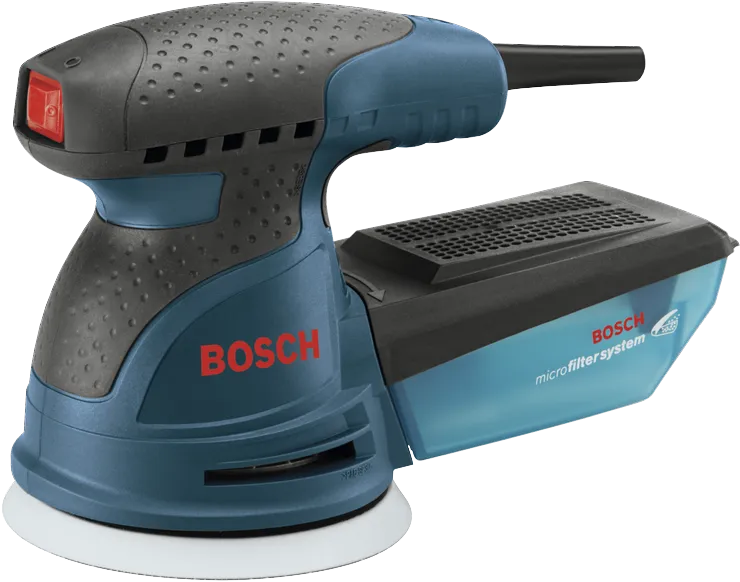
Bosch ROS20VSC is the corded five-inch palm random-orbit sander/polisher with a 7,500 to 12,000 OPM range and an onboard microfilter canister. Bosch describes a pad-dampening arrangement intended to reduce marking. That is manufacturer design information rather than our verification that a user cannot leave swirl marks. Surface condition, abrasives and the working method remain central to whether the result suits a visible cabinet or trim component.
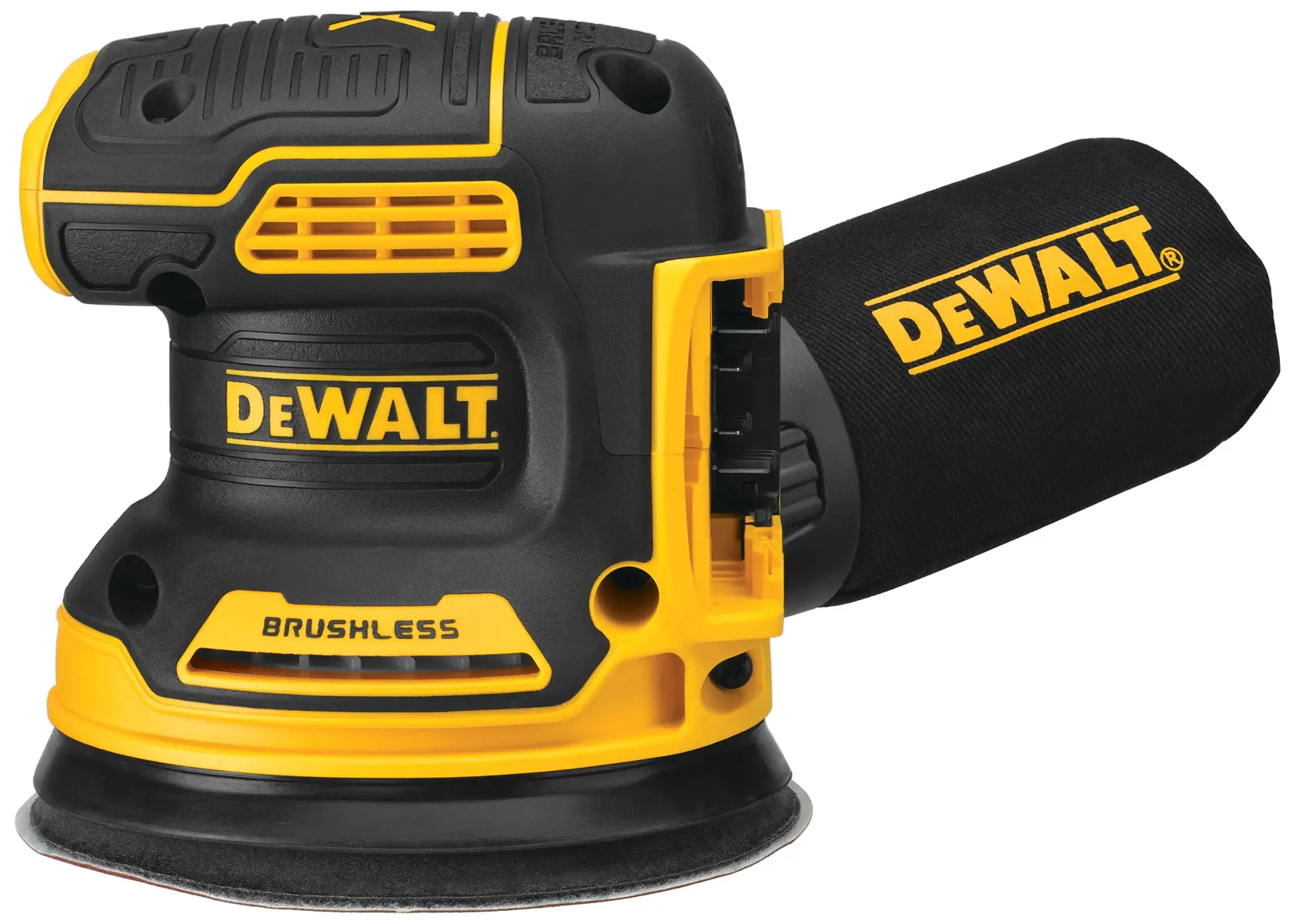
DeWalt DCW210B is a cordless five-inch random-orbit sander with an eight-hole hook-and-loop pad and an 8,000 to 12,000 OPM speed range. Its clearest carpenter use is moving between suitable fitting and finishing tasks with compatible DeWalt batteries already available. Removing the power lead does not remove the need for a collection arrangement, nor make a round pad reach every internal corner. The B configuration is tool-only.
Makita XOB01Z is the five-inch LXT random-orbit sander with three selectable speeds: 7,000, 9,500 and 11,000 OPM. That stepped control differs from the continuous dials on some corded choices. A carpenter already using suitable LXT batteries can shortlist it for supported mobile finishing. The Z version excludes charging and batteries; published runtime depends on the stated pack and conditions, rather than applying to every battery a buyer owns.
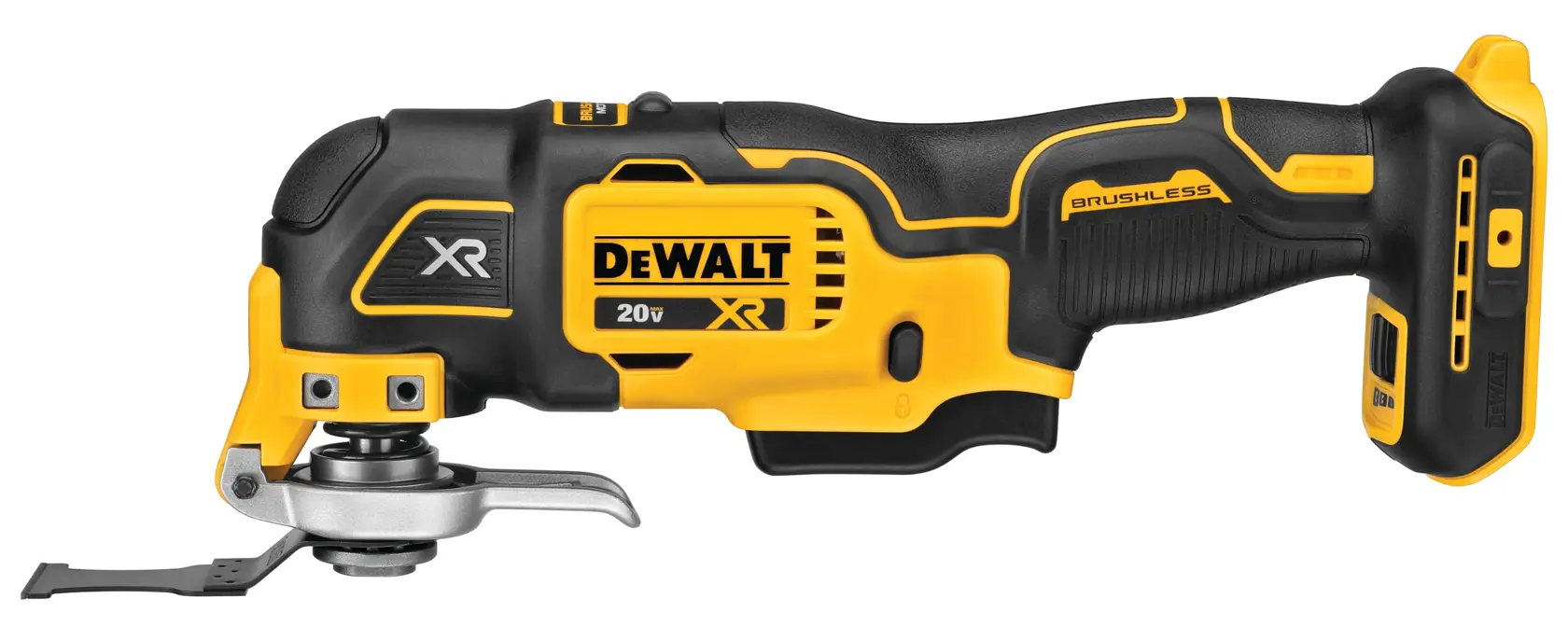
DeWalt DCS356B is a three-speed XR oscillating multi-tool with a variable trigger and quick-change accessory system. Its carpenter role is suitable local trimming, fitting adjustments and scraping where a full-size saw has poor access. It should not be selected as the fastest way to make repeated long stock cuts. The B configuration excludes batteries and charging, and a broad accessory-adapter claim is not confirmation that every available attachment is permitted.
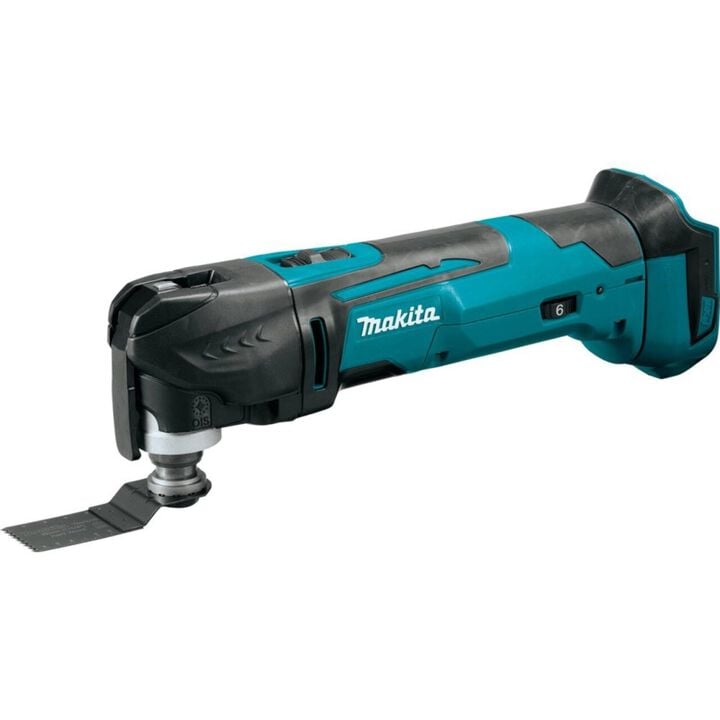
Makita XMT03Z is the LXT oscillating multi-tool with a 6,000 to 20,000 OPM dial and tool-less clamping arrangement. The manufacturer lists a plunge-cut blade and adapters in this package; batteries and charging remain separate. It is a practical comparison for local fitting or renovation adjustments on an existing LXT system. A small oscillating blade has a different role from a jigsaw or circular saw, even when each can cut timber.
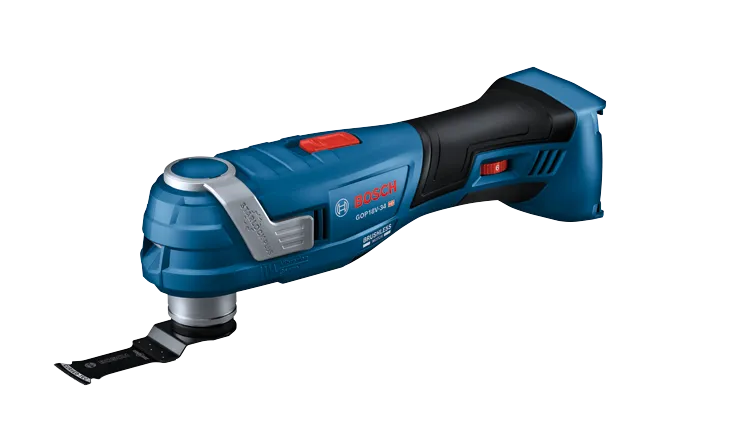
Bosch GOP18V-34N is the current brushless StarlockPlus oscillating comparison, with a documented 3.4-degree angle and up to 20,000 OPM. Its dedicated mounting interface matters: a buyer with a drawer of older generic blades should check compatibility before assuming those consumables remain usable. The source rating is only 3.2 from six reviews and includes switch-fault complaints. This is a conditional platform comparison, not a top-ranked reliability recommendation.
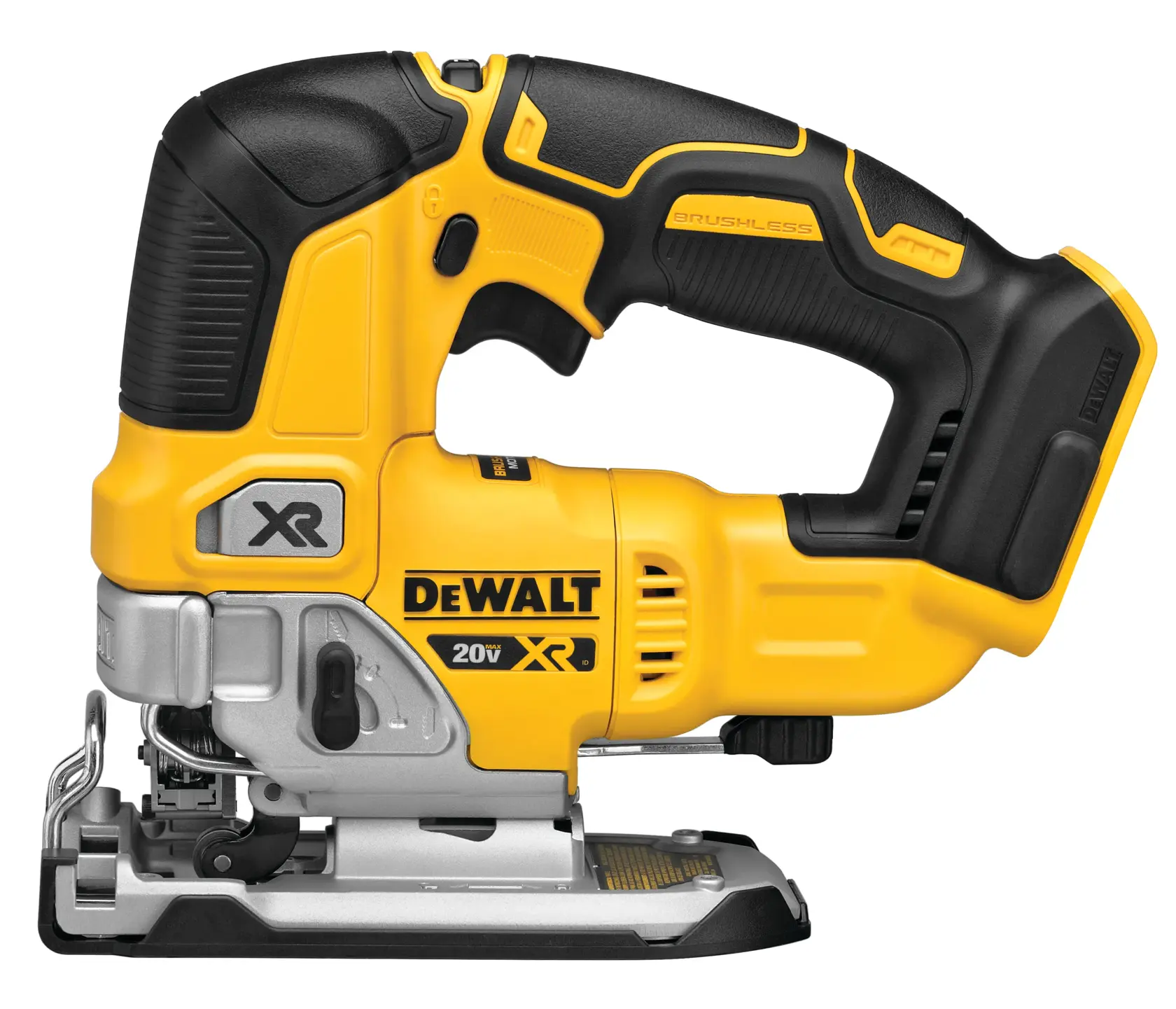
DeWalt DCS334B is the top-handle XR jigsaw, not the barrel-grip DCS335 variant. It uses T-shank blades and four orbital settings, with a variable trigger, speed dial and no-mar shoe cover documented by DeWalt. Its carpenter role is supported curves and appropriate cutouts where a circular saw cannot follow the shape. A shoe cover reduces one source of marking but cannot guarantee that grit or poor support will leave no trace.
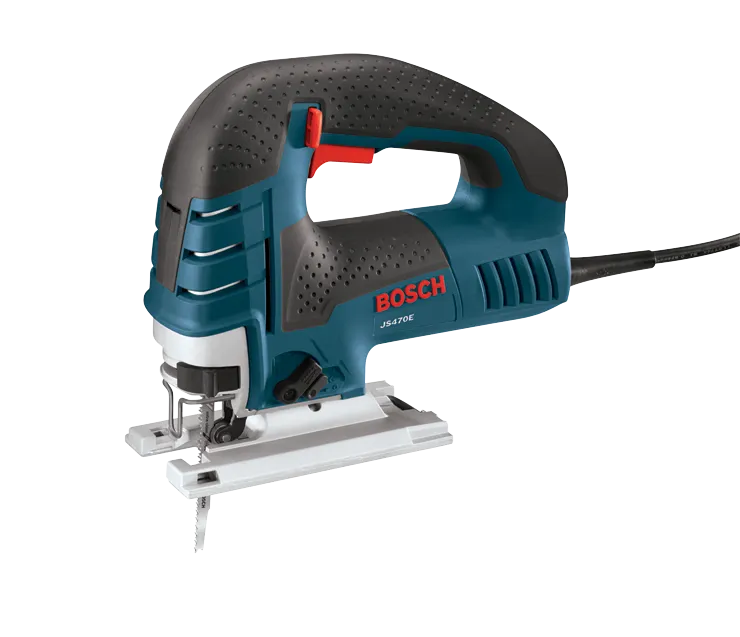
Bosch JS470E is a seven-amp corded top-handle jigsaw with a maximum-speed dial and accelerator trigger. The maker specifies T-shank blades and explicitly excludes U-shank compatibility. It also documents a blade-ejection lever and die-cast footplate. These details make it worth comparing for supported curves and cutouts near power. They do not establish that the same blade and orbital setting produce an acceptable face on every material or thickness.
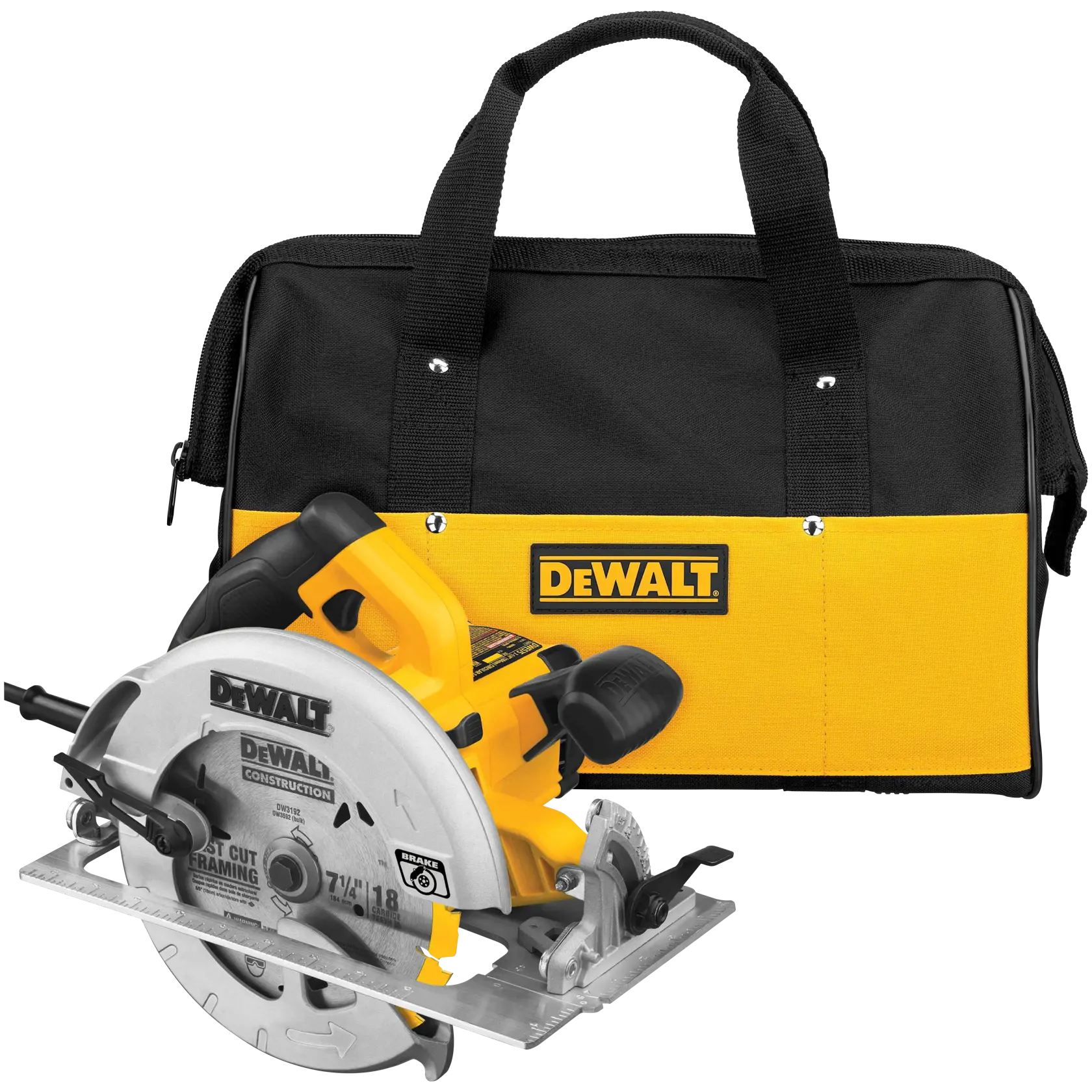
DWE575SB makes a practical starting point when the cutting work stays near suitable power. The manufacturer documents a 15-amp motor, electric brake and 2-9/16-inch depth of cut. It removes the need to fund a saw battery and charger, but still needs a suitable supply, support and blade.
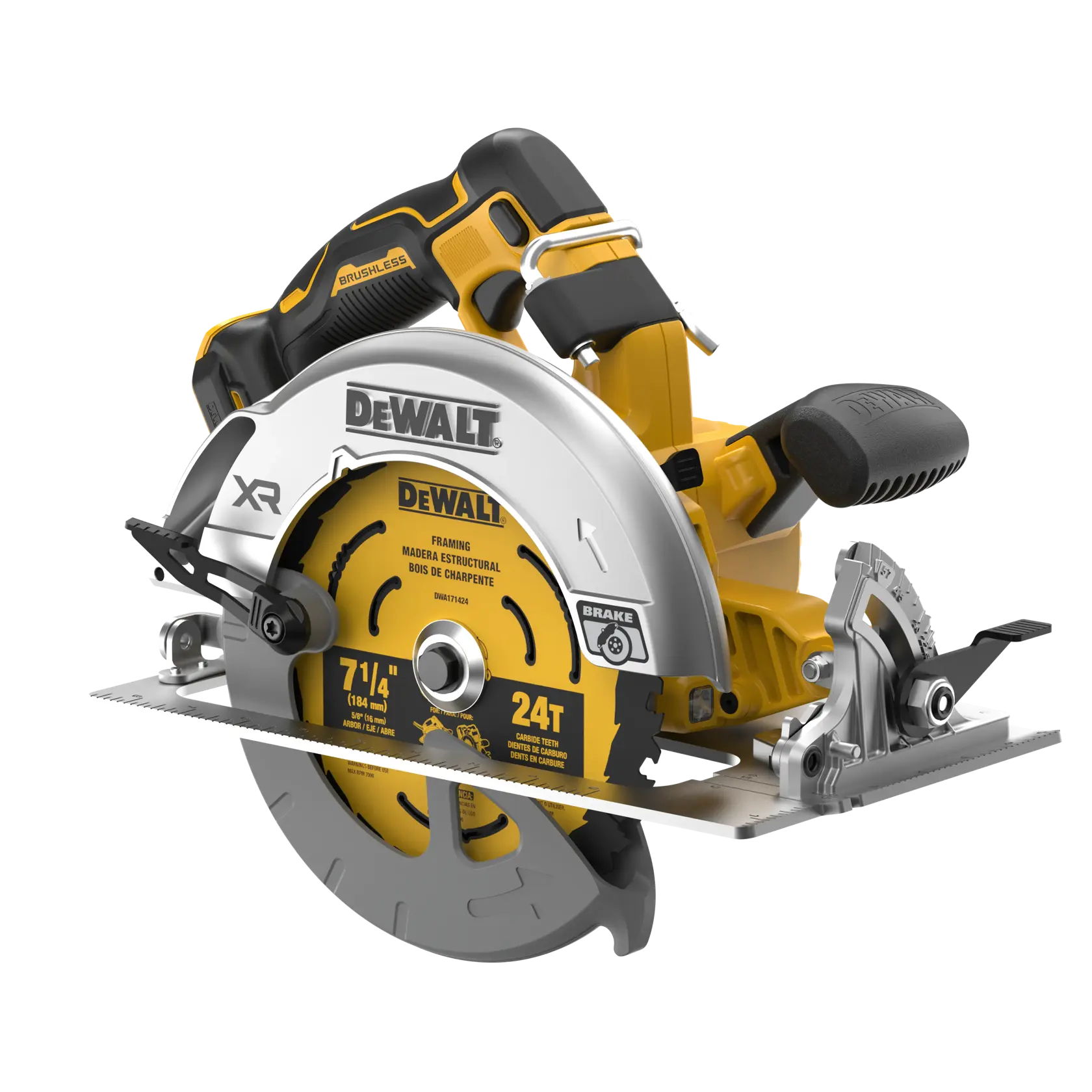
DCS590B is a brushless cordless 7-1/4-inch saw with a blade-right layout, electronic brake and documented 2-9/16-inch depth at 90 degrees. The B configuration is tool-only. Its purchase case is mobile work on a compatible power system, rather than a promise that cordless is always better value.
Milwaukee 2834-20 is the current M18 7-1/4-inch comparison here, with an electric brake, integrated dust port and supplied vacuum adapter. The manufacturer lists a 2-5/8-inch cut capacity. It is sold without a battery in the -20 configuration.
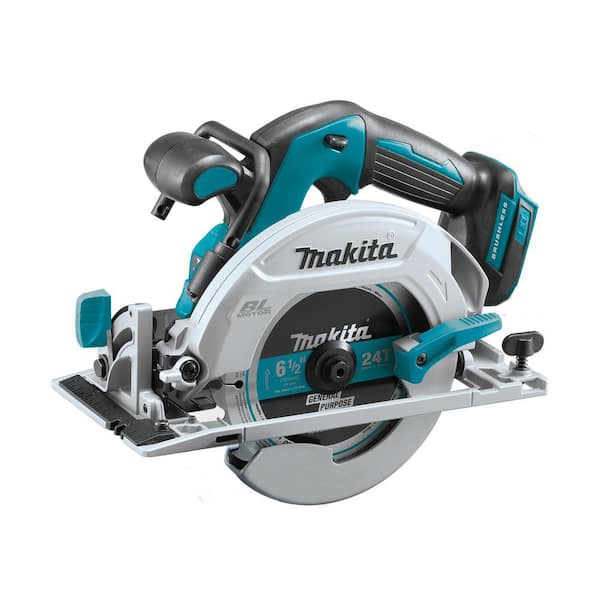
XSH03Z uses one compatible 18V LXT battery and a 6-1/2-inch blade-left arrangement. Makita documents a 2-1/4-inch capacity at 90 degrees and an electric brake. It offers a smaller cutting format, with capacity that must be checked rather than inferred from the battery voltage.
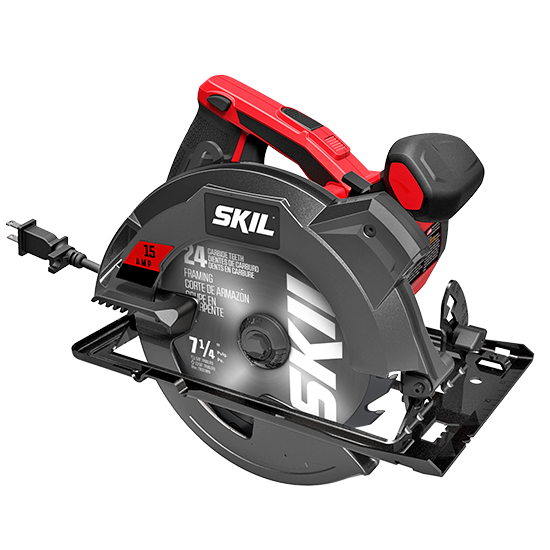
SKIL positions 5280-01 for DIY users. Its 15-amp corded format avoids a battery-system purchase and includes a 24-tooth blade, wrench and carrying bag. That makes it worth considering for suitable occasional starter work, with a clear distinction from a daily professional-use recommendation.
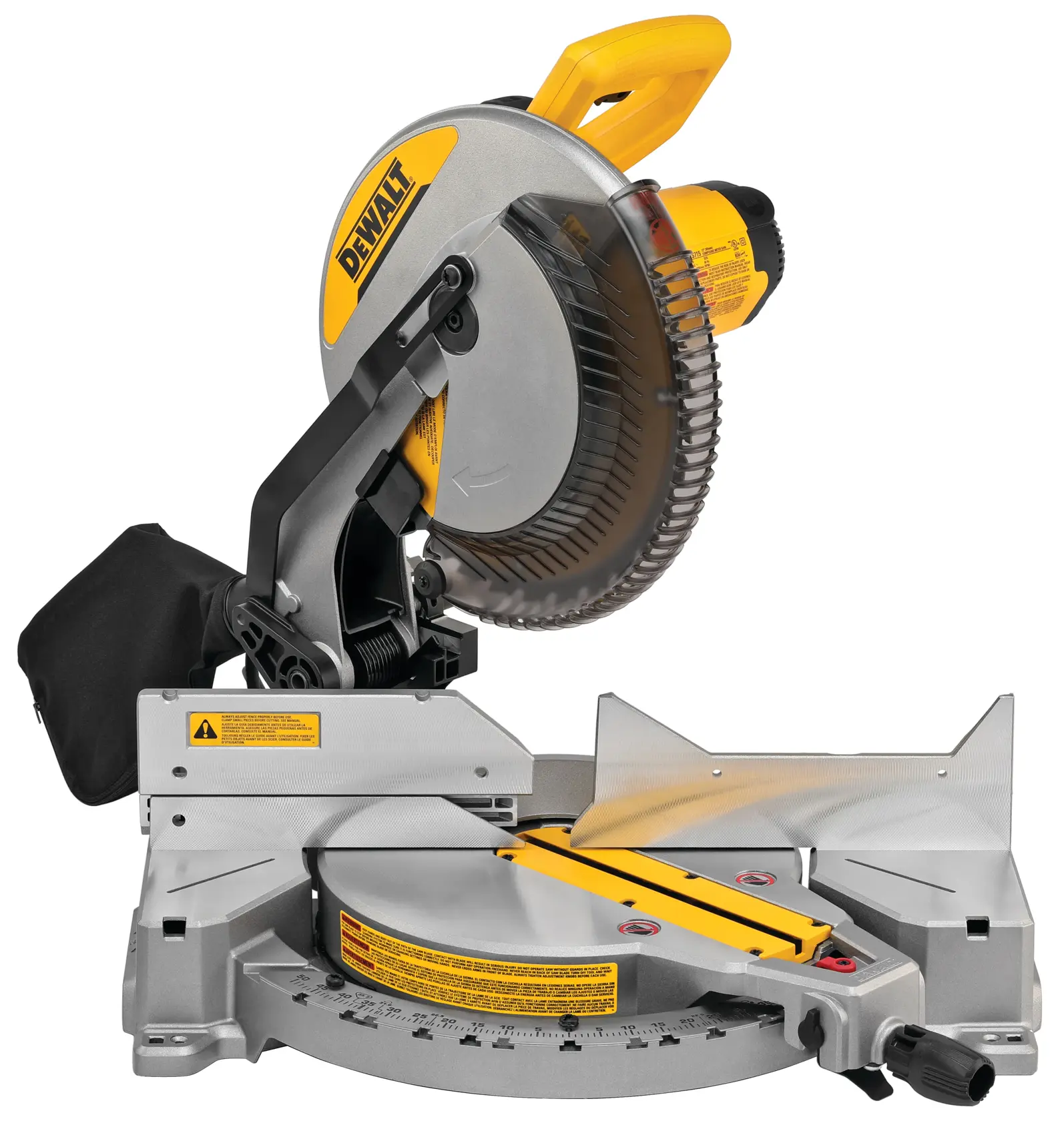
DWS715 is the fixed, single-bevel 12-inch alternative. DeWalt documents 2x8 dimensional-lumber capacity at 90 degrees and 2x6 at 45 degrees. It is a useful comparison for a carpenter who needs a working trim station rather than the largest machine on the shortlist.
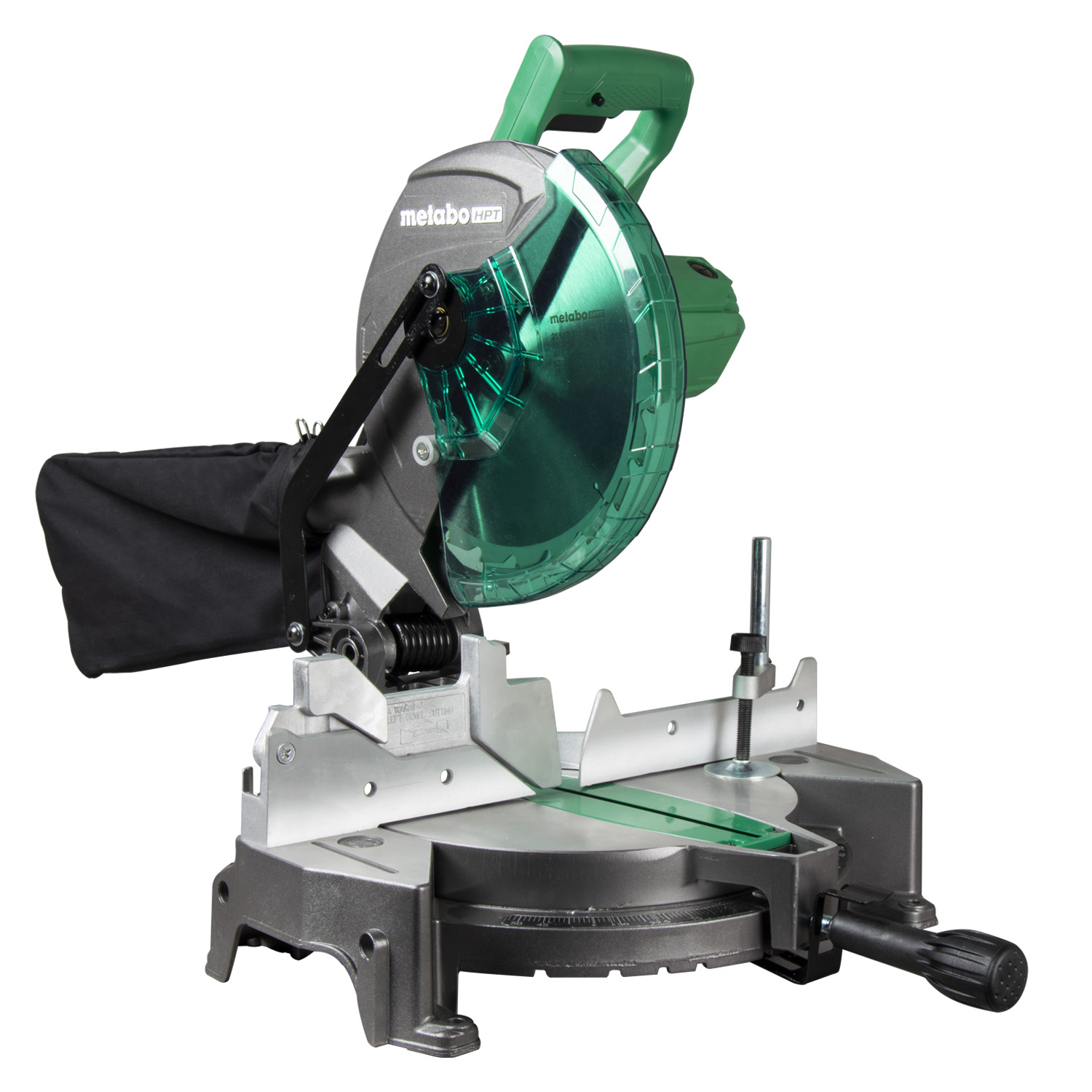
C10FCGS is a fixed 10-inch corded compound saw with left-bevel adjustment. Metabo HPT lists it at about 24 pounds, markedly different in carrying class from the large sliding machines. Check the actual package and cut capacity before choosing it for trim.
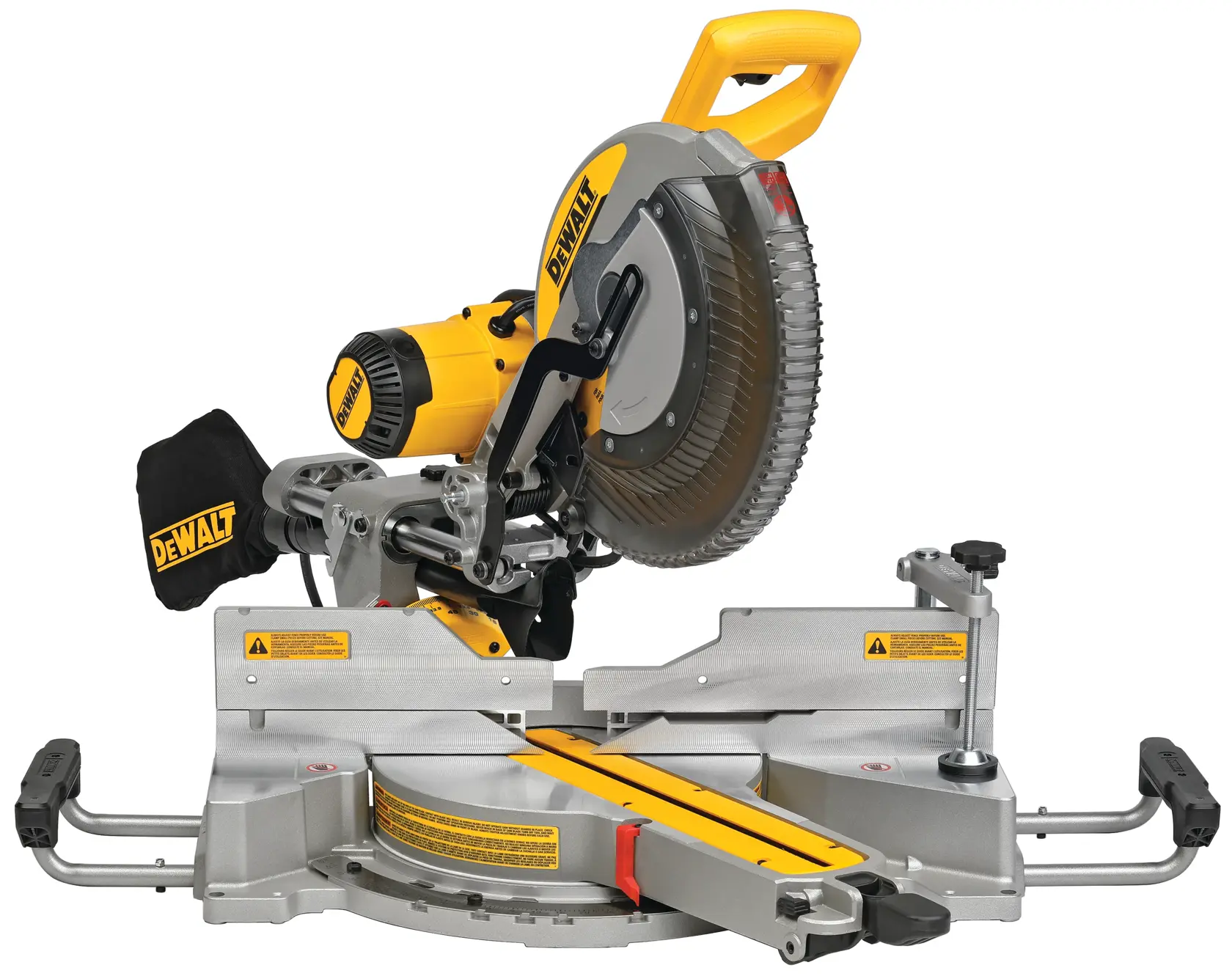
DWS780 adds a sliding dual-bevel format and the documented XPS cutline system. DeWalt lists 2x14 dimensional-lumber capacity at 90 degrees and 2x10 at 45 degrees. That capacity is a specific buying reason; it is not an automatic upgrade for every apprentice.
GCM12SD uses Bosch’s articulated Axial-Glide arrangement instead of conventional rearward sliding rails. The manufacturer documents 12-inch dual-bevel operation and front adjustment controls. Its reason to shortlist is the station arrangement as much as the cutting capacity.
LS1019L is a 10-inch dual-bevel slider with forward rails, front bevel adjustment and a laser. Makita documents 12-inch crosscuts at 90 degrees, 5-1/4-inch vertical baseboard and 6-5/8-inch nested crown capacity. It illustrates why blade diameter alone does not settle the comparison.
2505-20 brings four interchangeable heads to suitable cabinet, hinge and installation work. The offset and right-angle arrangements address access; this is not the first choice simply because a buyer wants maximum drilling power.
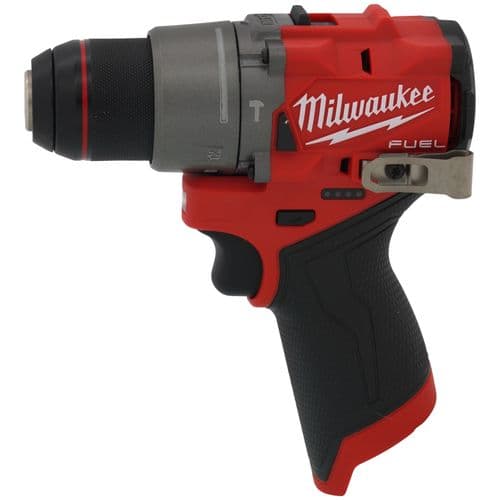
3404-20 provides a conventional half-inch chuck on the M12 platform. For supported pilot holes and assembly, it is the simpler comparison to the installation-head system. Check documented capacity against the work rather than expecting a compact tool to cover every large boring task.
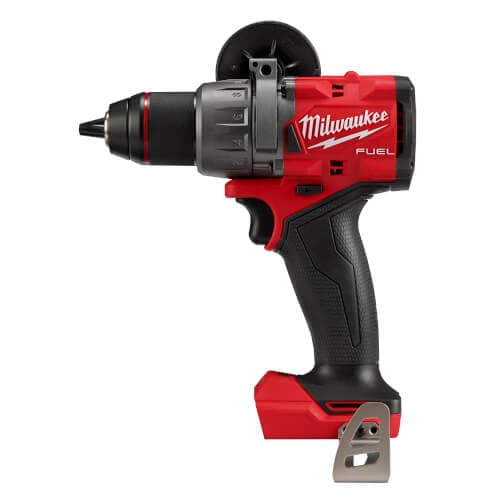
2904-20 is the conventional M18 hammer-drill comparison for carpenters whose supported drilling requirements justify that platform. Body, bit and fitted battery all contribute to the working envelope.
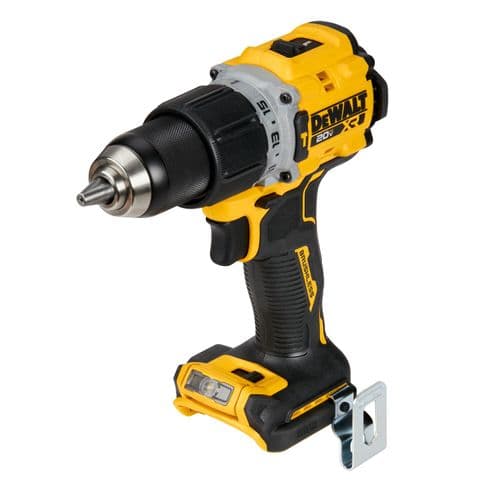
DCD805B is a brushless half-inch drill/driver with hammer mode on DeWalt’s 20V MAX platform. Its carpenter buying case is supported holes and controlled assembly on compatible batteries, rather than buying hammer mode for timber.
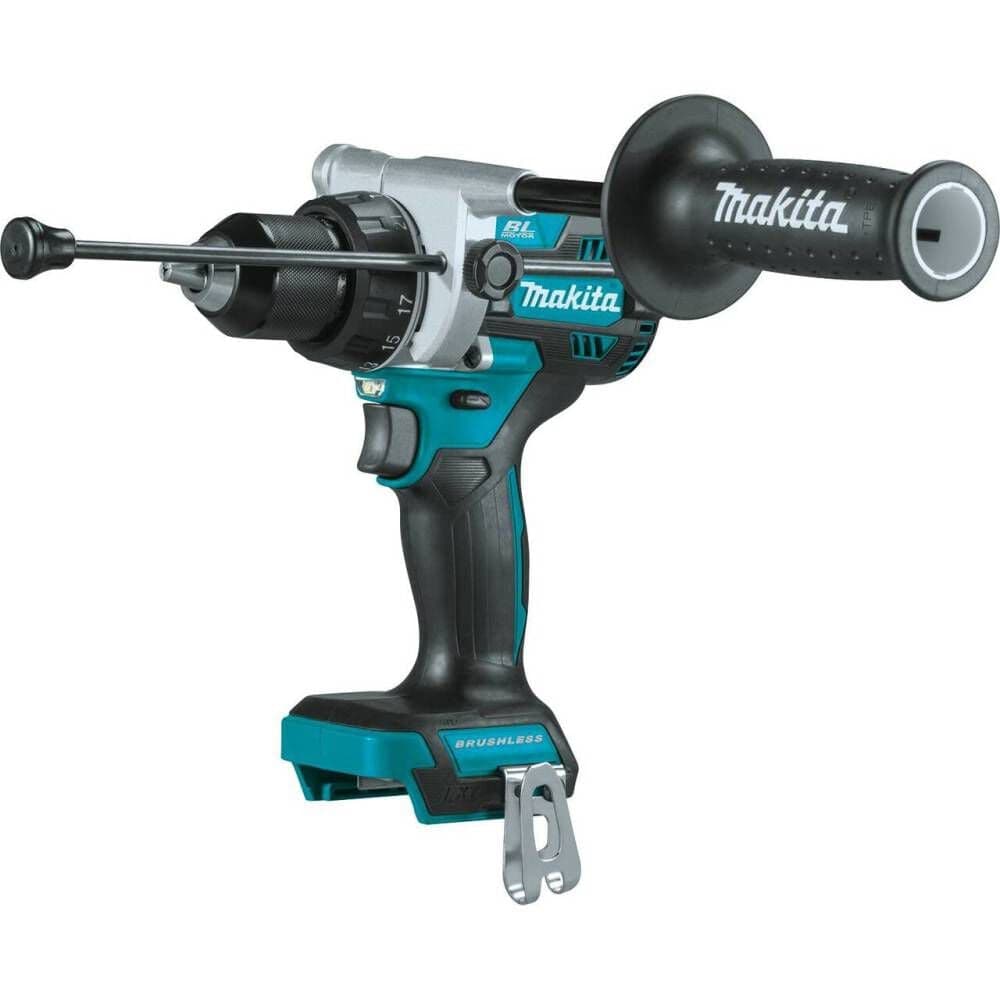
XPH14Z is the brushless half-inch LXT hammer driver-drill here. Match its supported capacities to the recurring drilling work and consider handling with the intended battery, rather than choosing by voltage alone.
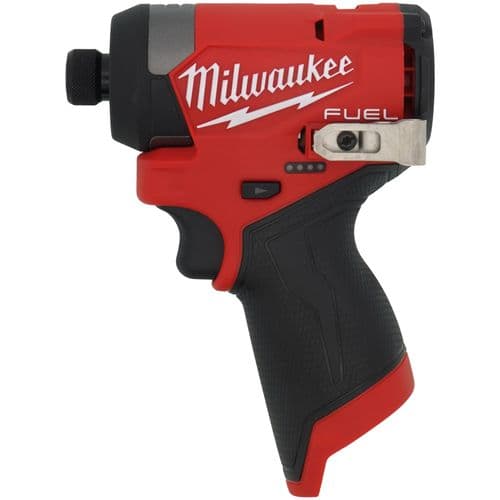
3453-20 is a quarter-inch hex M12 impact driver for suitable repeated fastening. It can complement a drill used for pilot holes, but its impact action is not controlled measurement of fastener torque.
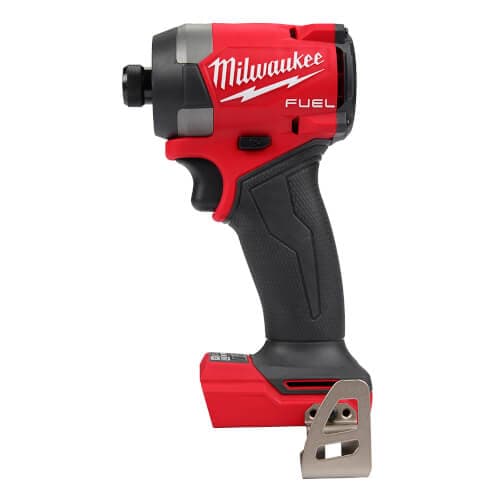
2953-20 adds a separate quarter-inch hex fastening tool to an M18 kit. Decking and construction work may justify it where the specified fasteners and method permit impact driving.
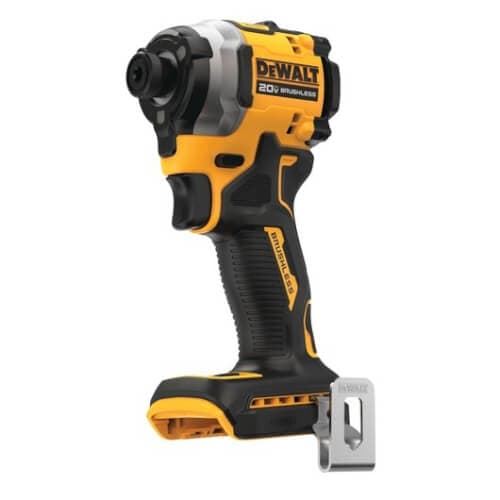
DCF850B uses DeWalt’s compact ATOMIC quarter-inch hex impact format. A shorter body can help some approaches, but the bit and battery also take space and delicate hardware may still need controlled hand or drill driving.
DCF860B is the XR quarter-inch hex impact alternative on the same broad DeWalt battery platform. Its place depends on approved fastening work and control needs, rather than selecting the highest headline torque for every screw.
XDT20Z is the LXT quarter-inch hex impact-driver comparison with selectable operating control. Those modes help tailor suitable fastening; they do not turn it into a calibrated torque instrument.