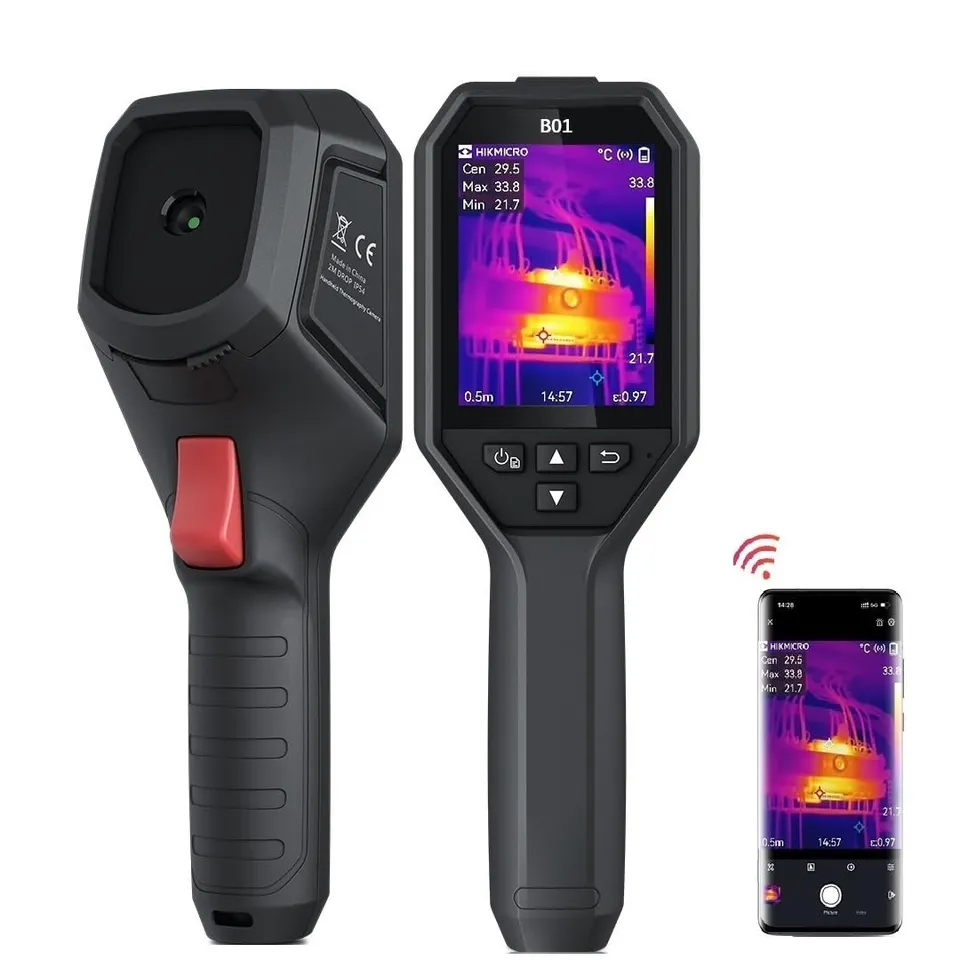
Why native resolution matters
More detector sampling points can preserve more spatial information in a surface pattern. That may help when comparing a small area with its surroundings, but it does not let the camera see through walls. Distance, surface properties and temperature contrast still influence the result. Enhanced saved-image dimensions are not additional detector pixels.
A separate instrument during an inspection
B01 leaves your phone available for calls, ordinary photographs and notes while you scan. The tradeoff is another device to charge and an image-transfer routine to learn. Decide how images will reach your report before choosing solely from a detector specification. We have not tested the current app or its performance on specific phones.
B01 versus C5
B01 has 256 × 192 native thermal resolution compared with C5's 160 × 120. C5 adds a visible camera, MSX outlines and its Ignite transfer workflow. These solve different problems: thermal spatial detail versus helping a report reader recognize the object. We have not measured comparative image quality or inspection outcomes.
Anomalies need confirmation
A temperature pattern is a reason to investigate, not proof of a leak, missing insulation or an electrical defect. Record the location and conditions and use a suitable second instrument or specialist assessment to establish the cause. A thermal camera complements an inspection rather than replacing the inspector's scope or judgment.
What to check before buying
Confirm the exact B01 model, supplied accessories and current supported software. Avoid borrowing visible-camera features from a B20 listing or specifications from B01S. If ordinary photographs are central to your reports, plan how to pair them with thermal captures so every finding remains identifiable later.