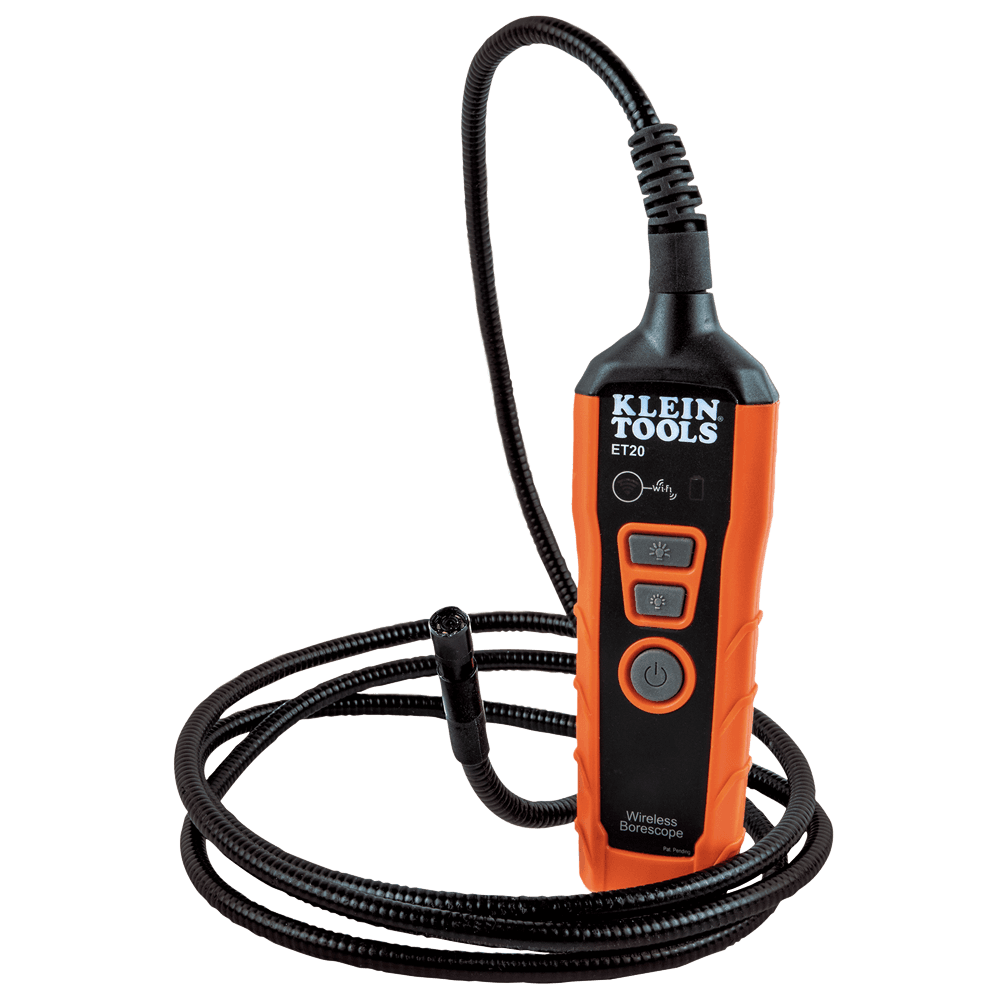
The phone is the main buying tradeoff
On a service call, your phone may already be used for the customer address, job notes and calls from the office. Decide whether adding inspection duties helps or interrupts that routine. Our interpretation is that phone-based recording can be useful when the output belongs in the job record, but a separate screen can avoid competing tasks.
Probe access matters more than the product photo
Measure the opening you are likely to use and think about the route beyond it. A head that fits the entrance may still be unable to turn toward the fitting you want to inspect. Plan a real access scenario before buying. Neither a longer cable nor more lights guarantees that a useful image will be possible.
Use it to answer a specific question
For a localized plumbing check, decide what you need to establish before inserting a probe: where a connection sits, whether access is possible, or what is blocking a view. Save an image with a location note if the finding must be explained later. A photo without context may be difficult for a customer or another technician to interpret.
Borescope versus drain camera
A short flexible inspection tool and a dedicated push-rod drain camera solve different buying problems. If you need meaningful reach, a locator or a record of a long pipe run, begin in the drain-camera category. Do not expect this shortlist to replace equipment chosen specifically for professional sewer surveying.
ET20 or a dedicated screen?
Prefer the ET20 when the phone workflow is the reason to buy. Prefer a self-contained camera when independence from the phone is more important. We have not tested connection speed or image clarity side by side, so the choice here is based on the documented design and how you prefer to handle the service call.