Why it suits plumbing service work
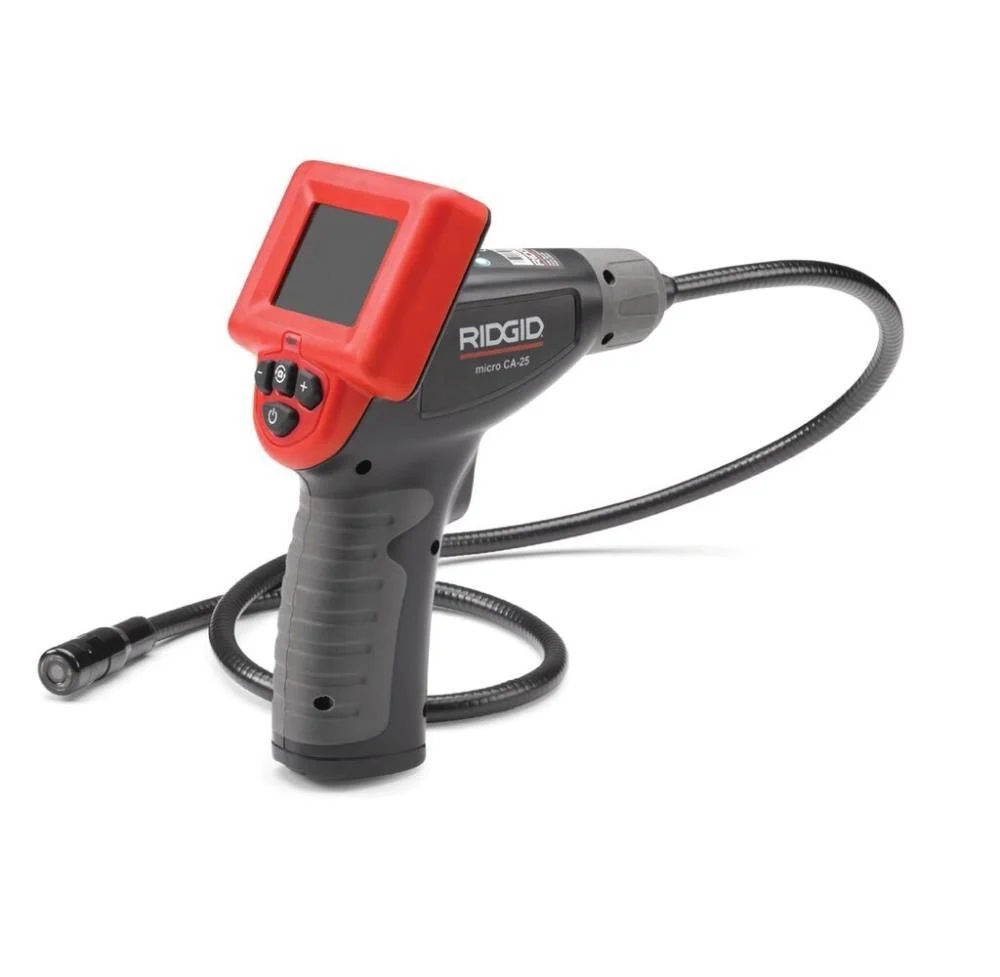
The appeal of the CA-25 is speed. Pull it from the case, switch it on and feed the camera into the area you need to inspect. There is no Wi-Fi network to join and no phone app to configure. That makes it useful for quick diagnostic work where the goal is simply to answer a question such as whether a fitting is leaking behind a panel or what is obstructing a tight cavity.
Camera and reach
RIDGID uses a 17 mm camera head on a fixed 4-foot flexible cable. The head includes four adjustable LEDs, and the camera/cable assembly is waterproof to the full 4-foot reach. The size is fine for many service-access situations, but it is much larger than the tiny probes used by some electronics-focused borescopes.
Screen and controls
The built-in 2.7-inch 320 × 240 color LCD is modest by current consumer-electronics standards, but it keeps the tool self-contained. Image rotation helps when the probe enters a cavity at an awkward angle, and RCA video output is available if you need to feed a live image to another display.
The key limitation
The cable does not extend beyond four feet. That makes the CA-25 a handheld inspection camera, not a sewer or drain camera. Plumbers who need to inspect longer pipe runs should move to a dedicated push-camera or a system with interchangeable longer probes.
Who should buy it?
It makes sense for service plumbers, HVAC technicians and maintenance professionals who value a robust self-contained tool for close inspection. If your work is mostly long drain lines, this is the wrong category of camera altogether.