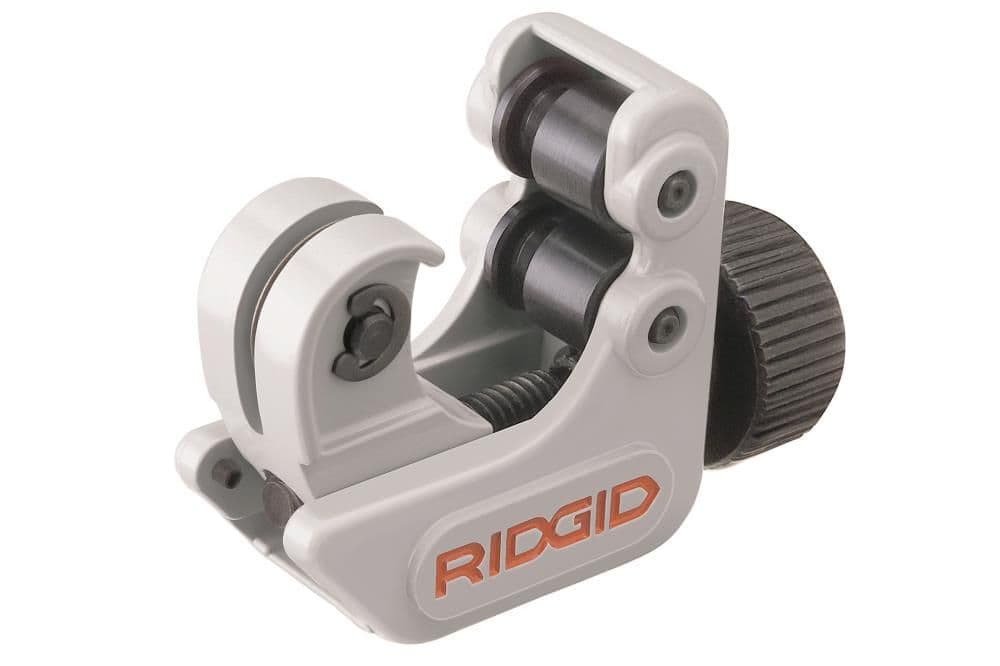
Why the 101 remains a useful first copper cutter
The RIDGID 101 is a small manual cutter with a published range of 1/4 to 1-1/8 inches. Its strength in a service kit is its compact format: when the pipe is close to a cabinet wall, the clearance around the tube can matter more than a speed claim. The 101 is a straightforward reference against which to compare AUTOFEED, quick-acting and battery-powered options.
A small cutter has a defined job
The 101 is not a general-purpose saw for every pipe material. The wheel, tube material and outside diameter need to match the tool instructions. After the cut, the fitting system may require reaming, cleaning and a marked insertion depth. A cutter that fits the available opening can still leave an unsuitable joint if the preparation is incomplete. This review evaluates buying fit rather than teaching a full joining procedure.
When to step up to another format
Choose the 118 if its AUTOFEED mechanism is the feature you want in a similar close-quarters role. Consider the 151 for accessible larger-diameter work or the M12 2471-20 when a run of supported copper cuts justifies a battery tool. KNIPEX TubiX offers another positioning mechanism. Each alternative should be checked against the same clearance and material requirements; the highest-capacity cutter is not necessarily the easiest one to use in the repair location.
Sources and review methodUse the linked manufacturer documentation to confirm the exact model, approved application and package. This is a research-based buying assessment, not a hands-on field test.
This is a research-based review. We have not hands-on tested this product or independently measured its performance. How we choose tools →
QUESTIONS & ANSWERSFrequently asked questions
What is the difference between RIDGID 101 and 118?
Both are close-quarters formats; 118 adds the manufacturer’s AUTOFEED arrangement. Compare the feed mechanism and your access rather than treating the models as identical.
Can a copper tubing cutter cut PVC?
Some cutter configurations support selected plastics, but the material and wheel must be listed for the exact tool. Use a dedicated plastic cutter where that is the appropriate category.
Does nominal 1/2-inch copper fit a 1/2-inch cutter?
Check the tube’s actual outside diameter and the tool’s published range. Nominal plumbing dimensions and outside diameter are not the same measurement.
Is the M12 tubing cutter worthwhile for occasional repairs?
Its value is strongest when repeated supported copper cuts justify another powered tool. A compact manual cutter can be a more straightforward first purchase.
Was this tool independently tested?
No. This review uses manufacturer documentation and task-fit analysis. It does not claim measured field performance, durability or comparative test results.