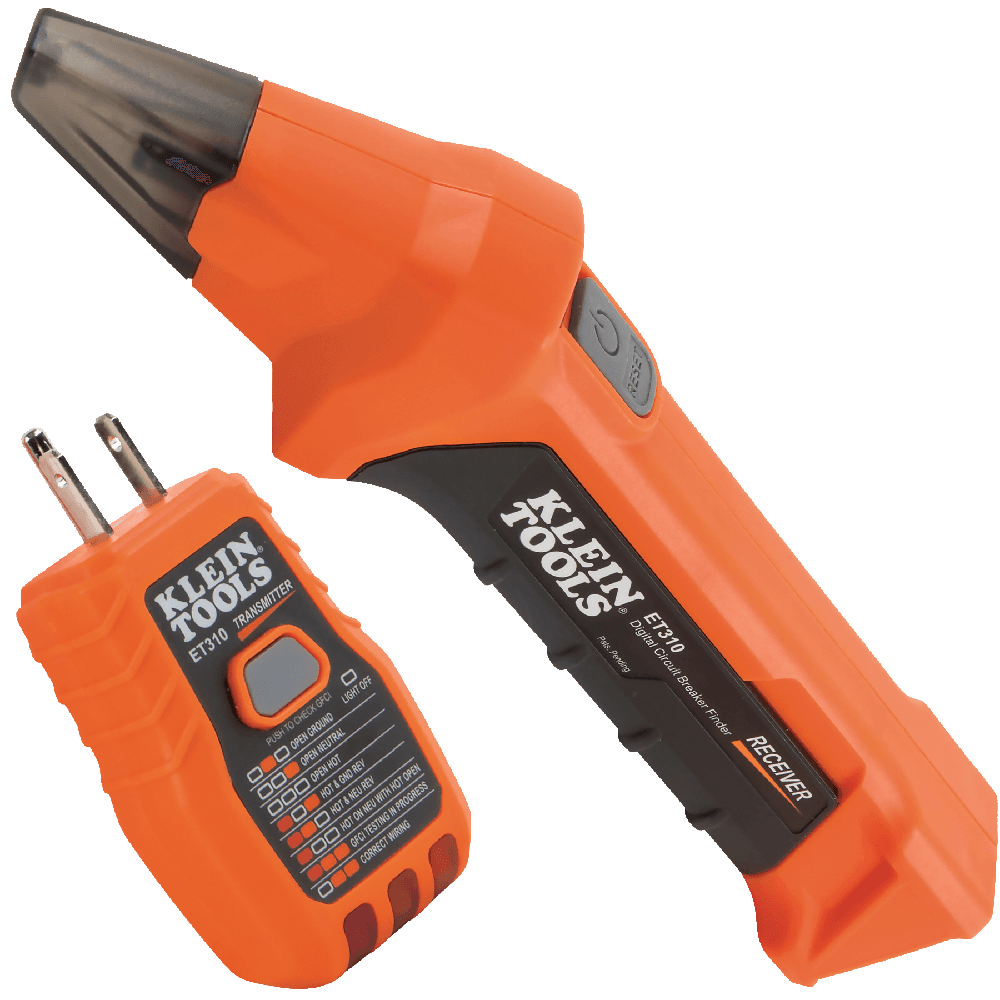
Where ET310 Digital Circuit Breaker Finder fits in the kit
The strongest ET310 use case is a service call where an accessible receptacle needs to be associated with a panel circuit. That is narrower than locating an open connection or following a concealed route, and it should stay narrow in the buying decision. A purpose-built finder can earn its place if this problem occurs regularly, while a rarely used one may be better kept in the van.
The decision that matters
Klein sells an ET310KIT bundle including the 69411 accessory kit and a case. Compare the included connections with the jobs you expect, especially when fixtures rather than ordinary outlets are involved. Buying the right bundle may be more useful than choosing a receiver from a longer feature list. We have not tested sensitivity or identification speed across different panel layouts.
Alternatives and purchase checks
ET350 is the next comparison when additional combined testing functions matter. ET450 belongs to the advanced tracer category and is a different kind of investment. Whatever receiver you choose, an indication is a lead to confirm rather than authorization to begin work. The isolation and verification process remains separate from identifying which breaker probably supplies the outlet.
When a basic finder is the right level of tool
Consider a recurring call where the starting point is an accessible compatible receptacle and the immediate question is which breaker supplies it. That is the buying scenario to evaluate for ET310. A different question—such as identifying a concealed route or tracing wiring without that receptacle access—does not become the same task by adding a cheap adapter. Check the permitted connections and documented accessories first. If the broader tracing requirement is routine, compare an advanced transmitter-and-receiver kit instead. We have not measured identification success across different panel layouts, so this recommendation does not promise a particular signal result in your installation.