Clamp meters for UK electricians
Choose by the current you actually need to measure. A meter that measures DC voltage at its leads does not necessarily measure DC current through its jaws.
Quick picks
Fluke 323 vs 325: AC and DC clamp meters
| Buying factor | 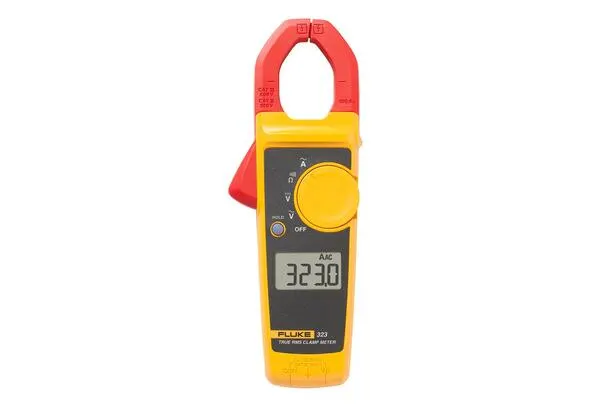 |  |
|---|---|---|
| Current through the jaws | AC only | AC and DC |
| Maximum clamp current | 400 A AC | 400 A AC or DC |
| On a mainly AC workload | Choose this if the extra functions would sit unused | Worth comparing if DC current is also on the job list |
| Small current readings | Check the manual’s minimum useful range | Compare its lower range and accuracy against a dedicated low-current clamp |
What matters for the work
Check the measurement category and voltage rating of both the instrument and leads for the intended work. If you're buying for training, start with the course tool list.
Choose the right measurement
Read the jaw-current and lead-voltage specifications separately. A dial setting for DC voltage does not make the jaws DC capable. The 323 covers AC current at the jaws; the 325 covers AC and DC. Write down the measurements you expect to make before comparing feature lists.
Check the low end
Both meters are sold as 400 A clamps, but that ceiling tells you little about readings near the bottom of the range. Compare resolution and stated accuracy together. If your main job is small DC current, compare a purpose-built low-current instrument rather than paying for a higher maximum.
Match the work and the kit
Consider jaw size and access as well as electrical ratings. Check the measurement category and voltage rating of the meter and leads for the intended environment. If this is for college or an apprenticeship, check the required instrument list; a clamp meter is not a replacement for the equipment specified for safe isolation.
How to choose for the jobs you do
Fault-finding on AC equipment
If the recurring question is whether a motor or another load is drawing current, start by listing the readings that would actually change your next decision. An AC clamp can be the right purchase for that workload. Compare jaw access against the equipment you service; the number printed on the dial does not tell you whether the instrument fits the space available. If you already own a multimeter, check which functions it covers before paying to duplicate them.
A kit for jobs that include DC equipment
If your job list includes a battery or DC supply and you specifically need current through the jaws, cross off AC-only models. For example, buying a 323 for DC voltage checks and assuming it will also clamp DC amps leaves an instrument gap. The 325 covers both kinds of jaw current, but its maximum figure should still be checked against your workload. If tiny DC readings are the main task, compare instruments built for those ranges before settling on either model.
Buying your first clamp as an apprentice
Take the course or employer tool list to the comparison. Look for specified instrument categories, lead requirements and any separate safe-isolation equipment before spending a larger share of the budget on the clamp. If the list only calls for AC clamp measurements, it may make sense to keep the difference for a tool the list specifically requires. Compare what is included in the exact UK listing; a standalone meter and a two-meter combo are separate purchases.
What to write down before ordering
List your lowest expected current, the largest current you reasonably expect to see, whether you need AC or DC through the jaws, and where the work is carried out. Match those four requirements to the manufacturer’s specifications. Pay particular attention to the stated accuracy at the bottom of the range. A display with another digit does not automatically give a more accurate result.
Detailed picks
Fluke 323
A sensible choice when you regularly need an AC load reading and already carry any separate instruments your work requires. DC voltage remains a lead measurement.
Skip if you expect the jaws to measure DC current. Buying a case or a different lead set will not add that capability.
Fluke 325
The better fit where the same kit must cover AC and DC clamp current. Read the manufacturer’s range and accuracy table against your expected readings before paying for the extra functions.
Skip if most of your DC work is at currents too low for the stated accuracy to be useful, or if you only need routine AC readings.
Buying questions
Does the Fluke 323 measure DC amps through the jaws?
No. It can measure DC voltage at the leads, but its jaws measure AC current. The Fluke 325 adds DC clamp current.
Is a higher current range always better?
No. For small currents, the lowest usable range and its stated accuracy matter more than the maximum number on the box.
Should an apprentice buy both a clamp meter and a multimeter?
Ask for the course or employer tool list first. A multimeter and a clamp overlap on some measurements, but they solve different current-measurement problems.
Sources and methodology
We compare documented capabilities, exact UK listing variants and likely fit for the job. TradeGear HQ has not hands-on tested these picks.