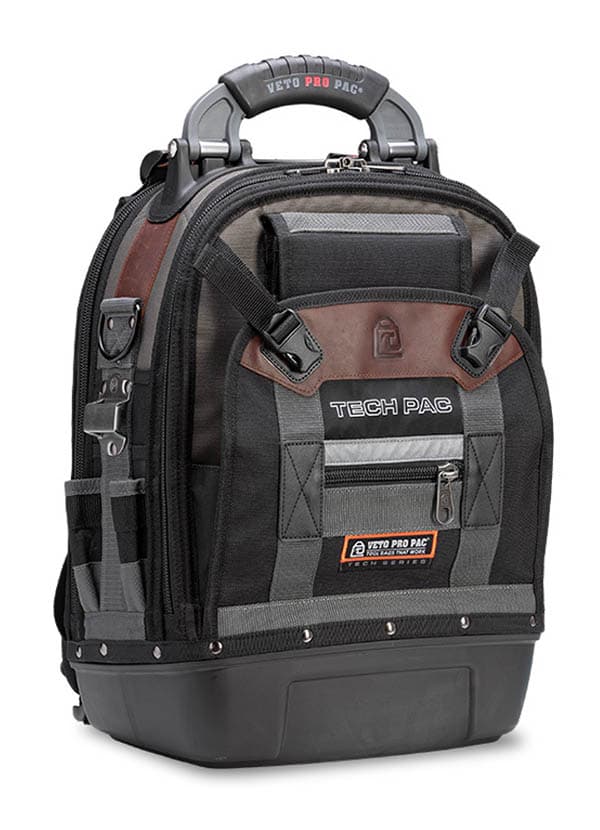
Where TECH PAC Tool Backpack fits in the kit
TECH PAC should be evaluated against a written service-tool list. The useful question is whether its organization puts your meters, drivers and everyday hand tools where they can be accessed without unloading everything. We have not packed the bag or tested carrying comfort. This is a research-led layout recommendation, not evidence that a particular user can comfortably carry a heavier kit.
The decision that matters
Start with the longest tools and the bulkier protective cases, then account for consumables and the working room needed to remove them. A pocket count does not tell you whether your meter case fits or whether a driver tip catches during removal. Check the manufacturer dimensions and current layout, and compare them with the two Klein configurations rather than treating every trades backpack as the same size.
Alternatives and purchase checks
The van setup workflow separates the service bag from stock and specialist tools that can stay in the vehicle until needed. That is relevant to the purchase: a backpack should not become a reason to carry every tool on every call. Compare simpler storage if the regular load is small. Verify the exact TECH PAC model, warranty terms and seller configuration; other Veto backpacks can have different layouts and purposes.
The ten-pound empty weight changes the carrying decision
Veto lists TECH PAC at ten pounds empty, with 46 pockets and a 24-liter internal volume. The listed body dimensions are 19 inches high, 13 inches wide and 10 inches deep. That makes the weight budget a material buying consideration before tools are added. If your actual daily kit is small, a lighter or simpler bag can be the more useful choice even when this layout has room to spare. The capacity and dimensions do not establish personal comfort or guarantee that a particular meter case fits a pocket. We have not conducted a loaded carrying trial, so assess fit and compare the alternatives against your own load.