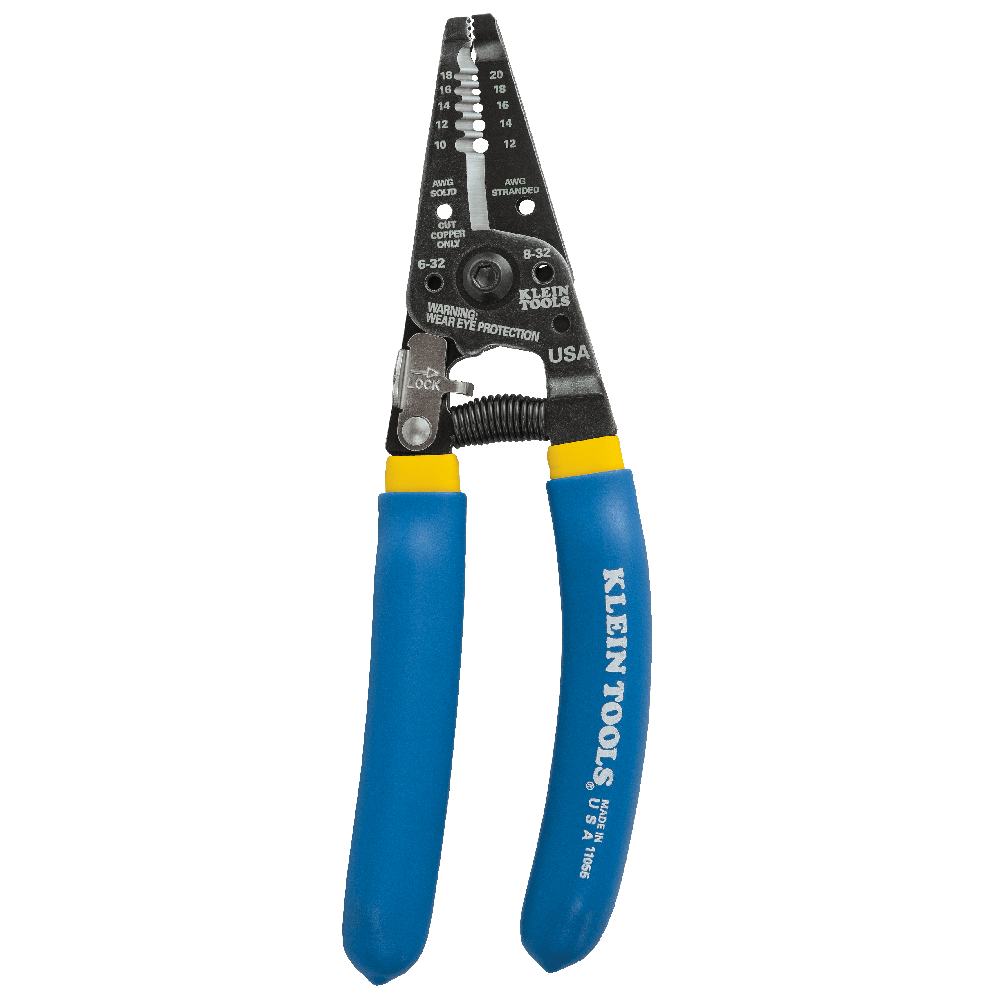
Where 11055 Klein-Kurve Wire Stripper/Cutter fits in the kit
11055 makes most sense as the familiar preparation tool in a mixed service bag. The user selects the gauge and controls where the insulation is removed, which can be useful when each repair is different. That is a format advantage rather than a measured speed or cut-quality claim. We have not tested its blade wear or compared conductor damage against an automatic mechanism.
The decision that matters
The distinction between 10–18 AWG solid and 12–20 AWG stranded coverage is important. A number on a conductor should be checked against the applicable range and material, rather than used to assume compatibility. If your work regularly includes other sizes or insulation types, choose a tool documented for them. Cutting capacity does not automatically extend the stripping range.
Alternatives and purchase checks
Klein 11061 and 11063W are alternatives for a repetitive stripping task, while KNIPEX 13 72 8 combines additional hand-tool roles. Keep those decisions tied to access and frequency: a larger multifunction or automatic head may be less convenient in an already crowded box. The standard 11055 should also be distinguished from explicitly insulated variants. Comfort grips do not establish electrical protection.
Choose preparation tools by the wires you actually use
For a mixed service bag, write down the solid and stranded copper gauges that recur in repairs and compare each against the documented range. If the normal work falls outside either range, a familiar brand is not a reason to buy an unsuitable tool. A repeated compatible-wire task may point toward an automatic stripper, while constrained access can favor a smaller manual format. Check material and insulation limitations before treating one tool as a universal solution. We have not tested conductor nicking or compared preparation speed, so no claim is made that manual control necessarily produces a better result than every automatic alternative.