Start with the measurements you actually make
Write down your last few diagnostic jobs before choosing a meter. If they mostly involved checking supply voltage, tracing an open connection and comparing resistance readings on isolated equipment, a conventional meter may be enough. If ambiguous induced voltages regularly consume your time, the decision should give greater weight to a suitable low-impedance function.
Fluke 115 versus Fluke 117
The shared meter family does not make the two models interchangeable. The 117 adds integrated VoltAlert screening and AutoVolt/LoZ voltage functions; those are the reason to choose it. Our buying judgment is that an existing kit matters: buying another screening function has less value if a separate tool already does that job well.
Where it fits in a service-call bag
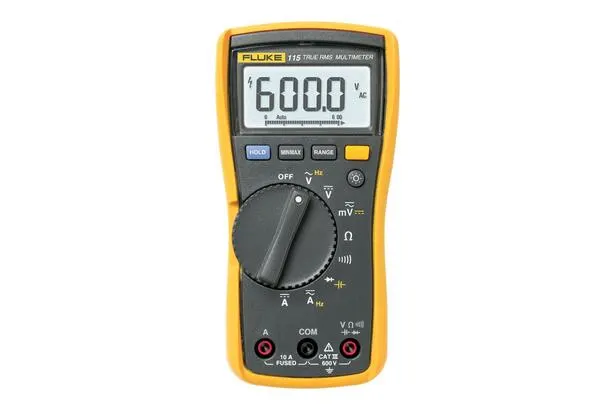
Treat the 115 as the general measurement instrument in the kit. Pair the meter with tools chosen for the other parts of the call, including lighting, circuit identification and safe isolation. A crowded bag is not automatically a better bag; clear roles for each instrument make it easier to recognize when the current tool is the wrong one.
Current measurement is a separate buying decision
A handheld multimeter's current input is not a substitute for a clamp around a conductor. For load-related diagnosis, choose the current-measurement method appropriate to the equipment and work procedure. Do not select this meter merely because the current range appears large on a specification sheet. Think about how often you actually need that measurement.
What would make us choose something else?
We would start elsewhere for higher-category work, specialist insulation testing or a need for wireless records. We would also choose the 117 if its added functions justify the difference in the current offer. There is no hands-on durability assessment here: this recommendation is a comparison of documented capability and the intended use case.