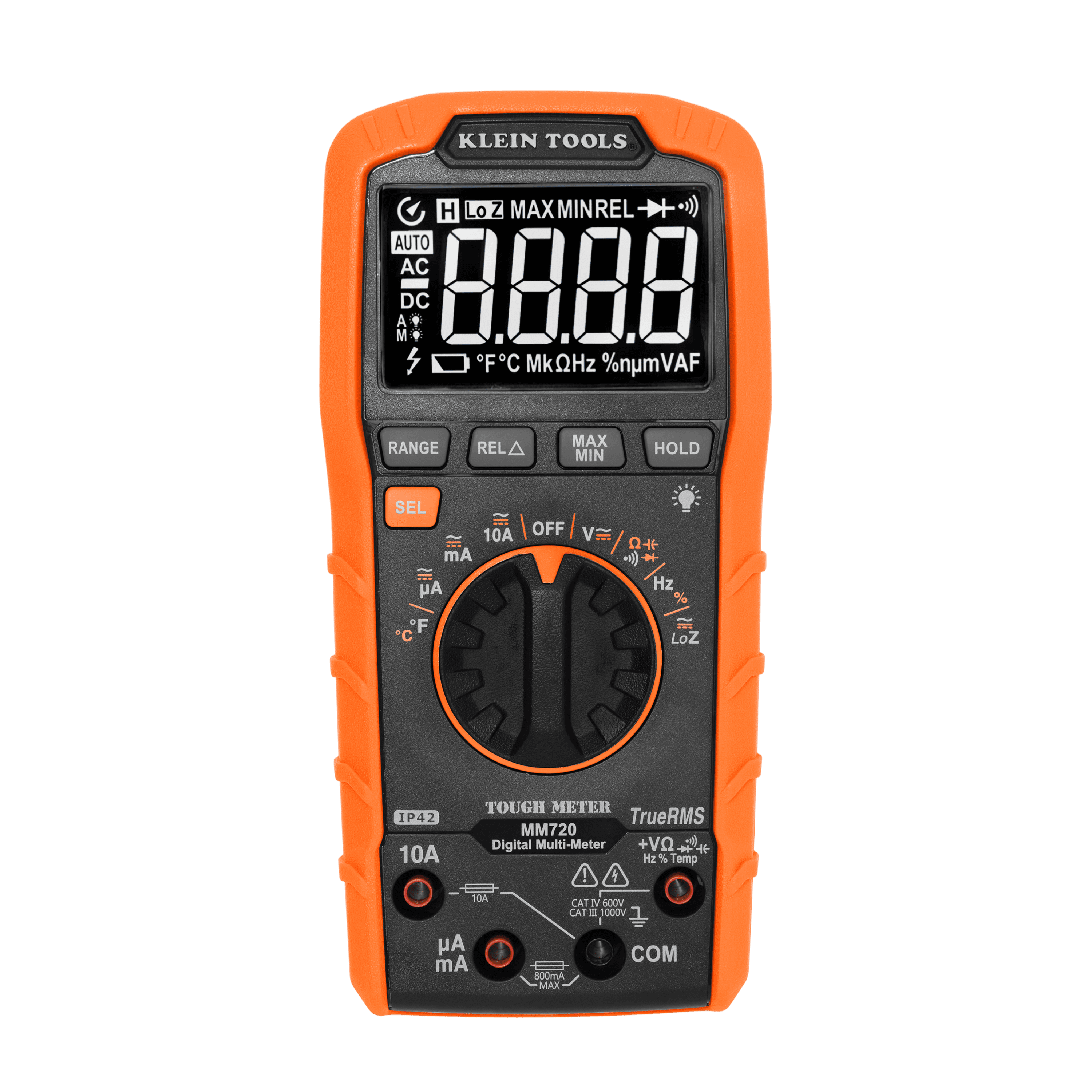
Why we changed the MM600 recommendation
A recommendation should not stay frozen just because a product was popular when a spreadsheet was written. For a new purchase, current documentation and an identifiable model are useful starting points. Owners of an MM600 may have different priorities, but this shortlist is primarily for buyers choosing their next tool, so we use its manufacturer-designated successor.
Choose the safety category before the feature list
The voltage printed on a meter and its measurement category answer different questions. Specify the environment you need to work in before deciding between meters. The category of the complete measurement setup can be limited by an accessory. Brand familiarity and a large display cannot compensate for an unsuitable instrument or damaged leads.
When the extra functions earn their place
Our buying interpretation is that temperature and low-impedance capability are most useful when your jobs repeatedly call for them. If a separate instrument already covers temperature work, do not count that function twice when weighing value. If you seldom encounter a difficult voltage reading, portability or display preference may matter more to you.
A useful upgrade from a basic meter
An apprentice should first establish the requirements of the employer or training program. A professional buying a replacement should list the missing capability of the old tool. That is a better reason to upgrade than a blanket assumption that every electrician needs the broadest meter. Keep specialist instruments on their own buying list.
Compare it with the two Fluke options
The 117 is our everyday service choice; the 115 suits a simpler general measurement role. The MM720 is worth investigating when its additional category and temperature capability aligns with your jobs. These are different fits rather than a laboratory ranking. We have not carried out side-by-side response-time, lead-quality or accuracy testing.