Buy for how you carry the kit
A tool that gets left in the vehicle has little value on a quick call. Consider where you want the meter to live and how you protect it, rather than comparing dimensions in isolation. Our interpretation is that a slimmer instrument can suit technicians carrying a smaller first-trip kit, provided the required measurement capability is still covered.
Display convenience without an accuracy claim
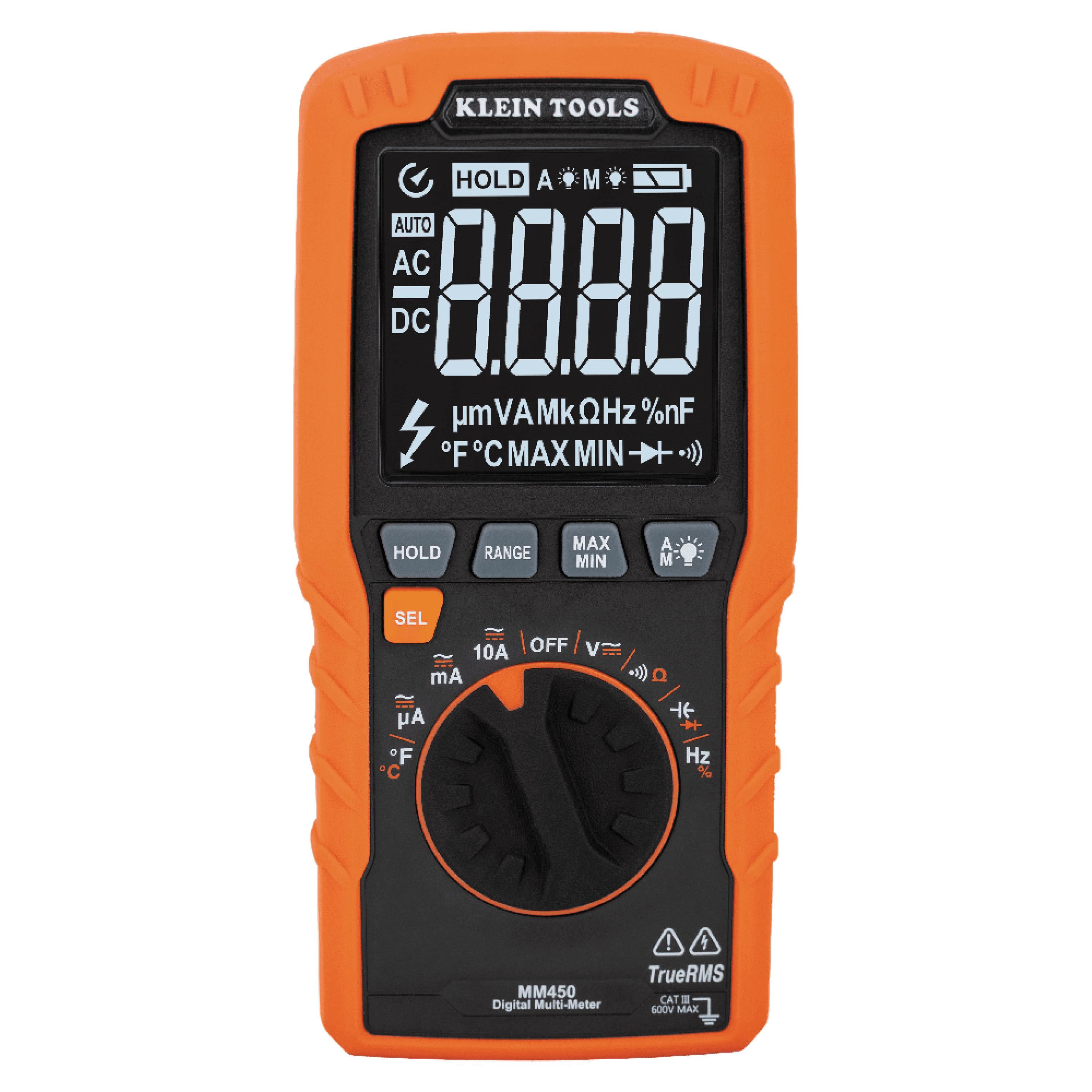
Klein documents ambient-light adjustment for the backlight. We regard that as a convenience to investigate, not evidence that the display is best in every situation. Before committing to a meter for daily work, consider your preferred viewing angle and how easily you can read it in your usual position. We have not tested that here.
A secondary meter versus a main meter
A compact backup and a primary diagnostic tool may be different purchases. For a backup, overlapping the essential capability of your main meter can be useful. For a primary meter, list the jobs it must cover independently. Do not buy on pocket size and discover later that another instrument is always needed for a common measurement.
Where the smaller format stops helping
Some service calls need a clamp meter, an insulation tester or a tool chosen for a different category environment. Carrying a small multimeter does not remove those requirements. Keep the selection focused on role: this option belongs in a general measurement discussion, rather than being presented as a universal replacement for electrical test equipment.
MM450 or MM720?
Choose the slim format when it is the advantage you will use every day. Investigate the MM720 when its broader documented capability is the reason for buying. If neither solves a problem with your existing kit, replacing a working meter may not be the next priority. Tool purchases should follow the jobs, not the order of a comparison table.