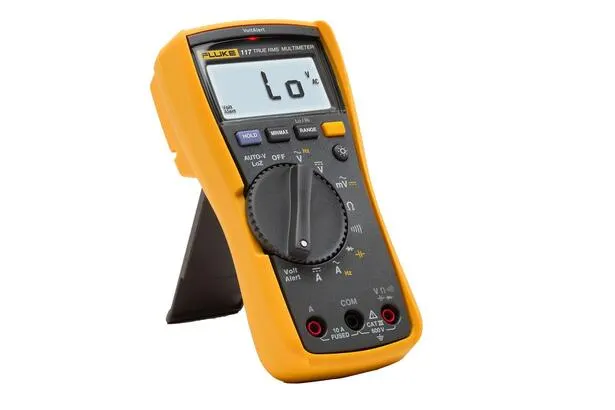
What makes the Fluke 117 electrician-focused?
The 117 is not just a generic multimeter with a different label. Fluke combines its integrated VoltAlert non-contact voltage detection with AutoVolt AC/DC selection and LoZ low-input-impedance measurement. In practical troubleshooting, that means you can screen for energized conductors quickly, then switch to a contact measurement while reducing the chance that capacitive coupling creates a misleading voltage reading.
Measurement capability
The meter covers the measurements most electricians use regularly: AC/DC voltage, AC/DC current, resistance, continuity, frequency and capacitance. Min/Max/Average recording is useful when a problem is intermittent. The 6,000-count display and True-RMS AC measurement make it suitable for modern electrical loads where waveforms are not always perfectly sinusoidal.
Safety and durability
Fluke rates the 117 to CAT III 600 V under IEC 61010 standards. That rating is appropriate for a large amount of building-distribution and fixed-installation work. As with any meter, the correct leads, safe work procedure and category rating matter more than the brand name alone.
Who should buy it?
The strongest fit is an electrician who wants a reliable primary handheld meter rather than the cheapest possible option. It makes particular sense for service work, commercial buildings, residential diagnostics and maintenance where fast voltage checks and ghost-voltage rejection matter.
Where does it fall short?
The 117 is not a clamp meter, insulation tester or advanced industrial logging meter. If your work regularly involves higher-voltage industrial systems or you need specialized functions, you may need another instrument alongside it. The purchase price is also higher than many competent entry-level meters.